Family of late New Mexico rapper Wake Self keeps his legacy alive

by: Anna Padilla

ALBUQUERQUE, N.M. (KRQE) – A music video of the late New Mexico rapper Andrew Martinez, better known as Wake Self, was released in November, a year after his death. The hip-hop artist and community activist was killed by a drunk driver on Nov. 5, 2019. He never got the opportunity to release his newest album and instead, his family released the project to honor the continuation of his message.

The song, named Holy Water, is from Wake Self’s posthumous album, “Ready To Live.” Eric Martinez, Andrew’s brother, said the rapper made it a priority to support the community in his home state, by giving back to those less fortunate and helping educate students on the processes of recording music. “His impact on the community was really felt, and it was nice to see all those people come out to support the family after he passed,” Eric said.

The family was inspired to keep Andrew’s legacy alive in ways the artist was passionate about, and are currently working on the Wake Self Foundation, which will provide funds for projects like providing hygiene and food packs to those in need, in addition to scholarships for Native American women. The family hopes to establish the foundation and eventually use it to help other local hip-hop artists in the community.

Read on KRQE’s website

Eric said Andrew was also a supporter of women’s rights and women’s equality. His music, and especially Ready to Live, carried those and other positive themes. “He preached a message of sobriety, positivity, self-love and self-worth. He wasn’t a typical hip-hop artist, he spoke out about a lot of things that are prevalent in the genre today like materialism and misogyny,” Eric said.

Produced in collaboration with the Institute of American Indian Arts, Holy Water was one of the last videos that Martinez shot before his passing. The film was conceptualized, directed and produced by his partner and collaborator, Noor-un-nisa Touchon.

Touchon was the one who prompted turning the song into a music video, as Martinez hadn’t expressed interest in doing so but agreed to it because she had such a clear vision of what it would look like. “He let me use this project to explore my creativity, and have freedom to do what I wanted,” Touchon said.

Touchon finished working on the music video in May. It was also shown in film festivals like the American Indian Film Festival, the Independent Shorts Awards, and the London Music Video Festival. “I wanted to do everything I could to keep his legacy alive, and submitting Holy Water into these festivals and getting his work out there seemed like another thing I could do,” Touchon said.

Touchon has one more music video that she directed and is working on, for Love Myself, which will be released next year. “I think one of the reasons he was so important in his community is because he really wanted to spread the message that it’s okay to be loving even if it makes you vulnerable, it’s okay to be honest about how you’re doing,” Touchon said. “I think we could all learn from that and keep that sentiment with us.”

CNM theatre students find unique way of telling stories amid pandemic

by: Anna Padilla

ALBUQUERQUE, N.M. (KRQE) – Live theatre is one of the many things that have come to a halt in 2020 because of COVID-19. Despite that, a group of playwriting students at Central New Mexico Community College has found a way to combine an old way of telling stories with a new one to reach audiences: radio theatre.

Students of the fall 2019 playwriting class have produced the stories they wrote for the class. While they weren’t able to see their stories played out on the stage, their teacher Leonard Madrid wanted to make sure the shows still went on.

Madrid works for Blackout Theater Company in Albuquerque, which makes their own podcasts, and is how the idea for this project came about. “It’s like we’re going back in time,” Madrid said. “I think what happens is we tend to misinterpret what a podcast is and forget that there’s a whole realm of fictional podcasts out there, so this fits in perfectly and tends to be a nod to those old radio shows.”

Most of the students participated in a few different productions at varying capacities. Students would perform their lines while in a Zoom call with the other actors, all while recording to their own individual devices to get the best quality of audio.

Read on KRQE’s website

Liam Hoch, a writer of one of the plays, said he appreciated the opportunity to gain new skills through this experience. “COVID aside, I think it’s been a really interesting learning process and something I really appreciated having to do,” Hoch said.

Hoch was surprised at how many people came to audition for roles and help with the productions and believed it was because through the online format, participating is more accessible to the community.

Anastcia MacArthur had roles in a few of the one-act plays. She said the most difficult part of this process was losing the social aspect of meeting with other actors and crew members from the show. “You would bond with your castmates while you were backstage or before rehearsals,” MacArthur said. “It was sad not to see people in person, but we still tried to talk and find times to have times that weren’t just work and have fun.”

Each of the students and Madrid expressed excitement at the prospect of finding new ways to tell stories. “That’s a shift I hope we see moving forward. I love the concept of being able to reach out to a bunch of people with a normal theatrical production,” Hoch said. “I do hope people start looking at the possibilities of what traditional theatre can be.”For a full list of the shows and their descriptions, visit CNM’s website to listen online.

Teacher on the road to recovery after hit and run

Story by Anna Padilla, News-Bulletin Staff Writer

LOS LUNAS — On Wednesday. Feb. 5, Tina Craig got a phone call from her daughter, SharonAnne, who had just been in a car accident at the Conoco gas station in El Cerro.

“My daughter called me from her phone. I don’t know how she did it but I couldn’t understand her,” Tina said. “It sounded like she was drunk or something was wrong with her — she couldn’t talk.”

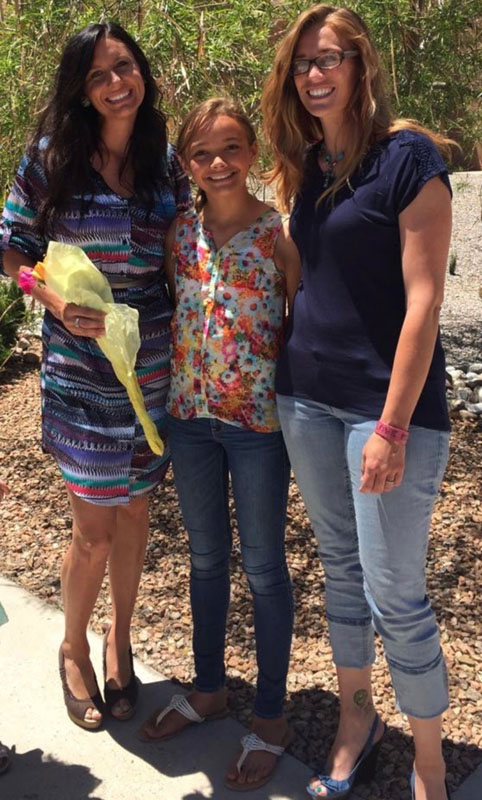
SharonAnne Craig, a teacher at Desert View Elementary, was involved in a hit and run a month ago and is recovering.

SharonAnne works as a special needs assistant teacher at Desert View Elementary, and is a single parent to an 11-year-old daughter. She thinks she was putting gas in her car after work when she was rear-ended by someone in a truck.

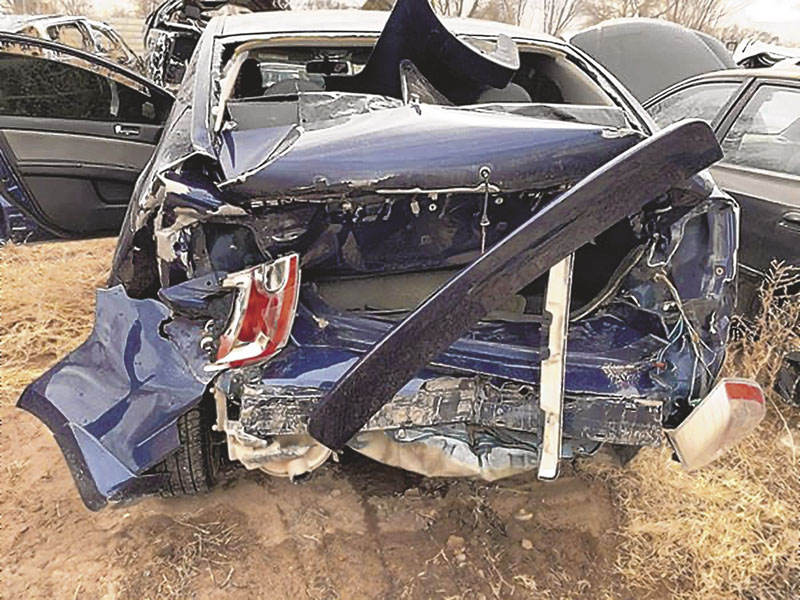
“My trunk was in the back seat of my car. The police thought [the driver] had to be going about 40 or 50 miles and didn’t stop at the stop sign,” SharonAnne said.

SharonAnne has no memory of the accident, and only knows what witnesses and law enforcement have told her. “I don’t remember the accident at all. When I woke up at the hospital, I thought I had fallen on the playground and hit my head,” she said.

Read on the Valencia County News-Bulletin’s website

A woman who works at the propane station nearby witnessed the accident and explained to Tina what had happened. “She was out there helping [SharonAnne], making sure she didn’t get out of her car and walk in the street because she was in the middle of the road with the car,” Tina said. “She actually got on the phone and told me what happened and let me know that they were taking her to the hospital.”

When SharonAnne was released from the hospital, she stayed with her brother until her memory started coming back.

“In the beginning, she remembered one brother but not all three,” her mother said. “Then she said she remembered one of the others.

“The doctor was concerned and said she had a severe concussion with a short-term and long-term memory problem.”

SharonAnne’s boyfriend, Jacob Garcia, was notified of the accident and met her at the hospital. He was told she was asking for him earlier but when he got there, her memory had become foggy.

“When I got there, she was really out of sorts. She couldn’t really remember me and thought it was Jan. 6, 2008, and then it got bumped up within a day and a half to 2013,” Garcia said.

While at the Conoco gas station in El Cerro on Feb. 5, SharonAnne Craig was in her car when an unknown driver hit her from behind.

When he went back to speak with the propane attendant, she said deputies with the Valencia County Sheriff’s Office had taken the surveillance footage to review it.

As far as SharonAnne’s progress, she feels like she’s steadily recovering. “My motor skills are still a little set back and my memories are slowly coming back; I’m feeling a lot better,” SharonAnne said.

“The doctor cleared me to be home alone and to drive. I’m going to try to go back to work on Thursday, just for a couple days, to see how it goes.”

Garcia started a fundraising page on Facebook for her to help cover some of the medical expenses and to purchase a new vehicle.

“I pray for the person who hit me all the time,” SharonAnne said. “I just hope it never happens to them or someone they care about because it’s been really hard.

“Just do the right thing and check on the other person, because that person could have died or could be really hurt. Stop to check and save a life.”

According to the crash report from the Valencia County Sheriff’s Office, Craig was driving westbound on El Cerro Mission Blvd. at about 3 p.m. when she was hit from behind by a faded red pickup.

Witnesses said Craig was waiting for eastbound traffic to pass before turning into the J&A Quick Stop gas station at 90 El Cerro Mission Blvd., west of Manzano Expressway.

The pickup, described as an early 1980s model, possibly an S-10, hit Craig’s Nissan from behind, backed up, then drove around her car and continued west.

Anyone with information about the crash is asked to call the Valencia County Sheriff’s Office at 866-2400.

20th annual World’s Largest Matanza

Story by Anna Padilla, News-Bulletin Staff Writer

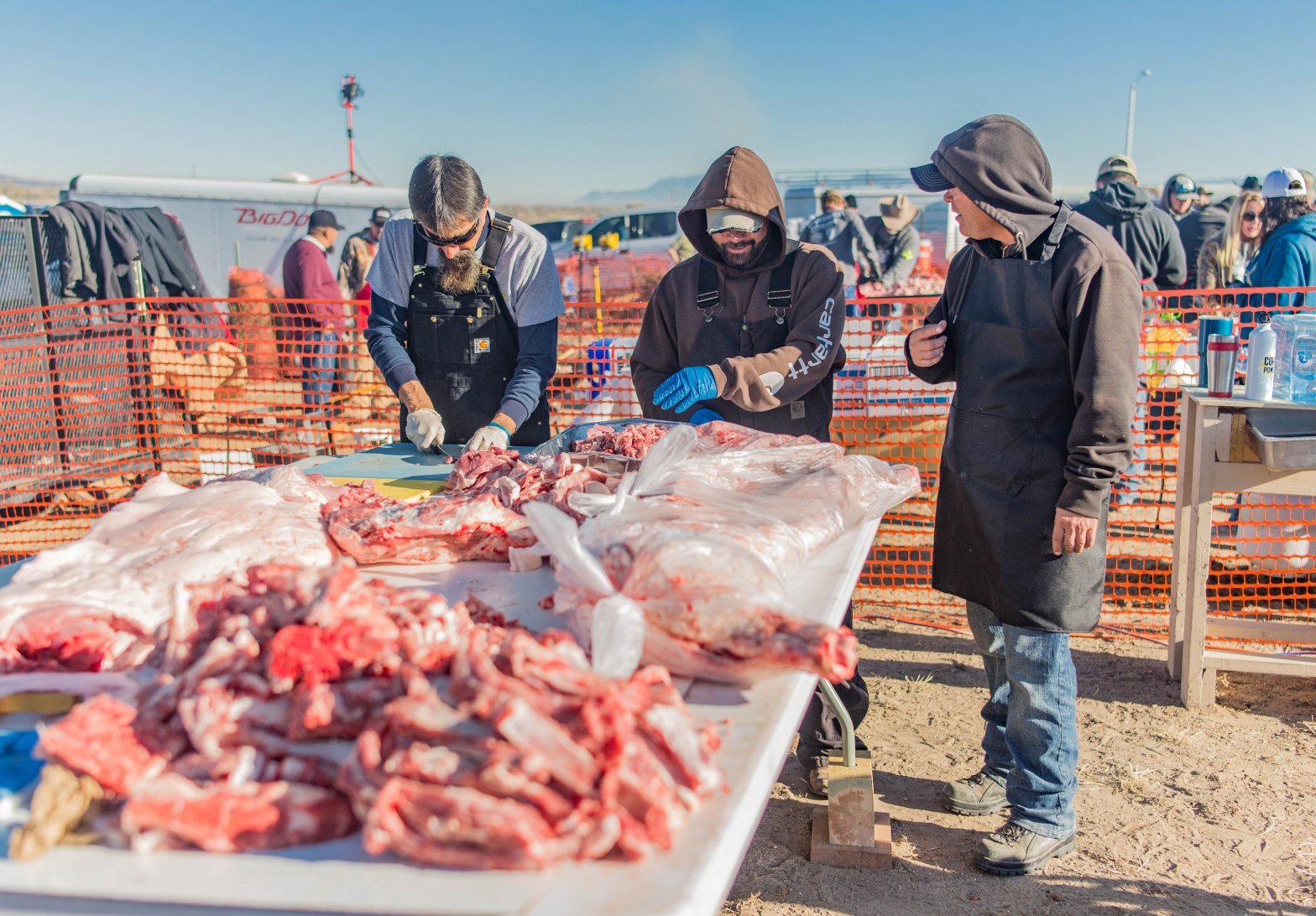
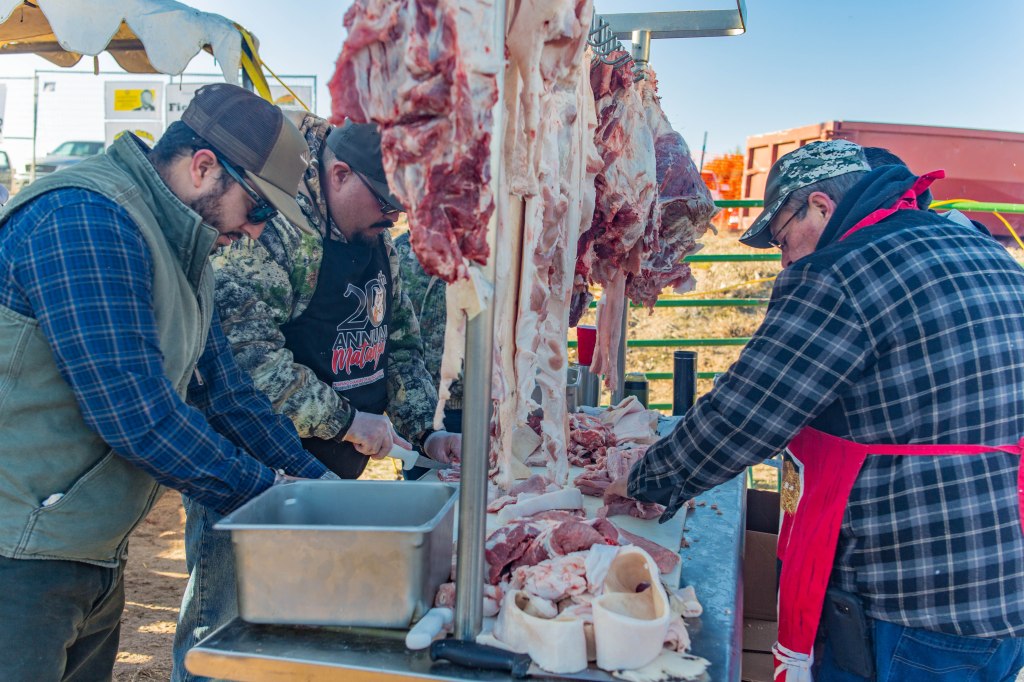
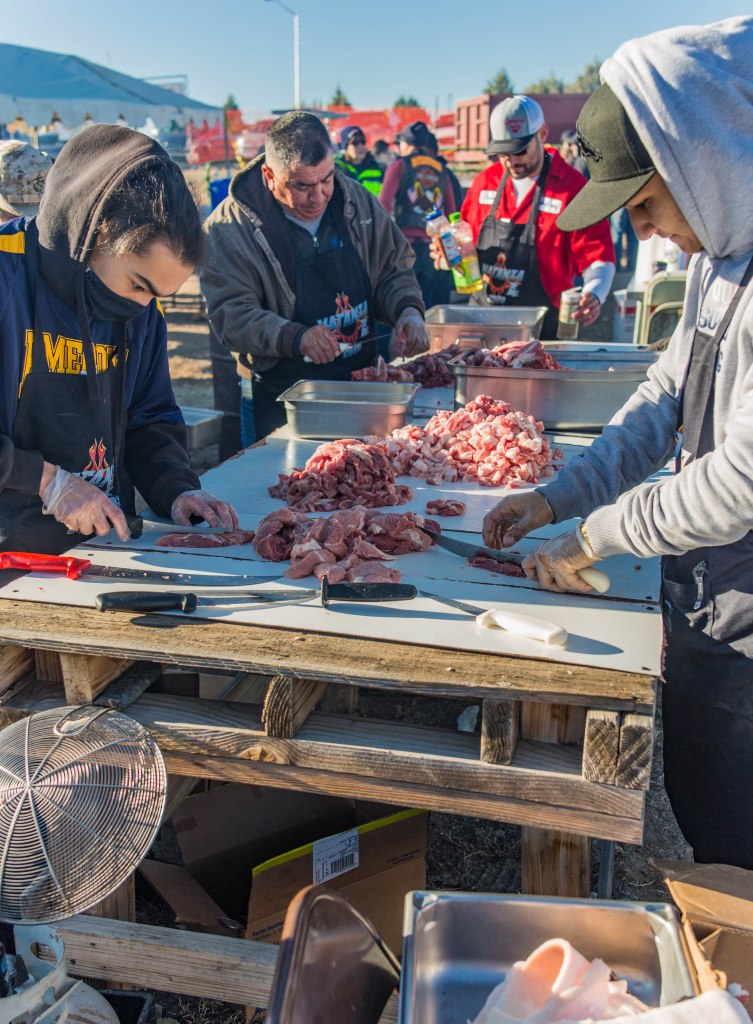
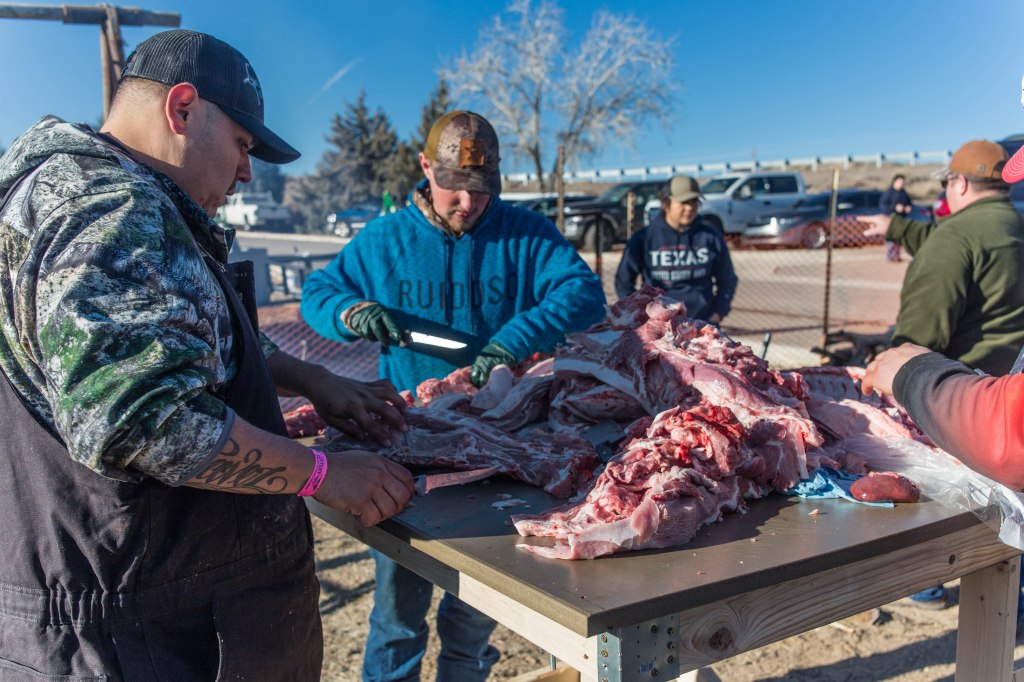
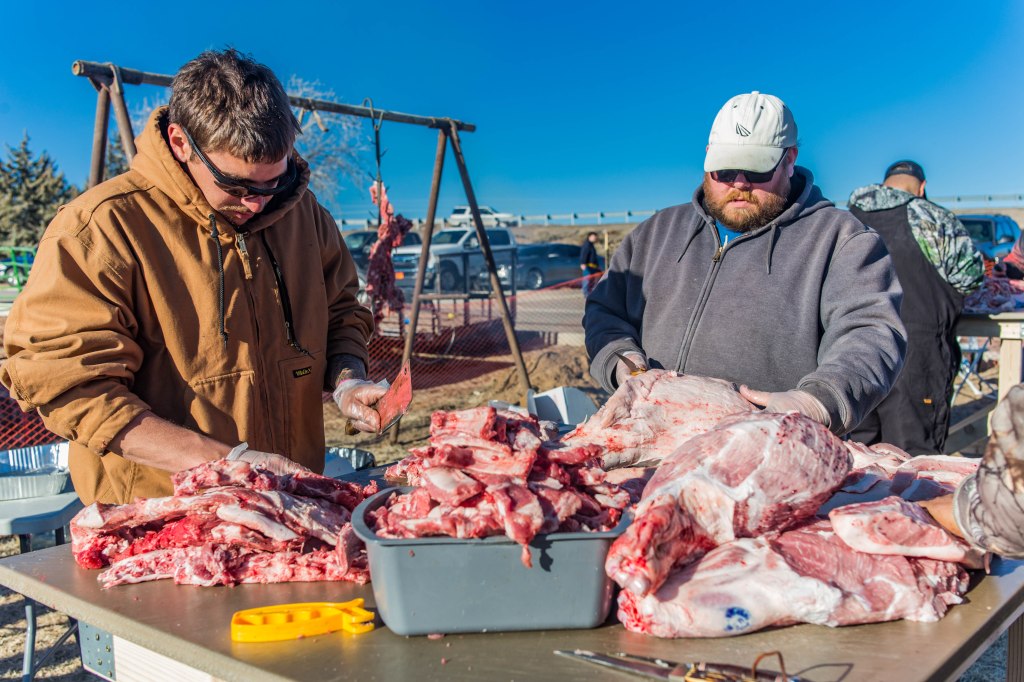
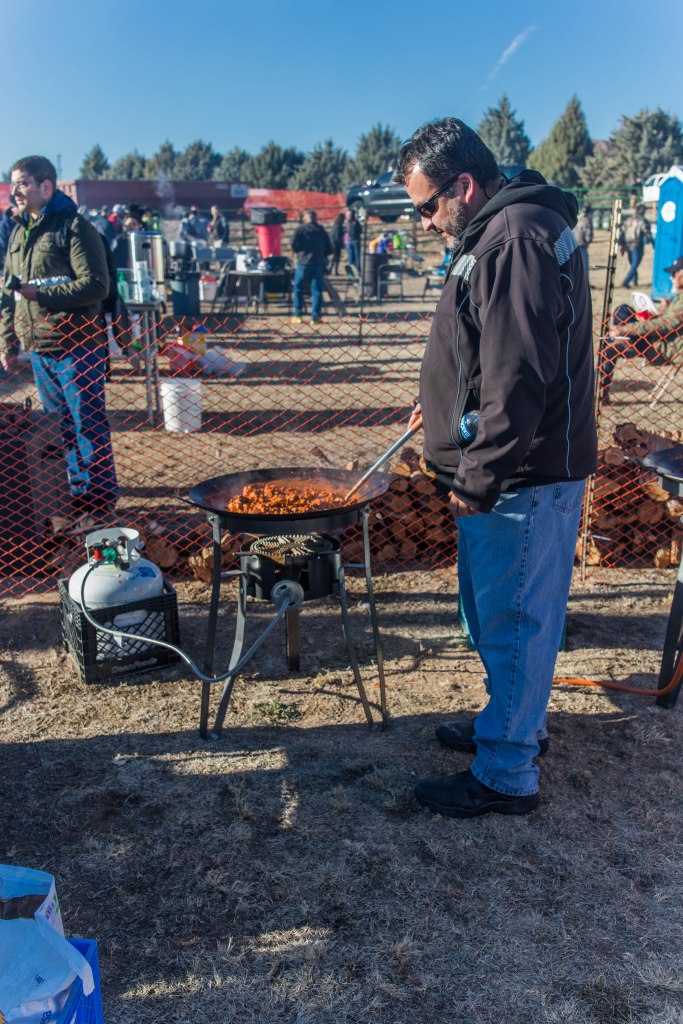
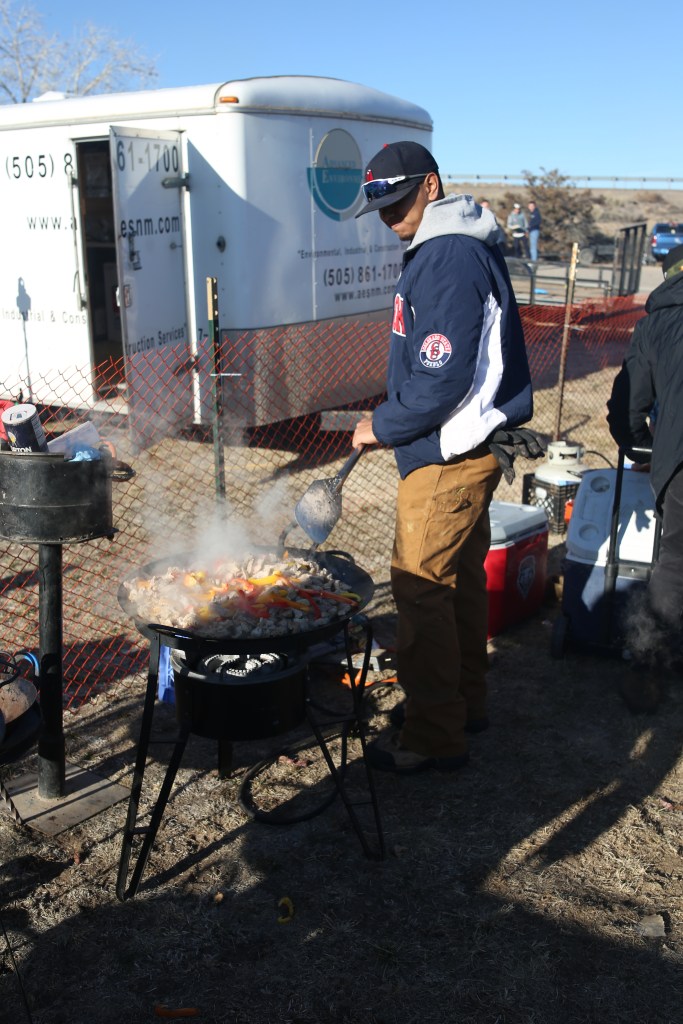
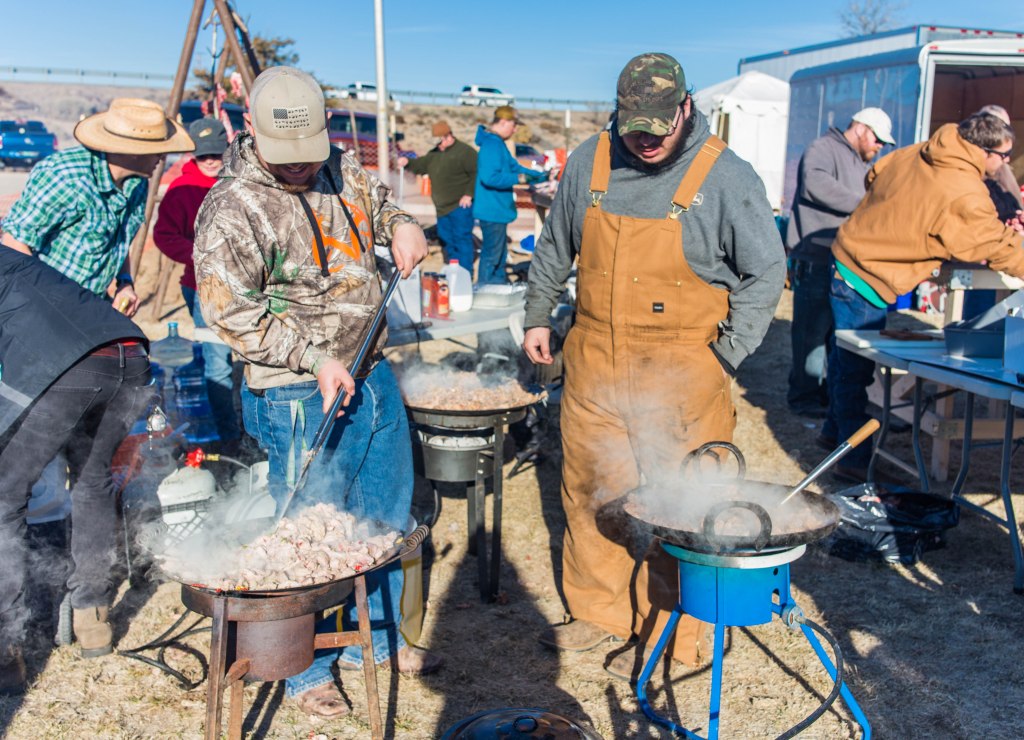
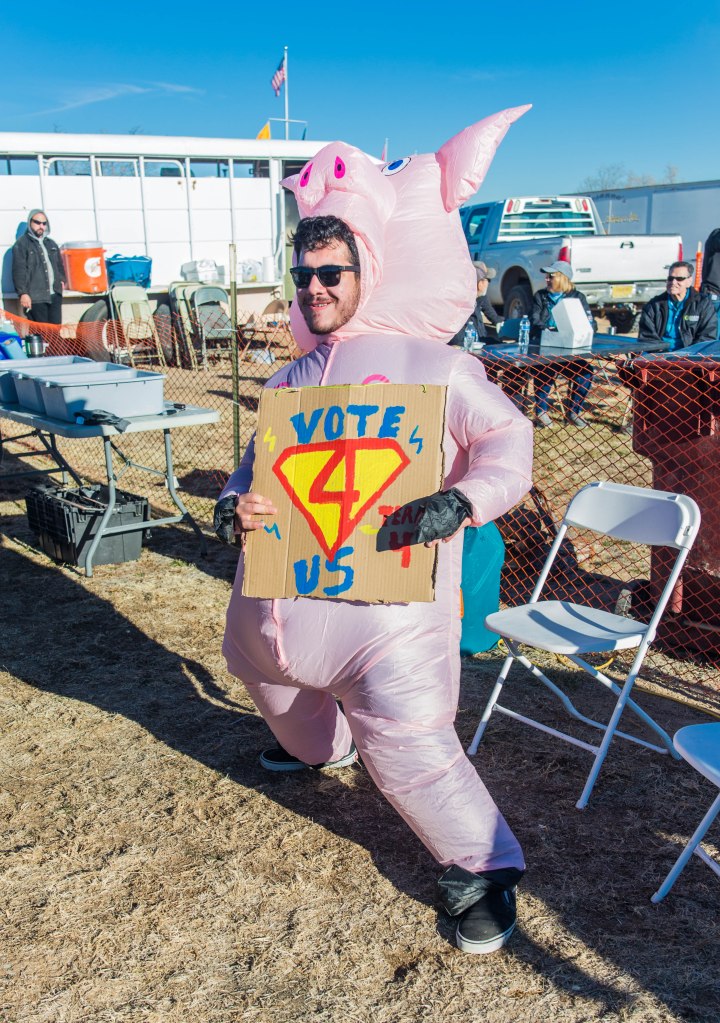
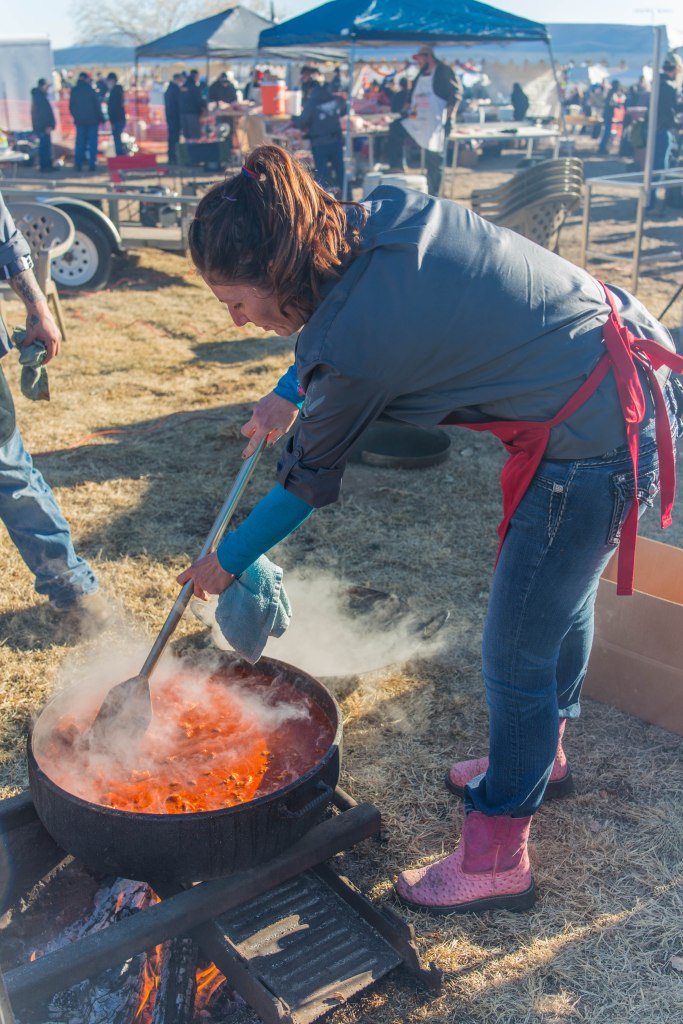
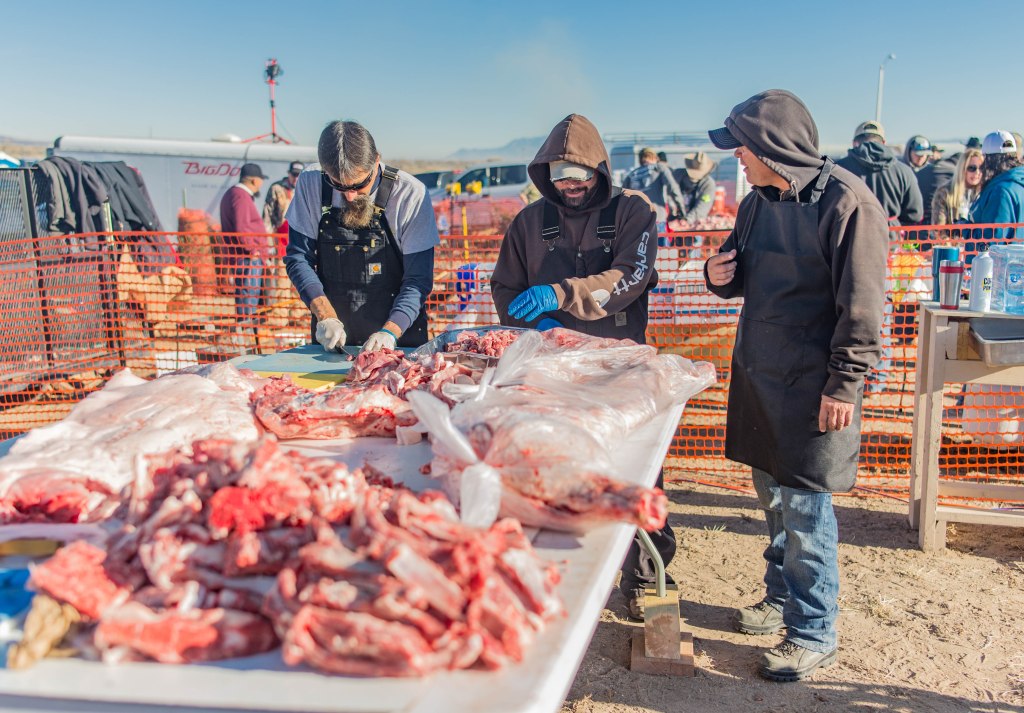
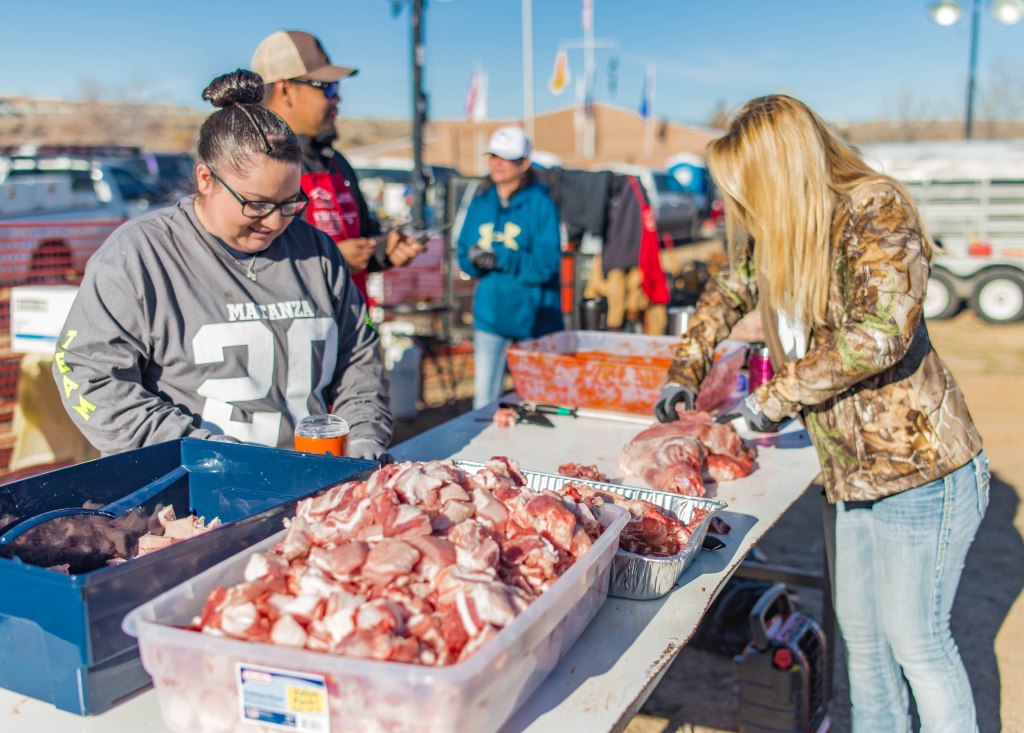
BELEN — The 20th annual World’s Largest Matanza opened its gates early Saturday morning to welcome its hungry patrons. The event, sponsored by the Hispano Chamber of Commerce of Valencia County, raises funds that will go towards scholarships for local high school and college students.

Bruce Gallegos and his team have been participating in the event for 19 years. His father is the one Gallegos credits for getting him involved with the event.

“My dad got a team together back in the day and we’ve been taking it over since he passed away in 2009,” Gallegos said. “This is in memory of Ray Gallegos.”

He noted the many people surrounding him who have donated their time, energy and resources to the team. “From one little grill to all of this,” Gallegos said. “We’ve come a long way. Our team has grown since the years have gone on.”

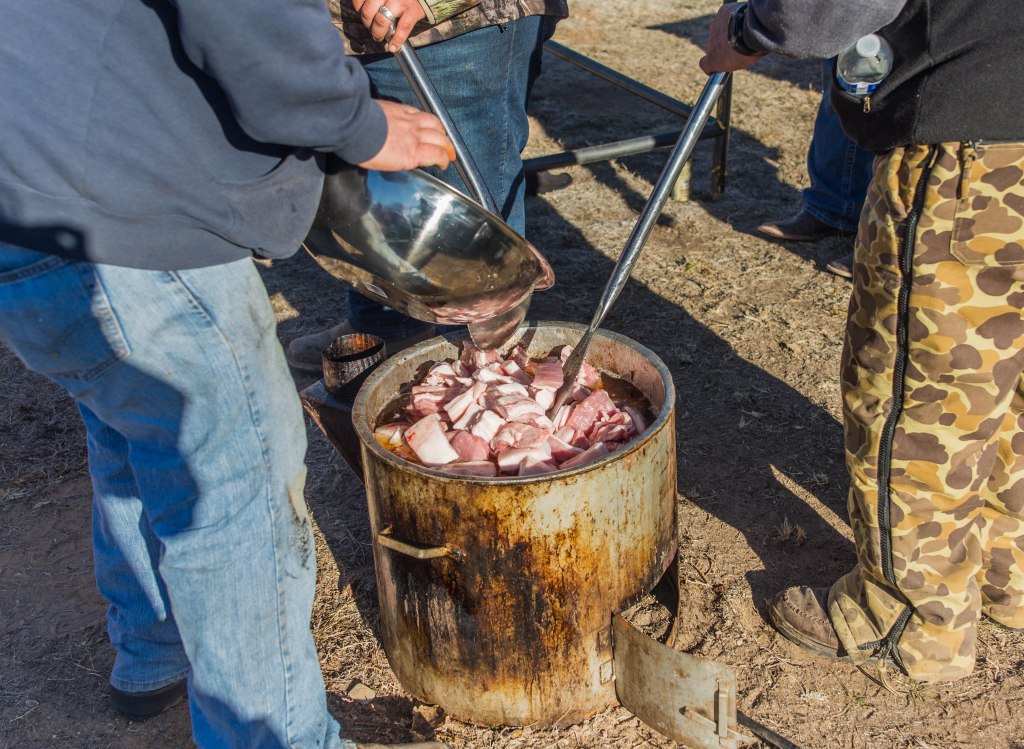
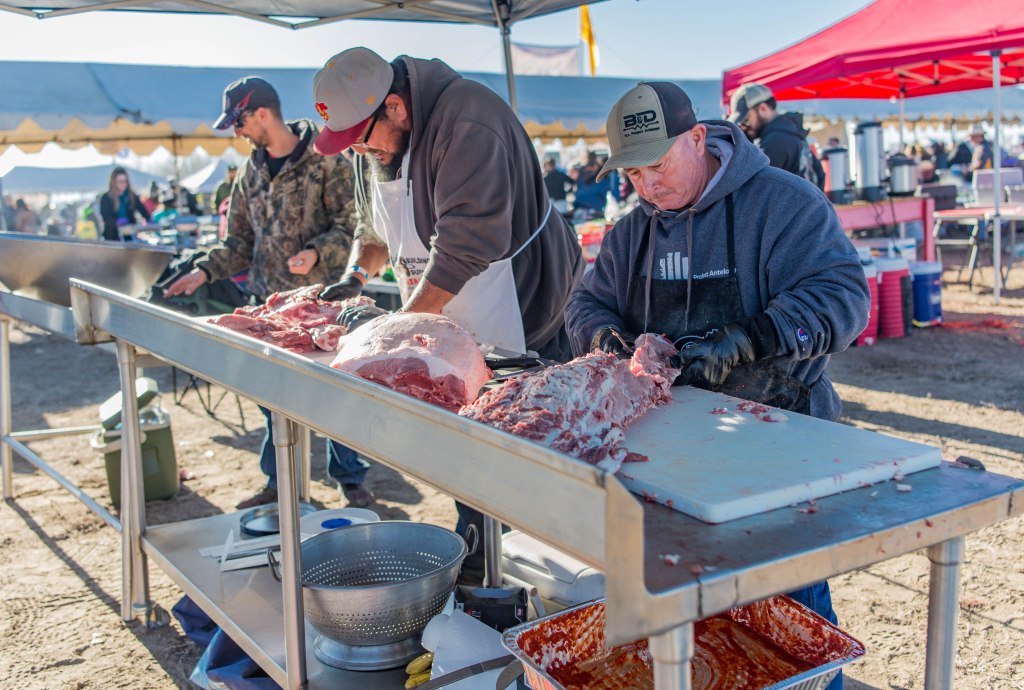
His team boasts being the only one to shave and kill the pig. Holding on to that cultural tradition is important to Gallegos.

His favorite part of the process is getting to see people that he hasn’t seen in a long time. “It’s like a reunion. Being here, surrounded by people who have volunteered so much of there time is my favorite part,” Gallegos said.

On the other side of the tents, 11,000 people, including spectators, teams, volunteers, sponsors and entertainers attended this year’s event — 1,000 more than last year.

Gerson Sanchez, a resident of Los Lunas, has attended the World’s Largest Matanza before, but back when it was held at the Sheriff’s Posse. This was the first time he and his wife had attended the event at Eagle Park.

He said this kind of event is important to celebrate in our community. “We’re losing some of our Hispanic traditions. We need something like this to celebrate our culture,” Sanchez said.

He hopes the future generation will keep this tradition alive and pass it down to the next. “I hope they learn how it is truly done and what goes on during a matanza. I hope the processes remain true to how they’ve been passed down to us,” Sanchez said.

The annual matanza attracts not only local Valencia County residents, but has also made a name for itself across the state.

Carlyle Bitsuy is an Albuquerque native but said he knew Belen was the place to be last Saturday because of the matanza. “When you visit Los Lunas, what do you do? You visit the Luna Mansion. When you visit Belen, you go to the World’s Largest Matanza,” Bitsuy said.

This was the first time in nine years that he has attended the event. He and his friends come because of the environment and getting to experience different styles of food.

“I told a bunch of people to come today. Growing up, it was one of the things I used to love coming to. It all comes down to a family tradition,” Bitsuy said.

Making a blended family work

Story by Anna Padilla, News-Bulletin Staff Writer

LOS LUNAS—After a Los Lunas family’s photo was featured in an article on Good Morning America’s website, their photo and unique story was shared across the country.

Kelsey Hanks posted the photos from her family’s photo shoot on Facebook in July, and it immediately drew attention.

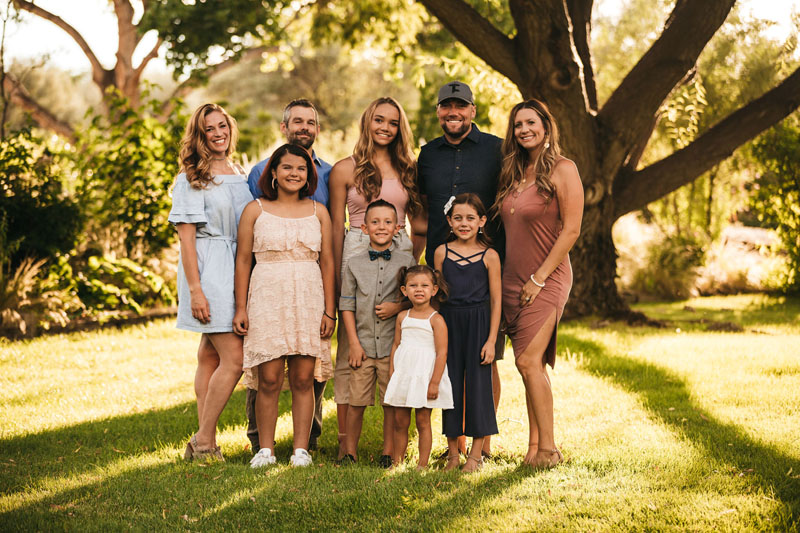
These photos weren’t conventional family photos, they were photos of two families joined together by one common factor — their daughter, Tayden.

Fourteen-year-old Tayden Hanks was not only the catalyst for the photo shoot, but is also the driving force behind the Hanks family and the Campanella family coming together.

Tayden’s blended family is comprised of her mother, Thalia Campanella; stepfather, Brandon Campanella; father, Tim Hanks; stepmother, Kelsey Hanks; and step siblings, Jaidaa Campanella, and Brooklyn, Austin and Peyton Hanks.

“I know it’s different for a lot of people … A lot of people don’t have both parents or they don’t even have at least two, and I have four of them,” Tayden said. “So I thought it was cool that we can do stuff like this. It’s a story for other people to know and hopefully inspire other people.”

Read on the Valencia County News-Bulletin’s website

The families can be spotted supporting Tayden at various sporting activities or enjoying special events together, though they admit it wasn’t always this easy for the families in the beginning.

“We started off like everyone else does,” Tim Hanks said. “There were emotions and a lot of holding on to the past. It took work to focus on the right things rather than the past.

“There’s a lot of compromising and compassion and moving forward to focus on Tayden. If she has birthday parties or graduation or someday her wedding, we wanted it to be at the point where she doesn’t have to worry about her family not being in the same room together,” he said. “We want her to know we’re going to get along.”

Three of Tayden’s parents came from divorced families so they all wanted to make the best of the situation for the sake of their children.

“We just wanted a big, happy family,” Thalia Campanella said. “You grow up and you want better for your kids. They are Tayden’s family, too; they’re important to her so they’re important to me. Anybody that’s her family is all of our family.”

Each of the parents emphasized the importance of communication, honesty and compromise to make sure Tayden is being raised in a healthy environment.

Thalia said when the siblings were younger they would trade last names and try to figure out how they could be part of everybody’s family.

“You look at the pictures and it’s hard to tell the work that’s been done up to this point,” Brandon Campanella said. “It was tough in the beginning. It took a lot of conversations, a lot of communicating, a lot of prayer and just understanding in the end it’s all about the kids.”

The family members themselves dealt with misconceptions about each other when they first came in to Tayden’s life.

“We could’ve started off on a better track, but it doesn’t have to be like that way because we’re all just people,” Thalia said. “We’re humans and we make mistakes and we have to work through things for the sake of the family.”

The families can be spotted supporting Tayden at various sporting activities or enjoying special events together.

When Tayden suggested they have a photo shoot with the entire family, Kelsey brought it up with the rest of the family and they happily agreed to do it.

“We only have her at home for four more years so we thought it’d be cool for her,” Kelsey said.

Kelsey set it up with the family and knew just who to talk to for the photography.

Local photographer Shae Prieskorn, of Shae’s Photography, met the family when she and Thalia worked together at The Branch in Los Lunas.

“I knew that Shae knew both families and that’s why I picked her — everyone felt more comfortable with Shae,” Kelsey said.

Prieskorn was thrilled they chose her to take their photos, and even more so that other families can see her photos and their story and be encouraged.

“I was really excited. I’ve actually always wanted to do their family photos with all of them,” Prieskorn said. “This family is such an inspiration. God has really blessed them with such a wonderful story and testimony.”

The idea that these photos and the story behind them would be featured on such a large scale never occurred to the family.

“I just wanted pictures to hang on my wall,” Tayden said with a chuckle.

A reporter from Good Morning America reached out to Kelsey to ask if she could write a story about their family, and they gladly accepted.

“This was so unexpected but cool. I know if I would’ve seen this when we first started trying to work things out as a big family, I would’ve been encouraged,” Kelsey said.

Although the attention from Good Morning America came as a shock to the family, they readily welcomed the opportunity to share their story to encourage other families.

Although this came as a shock to the family, they readily welcomed the opportunity to share their story to encourage other families.

“We hope to let people know that it can be done if you focus on the right things and put in the work. If you can do that, the kids will be in a much better situation.” Tim said.

The family is already seeing people they don’t even know commenting on the Facebook post to share kind comments or to share their story with other families in similar situations.

“We’ve seen people tag other people in our post that shares our story to encourage them,” Brandon said. “To know that other families are doing this too is neat.”

Each of the parents emphasized the importance of communication, honesty and compromise.

“We don’t always agree on the same things but we work it out,” Tim said. “We just want to make sure that Tayden gets raised the way she needs to be.

“So, hopefully, people can see that and use that and know we’re a real family with a lot of the same issues other families deal with.”

The future of flamenco in Albuquerque

By Anna Padilla and Andrea Solis


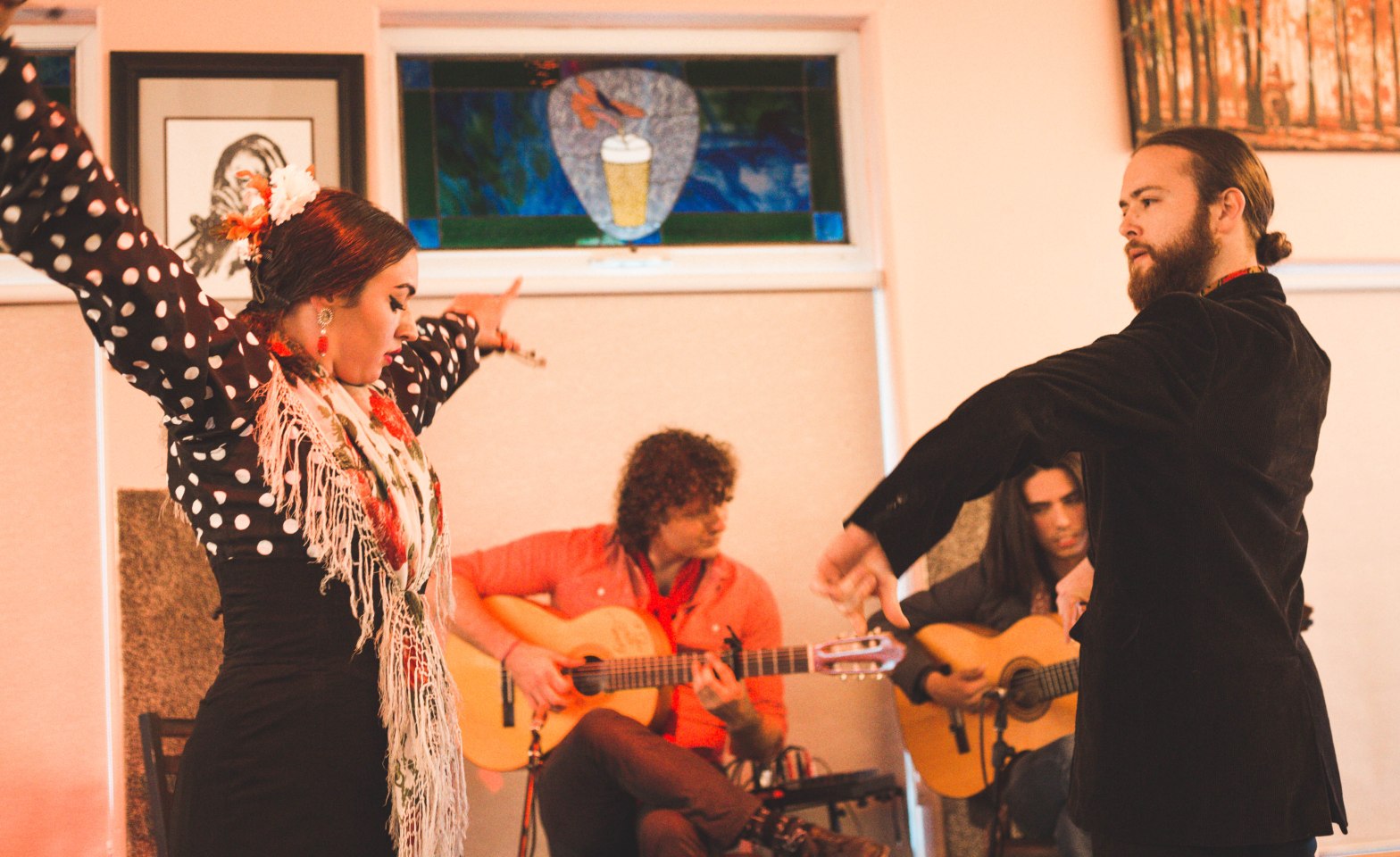
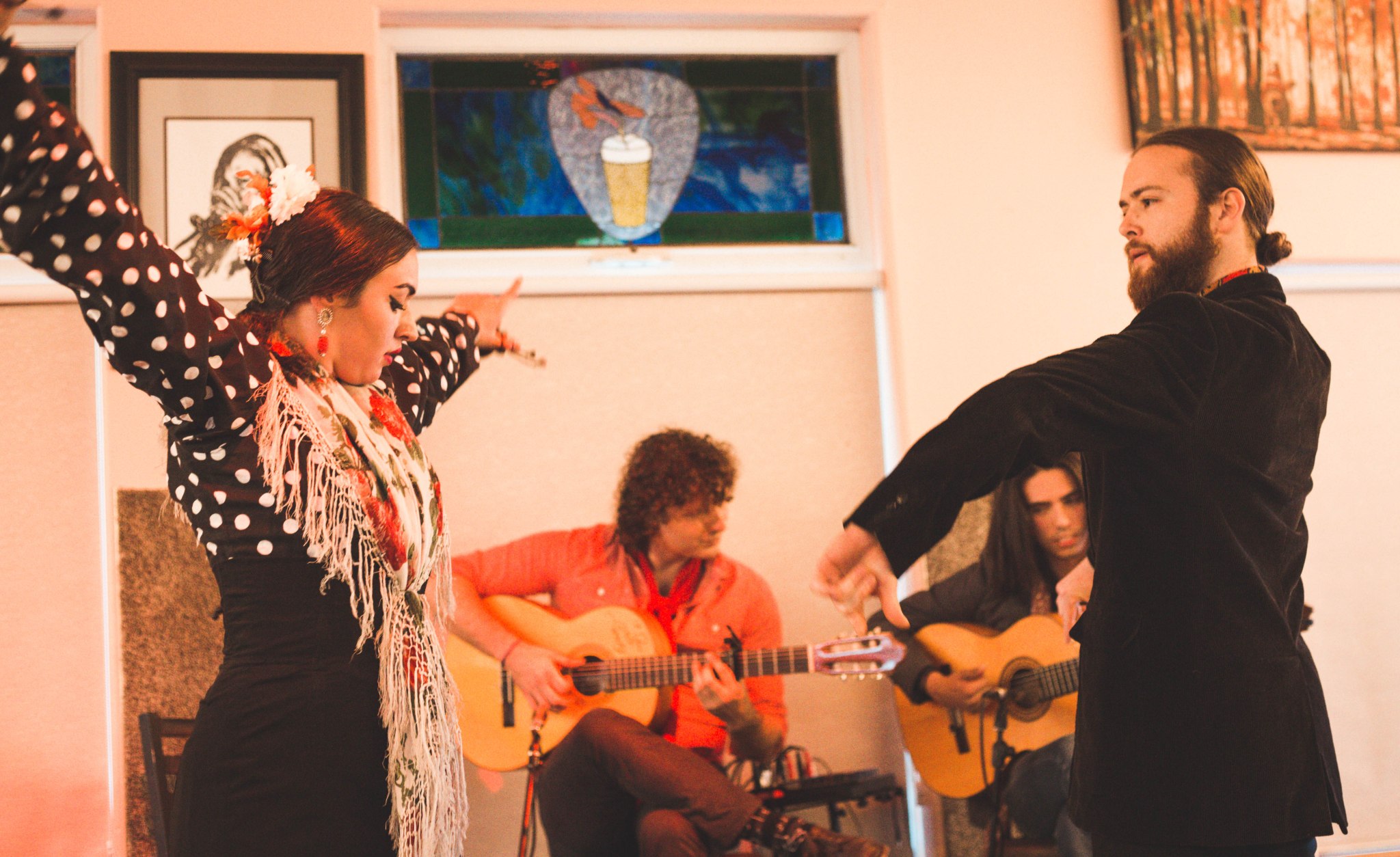
Albuquerque is at the heart of a flamenco community.

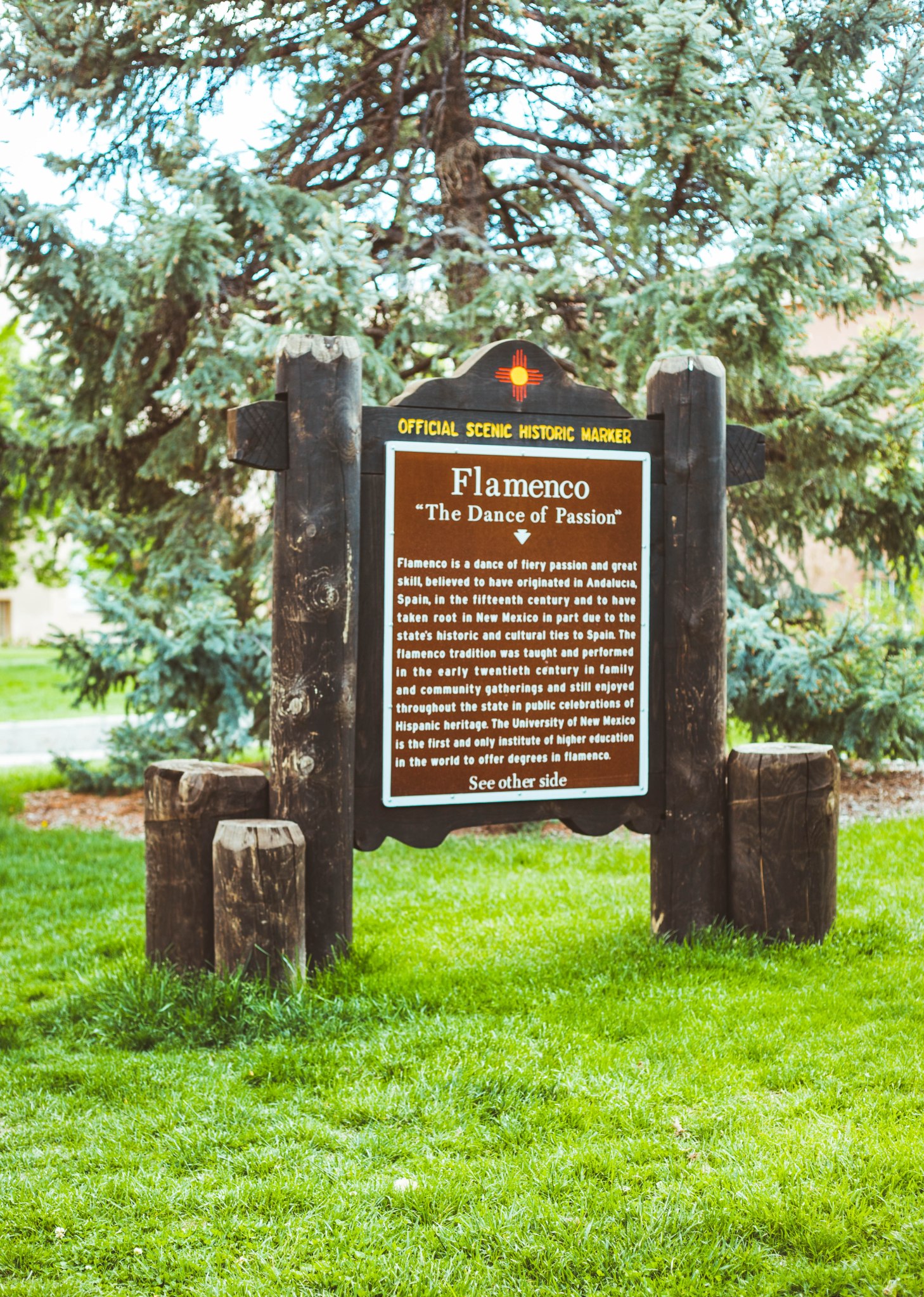
This is largely due to UNM having the only dance program with a focus on Flamenco dance and history. In recent years, the city has made strides to be more accommodating of this culture. There is now a charter school called Tierra Adentro that feeds into the flamenco program at UNM, which can feed into Yjastros, UNM’s resident dance company.


UNM alumna Sarah Hartshorn said that during her time as a flamenco critical studies graduate student at UNM there wasn’t a performance program for flamenco yet. Hartshorn chose to focus on researching how flamenco was being taught in the United States during her graduate studies. She went on to create the first research symposium within the Festival Flamenco as a way of bringing other people who were researching flamenco to Albuquerque. This became a road map for the historic side of the Flamenco program.

The Festival Flamenco is an annual event that brings dancers from all around the world to perform and hold workshops to educate the local dance students.

“There a lot of people that want to be a part of flamenco and research and learn about it, but maybe they don’t want to be full-time performers,” Hartshorn said. “You have to be able to have the people that can spend the time in the studio and you have to be able to have the people that can teach everybody about what they’re seeing on the stage… that can talk about it in an informed way so that you’re creating a whole environment of people that are educated.”

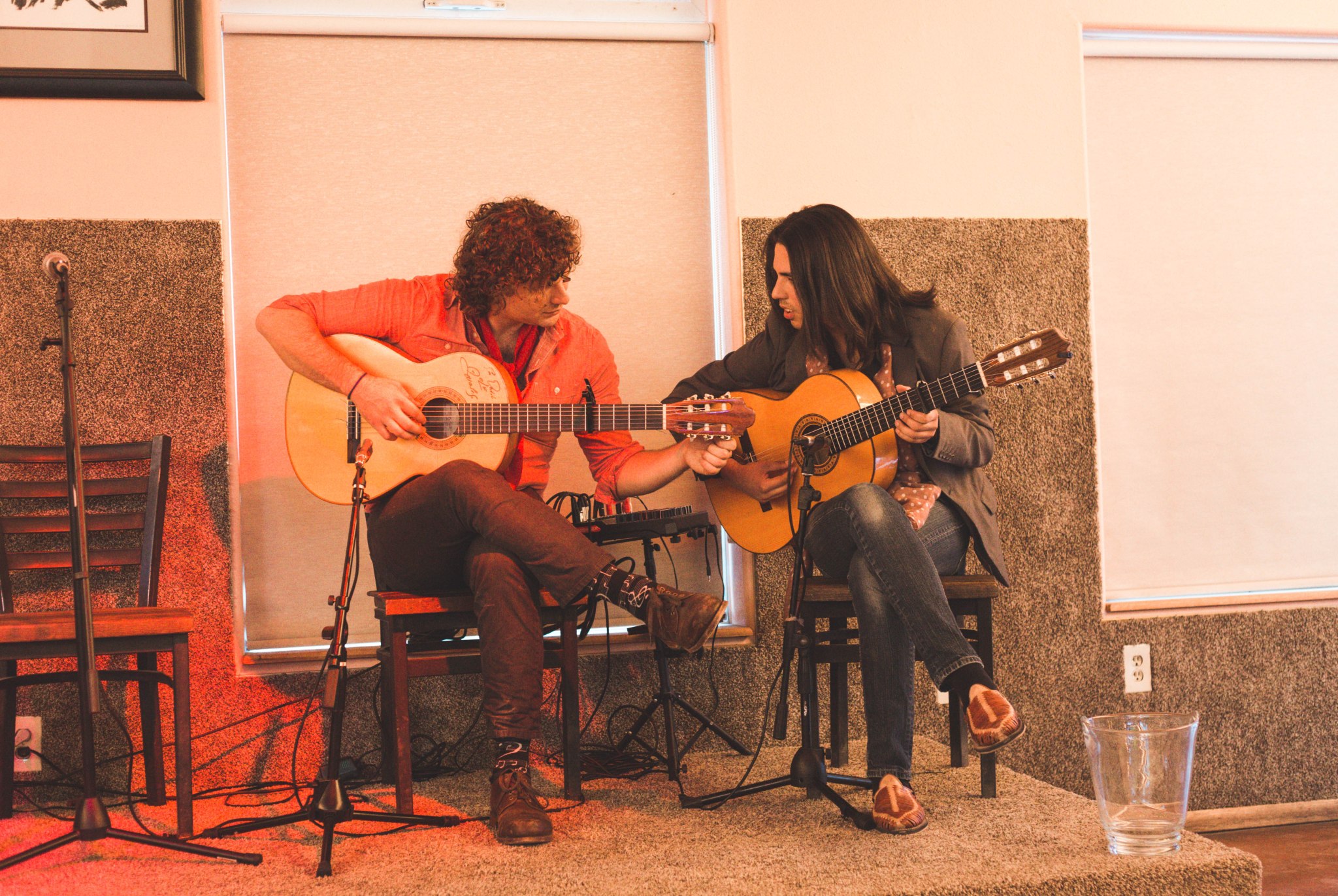
Hartshorn is currently a teacher at Tierra Adentro: The New Mexico School of Academics, Art and Artesanía (TANM), a school that allows students to study the arts in a rigorous curriculum of academics and performing arts. “Artesania” is spanish for “crafts”. This can include pottery, furniture making, sewing and costuming, and jewelry making. The art incorporates, “cante” meaning song, Spanish/flamenco guitar, cajon and castanets.

IMG_9953

According to their website, “The function of TANM is to ensure quality education for our children while facilitating a deep understanding and practical application of New Mexico’s cultural roots and traditions. We will succeed at addressing the critical need for generational continuity of New Mexican culture through academics, Spanish language, art and artesanía.”

The co-director of the school Veronica Torrez said that students begin building their foundation in flamenco from grades six through nine. In 10th grade, they choose a focus in art, artesania, music or dance. From then on, they do their academic work in the mornings and study their chosen focus in the afternoons.

“It’s kind of like we give them this big dance watering hole, and however much they want to drink out of it they are allowed to,” Torrez said.

IMG_0035

Starting in their junior year, the students have the opportunity to take dual credit classes at UNM. For flamenco-focused students, they take Intermediate Flamenco their first semester of dual credit.

Eva Encinias-Sandoval is the professor of flamenco at the University, as well as the founding director of the National Institute of Flamenco which often collaborates with UNM and TANM.

“Now what we’re finding is a lot of the kids a lot of the young people that are graduating from TANM are interested in coming to the University to get a degree in either dance or music,” Encinas-Sandoval said. “So that’s really nice because we’re seeing that full 360 idea of our early training in childhood starting to come back to the University. That’s another way I feel that the marriage between the non-profit and the institution of the University is really a win-win situation,” Encinas-Sandoval said.

IMG_0036

For 12th-grade TANM student Madison Olguin, being part of the flamenco program at UNM is the goal. She has done enough dual credit through her junior and senior years of high school that when she begins college, she will have almost all of her UNM core requisite classes completed.

“I had to go through the audition process my senior year,” Olguin said on auditioning for the flamenco program at UNM. “Usually you’re not supposed to do it until your sophomore year of college, but they’re like, ‘You’re in a place we think you’re ready to be in the program.’”

Olguin has been attending Tierra Adentro since 6th grade and has excelled through the flamenco-focused curriculum.

“Usually when you go into the flamenco program, you’re kind of in a beginning level and I feel like I’m just going to really be able to use the resources that are available and really grow as a dancer because I’ll just be focusing on dance,” Olguin said.


UNM Modern Dance professor Vladimir Reche spoke about how modern dance technique works with flamenco dance technique and vice versa.

“It is a pleasure for me to work with flamenco dancers. They have wonderful work ethics. Their musicality is exemplar. Their dedication and commitment unparalleled and they have a distinct sense of ground,” Reche said. “I believe that modern dance is very supportive towards the understanding of alignment outside of their main technique and dance form and demands distinct access to the movement and how it connects with the ground and gravity.”

UNM flamenco student Samantha Martinez said that her experience in the UNM dance program has deeply impacted her perspective.


“I really think if it weren’t for the dance program, my life wouldn’t be as rich as it is…” Samantha Martinez, flamenco student.

“Joining flamenco completely flipped my world around because now I’m all about it,” Martinez said. “I really think if it weren’t for the dance program, my life wouldn’t be as rich as it is… I just hope that people start to open their minds to the arts and to dance and to music and to movement and not see it as this leisurely thing, but to see it as a journey that will make you a more respectful person in the world.”

Martinez says that she spends approximately 10 hours a week rehearsing outside of class. She describes flamenco as an art form and lifestyle that demands respect and dedication.

Flamenco surfaced in Spain between the 9th and 14th Century during the Roma migration from India to Spain. Roma in spanish means “gitanos”, gypsies. The gypsies brought with them dance, song, and a variety of instruments including wooden castanets. When having encountered the Sephardic Jews and the Moors, flamenco was then born. The gypsies were considered low class and un-educated, their dance and song became a voice for them, a way of expression.

IMG_9951

Flamenco is not all passion and fire– these terms used often when articles are written– but rather it is a symbol of strength and endurance. Through every movement, you can feel the power of generations emanating through the body if the dancer, it can be painful and also show beauty. This is only a part of Flamenco.

“Through the years flamenco has really developed an important place in the University community and in the community at large,” Eva Encinias-Sandoval said.


Anna Padilla and Andrea Solis are reporters for the NM News Port — contact on Twitter @AnnaLPadilla and @drearooo

ABQ Street Meet fosters local talents

By Anna Padilla


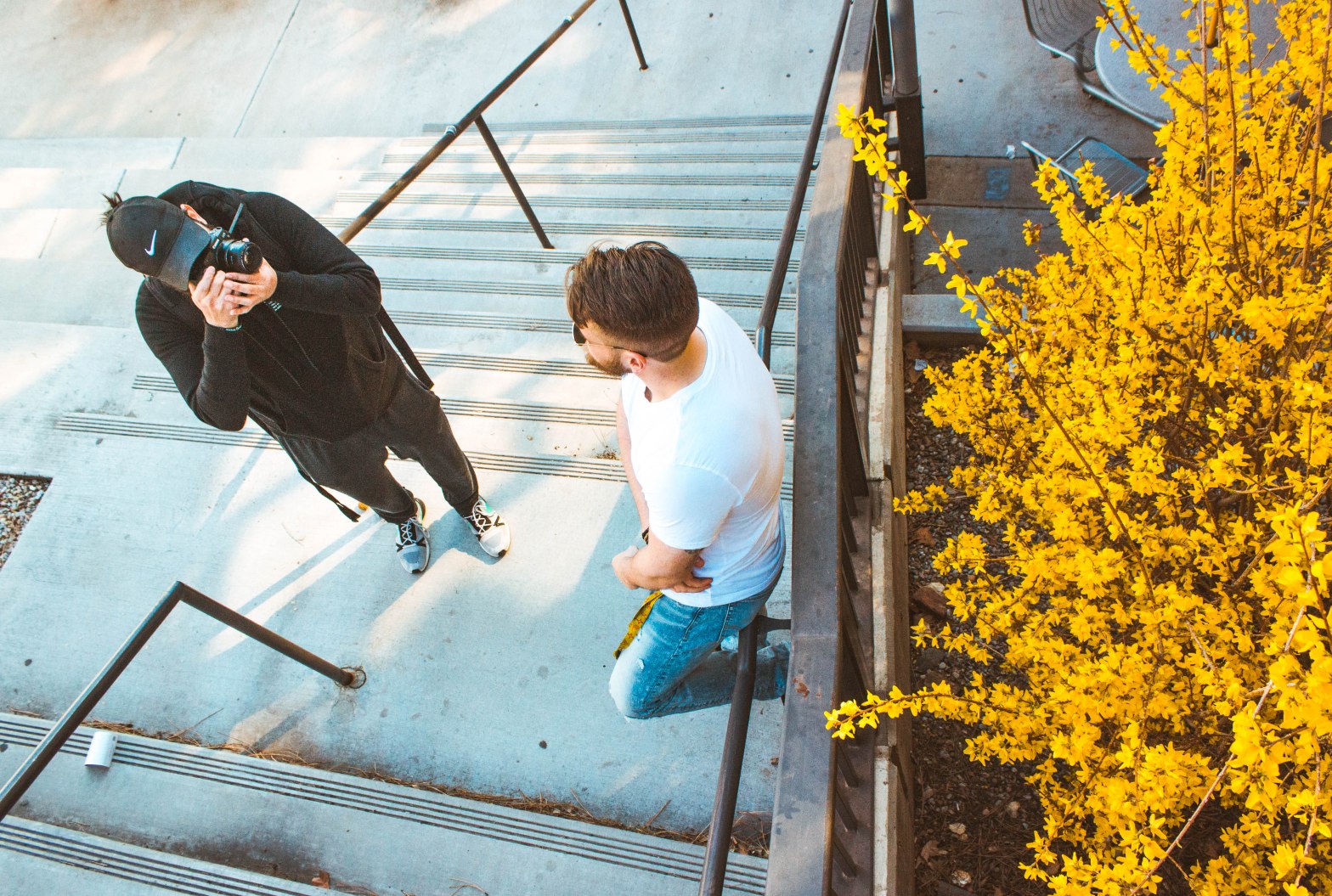
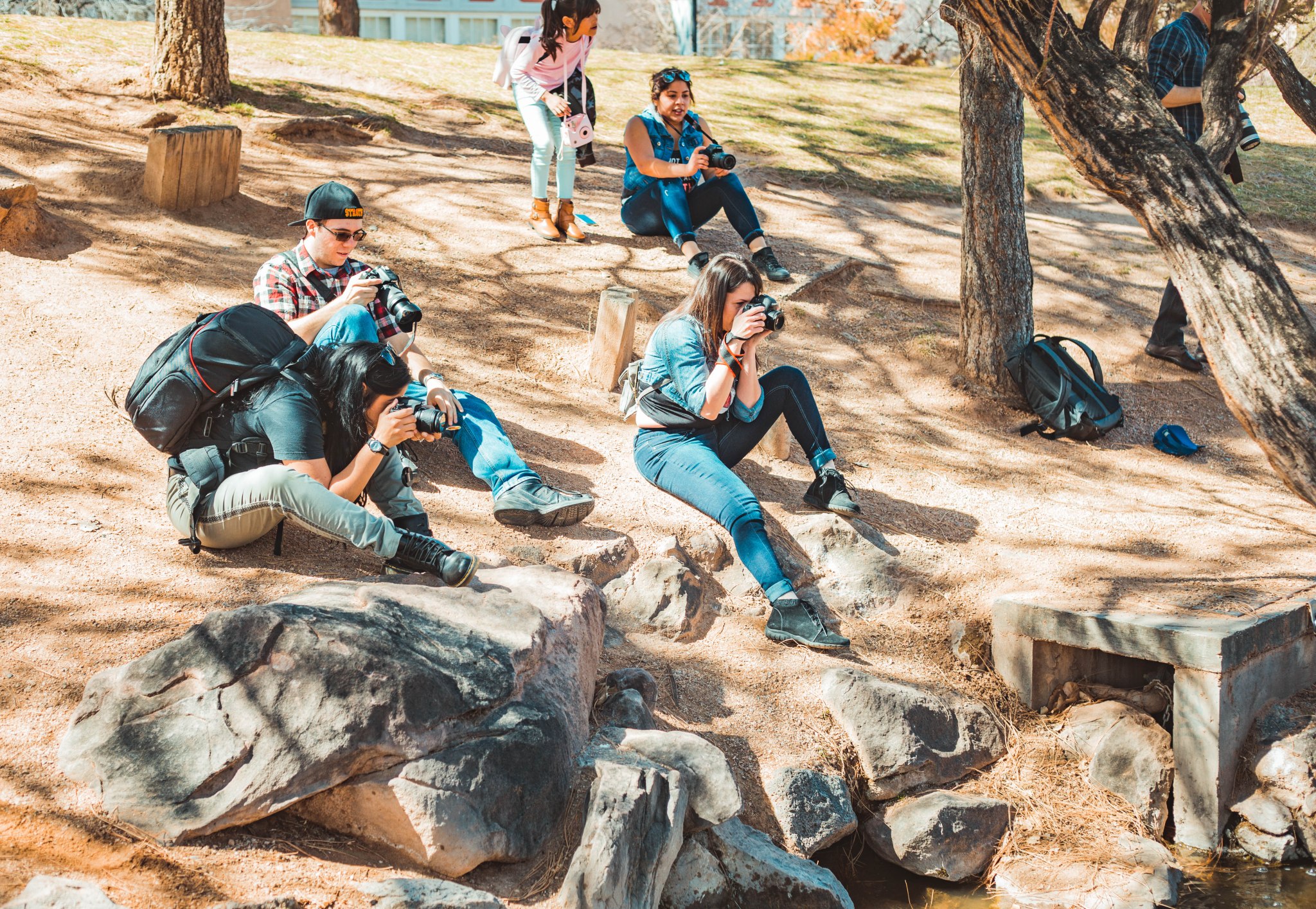
Albuquerque creatives gathered at UNM in March for the seventh installment of the ABQ Street Meets. The pop-up gatherings consist of local photographers, models, makeup artists and videographers looking to collaborate with each other to add to their portfolios, meet people with similar interests, or to simply learn through experience.

Evan Pierce became involved with the event as he was beginning his photography career. He heard about it through a classmate and volunteered to help in an attempt to expand his skills.

“Albuquerque Street Meet is very based on Instagram and on building your following

for business,” Pierce said. “The whole goal was to network and grow your following in order for you to professionalize yourself.”

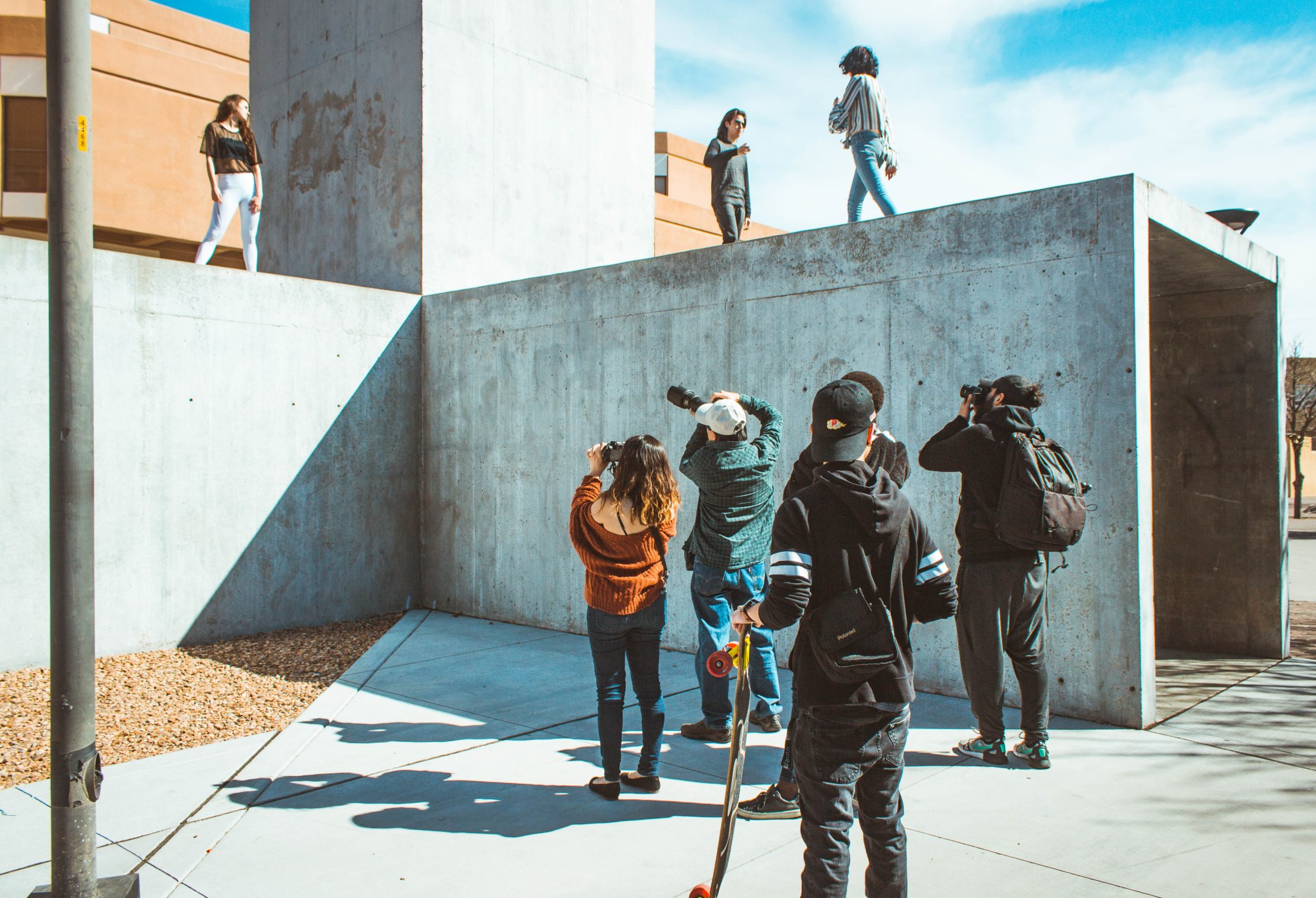
On a sunny day during UNM’s spring break, photographers of varying ages and backgrounds gathered around the “Center of the Universe” sculpture near the campus duck pond. Three models climbed to the top of the structure and posed. Ten feet away, another photographer waited to take a photo, as a makeup artist fixed a strand of hair on cosplay model.

IMG_9331

Inside the Center of the Universe, voices echoed as a photographer explained to new photographers about what lighting was most flattering for the model and why.

Megan Kamauoha is the driving force behind the event. The Interdisciplinary Film and Digital Media student said that when she first began photography. She didn’t encounter many people in Albuquerque that were willing to educate her, apparently for fear of losing business.

“There’s no reason why there’s not enough jobs to go around. Maybe because we’re smaller and people are afraid of things getting overused. Honestly, the competitiveness here doesn’t quite make sense to me,” Kamauoha said.

Kamauoha decided that she wanted to create a safe environment for artists to learn and collaborate, and created the ABQ Street Meet with the help of her friends. (Listen here for more about the inception of the Meet and its purpose.)

IMG_0836

The first of the meets was on June 1 last year, and drew some 100 attendees. Since then, there have been six other events with attendance spanning between 50 to 250 people. According to the page’s Instagram Insights, the main age demographic reached is 18-24 year olds in Albuquerque. The page itself currently has 1,651 followers, although that number is known to fluctuate often.

Because of the rapid growth in event attendance, the hosts have created a Patreon page to raise money and alleviate some of the costs to hold the event, predominantly insurance and printing promotional material.

“The funds go to us hosting,” said Kamauoha. “Because our events have too many attendants… they need us to carry insurance. A day of insurance casts about $180 for us.”
The events spotlight featured artists and rely on rotating hosts. A featured artist applicant will submit some of their photos for promotional content to be advertised in the days leading up to the Street Meet. A co-host of the event will help plan for the upcoming event, organize locations and helps hold workshops to educate newcomers.

Evan Pierce, who participated in the first ABQ Street Meet was a featured photographer and co-host. He said that one of the things that makes the event successful is because it benefits everyone involved.

“The networking was definitely interesting. With every Meet you meet a lot of people and get a ton of experience with working with different modes of photography because there’s such a wide range of people that comes to these meets.”
After the participants have had time to edit their photographs and videos, they are posted on the artist’s personal page using tags that link to the the ABQ Street Meet page. The administrators of the page (the co-hosts) pick their favorites and share the photos from the event on the Street Meet Instagram page.

IMG_0838

Kamauoha said all ages are welcome to join the community.

“I got to talk to an 11 year old,” Kamauoha said. “His dad had messaged the page on Instagram and asked if it’s kid friendly. He said ‘My son’s 11 and has his own camera and is trying to shoot.’ And I’m like, bring him. He is not less-than anybody who’s there, he has as much of a right to be there as anyone else.”
Pierce said he is hopeful about the event’s impact on the local photography community.

“Albuquerque geographically is very spread out and there’s not necessarily a big culture of collaboration already, that I’ve seen. I think this event is definitely a step in the direction of getting people to work with each other,” said Pierce.
 

You can follow Anna on Twitter @AnnaLPadilla

You can also read the article on the News Port website.

Albuquerque’s brewing a gourmet coffee community

Albuquerque’s Brewing a Gourmet Coffee Community

By Anna Padilla

Albuquerque is witnessing the beginnings of a “third wave” coffee movement. New coffee entrepreneurs say they are elevating the local coffee experience with single source beans, in house roasting and other approaches that set their shops apart.

The first wave of coffee centered around the accessibility of homemade coffee. Think supermarket ground coffee for your home drip machine. First wave coffee was simply for convenience.

IMG_0100

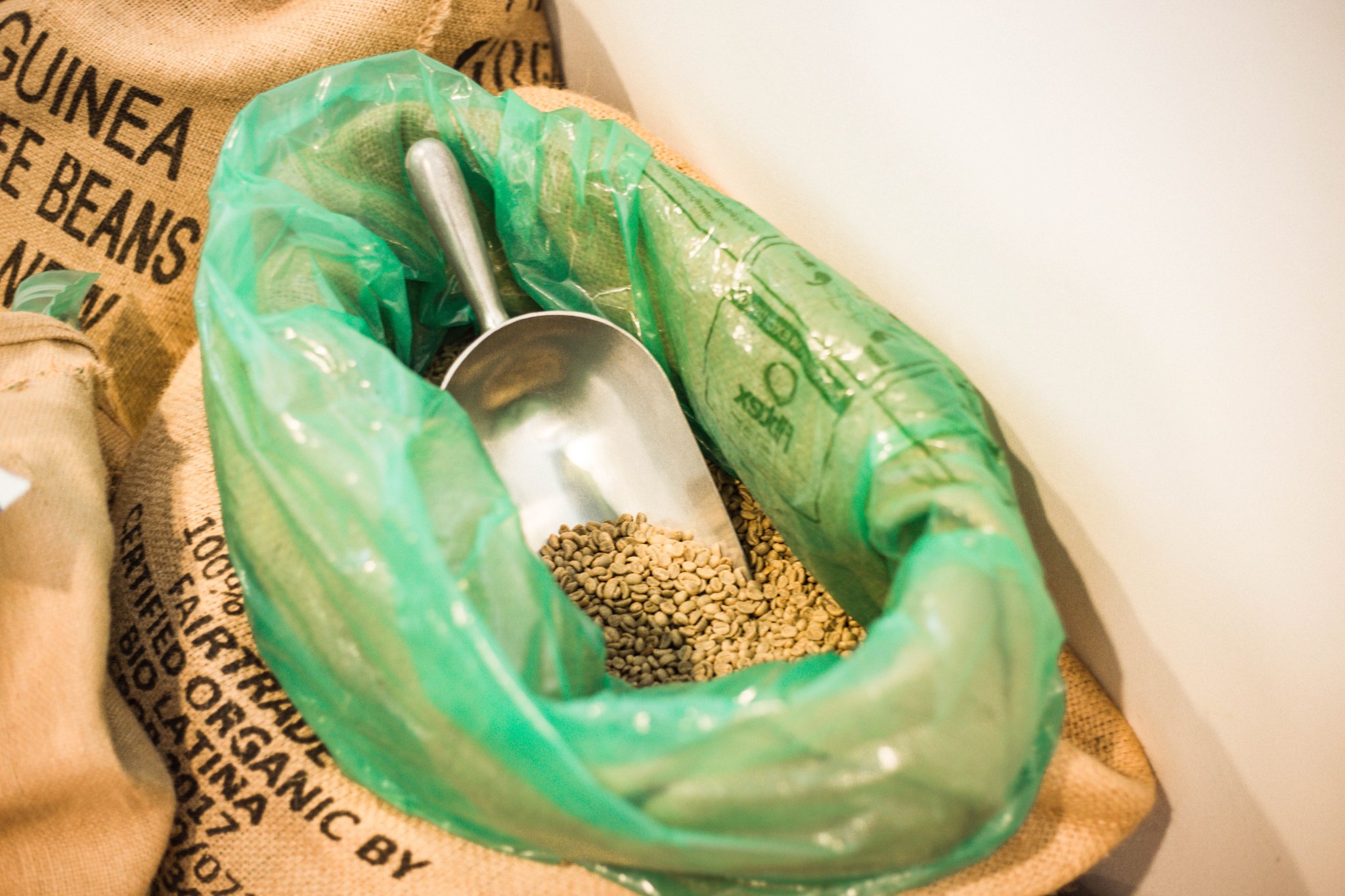
Coffee beans before they are roasted are often referred to as “green beans”. Photo by Anna Padilla/ New Mexico News Port

Albuquerque’s Little Bear Coffee roaster James Reimann describes second wave coffee as “fast food coffee.”

“In my mind, we aren’t competitors with Starbucks, McDonalds is competitors with Starbucks. It’s fast-food service, and they just so happen to be selling coffee,” Reimann said.

IMG_0717

Albuquerque is witnessing the beginnings of a “third wave” coffee movement. Photo by Anna Padilla/ New Mexico News Port

Starbucks is a recurring target for third wave coffee promoters like Solomon’s Porch coffee roaster Christian Andrioli.

“Starbucks is the epitome of second wave. They dark roast their beans, they have really fruity drinks, and they’re probably the only coffee shops in town that have a Frappuccino,” Andrioli said.

Third wave coffee is a movement that attracts coffee aficionados, who appreciate coffee as an artisan drink, much like how wine is held to a higher culinary standard.

Grey Smith, owner and coffee roaster of Prismatic Coffee, says third wave coffee can be loosely defined as controlling every step of the process — from the growing of the beans to the delivery of the brewed cup.

“It starts before the roasting process even occurs,” Smith said. “The ability to directly source coffee from a farm. It gives us a lot of control over what the final product is going to be.”

The coffee vendors contacted for this story all say they support ethical farming and labor practices. The buzz surrounding specialty coffee shops buying from ethically sourced farms began with Fair Trade Coffee.

 Coffee roasting companies search for coffee farmers to match their level of detail-oriented work.

“These aren’t just labor workers– they’re professional farmers, botanists, horticulturists,” Smith said.

“There’s science involved. People really analyze these crops down to the genetics of the plants.”

“It starts before the roasting process even occurs. The ability to directly source coffee from a farm. It gives us a lot of control over what the final product is going to be” — Grey Smith, owner, Prismatic Coffee

“The way I would define somebody who is a third wave roasting company is a company that purchases exclusively specialty-grade coffee,” Smith said.

To Smith’s knowledge, Prismatic Coffee and Little Bear Coffee are the only shops that roast exclusively specialty-grade coffee in Albuquerque .

Reiman said some coffee shop owners might fear calling themselves third wave coffee shops because it could exclude potential customers who just want a simple cup of coffee.

Another barrier local vendors might face is the investment in expensive roasting equipment required to roast your beans in-house. That, and gambling on finding a more discerning market, can be a hindrance to local owners considering the third wave option..

The advantages however, seem to outweigh the disadvantages in the eyes of some local shops.

“We use the best equipment in the industry,” Smith said. “We brew everything to the highest standard of quality, with our focus being on the root-coffee beverage tasting as good as it can.”

Andrioli says that Albuquerque still has room to grow before the city can accommodate a true third wave coffee community.

“I think as roasters we’ve seen that Albuquerque isn’t really ready for that scene yet. There isn’t as big of a market here as there is in LA or Portland. It definitely is growing and being cultivated though,” Andrioli said.

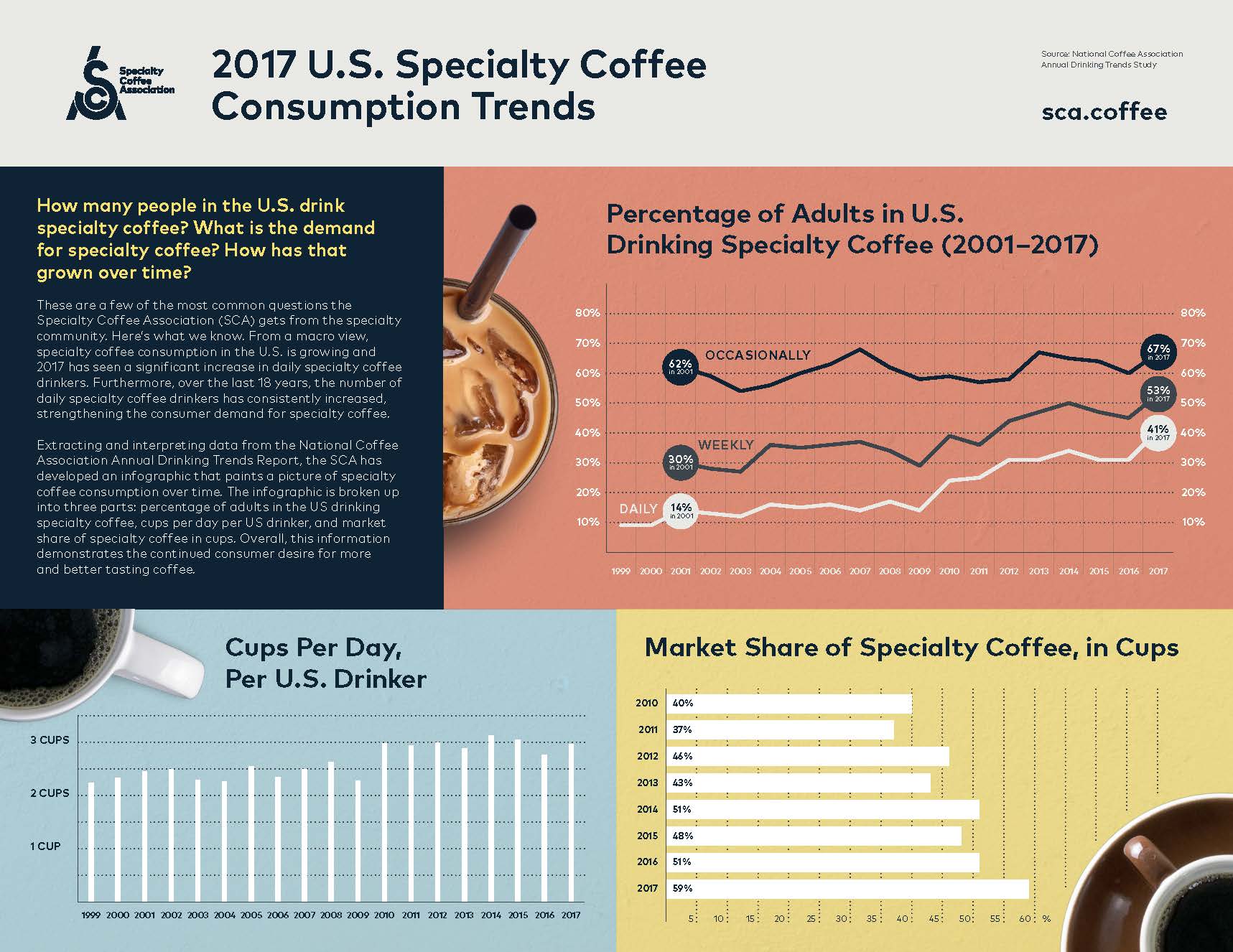
According to the 2017 U.S. Specialty Coffee Consumption Trends report, the percentage of adults drinking specialty coffee has increased consistently over the years starting from 2001.

SCA_Consumption_US_Letter_V2

According to the 2017 U.S. Specialty Coffee Consumption Trends report, the percentage of adults drinking specialty coffee has increased consistently over the years starting from 2001.

“It’s always going to be this generational division between the ages,” Andrioli said. “I think what needs to happen is the city needs to build itself up because then the market is going to be there. There’s always going to be that market, it’s just in small quantities here right now.”

Smith says that there is a lot to be said about simply keeping an open mind about this new wave of coffee.

“A lot of people who come from the more subjective side of the coffee industry approach us with skepticism and maybe commit to drinking coffee at the specialty grade usually never go back to a commodity coffee,” Smith said. “It’s just one of those things that you don’t really realize what you’re tolerating until you don’t have to tolerate it anymore.”

Reimann believes it starts with the establishment.

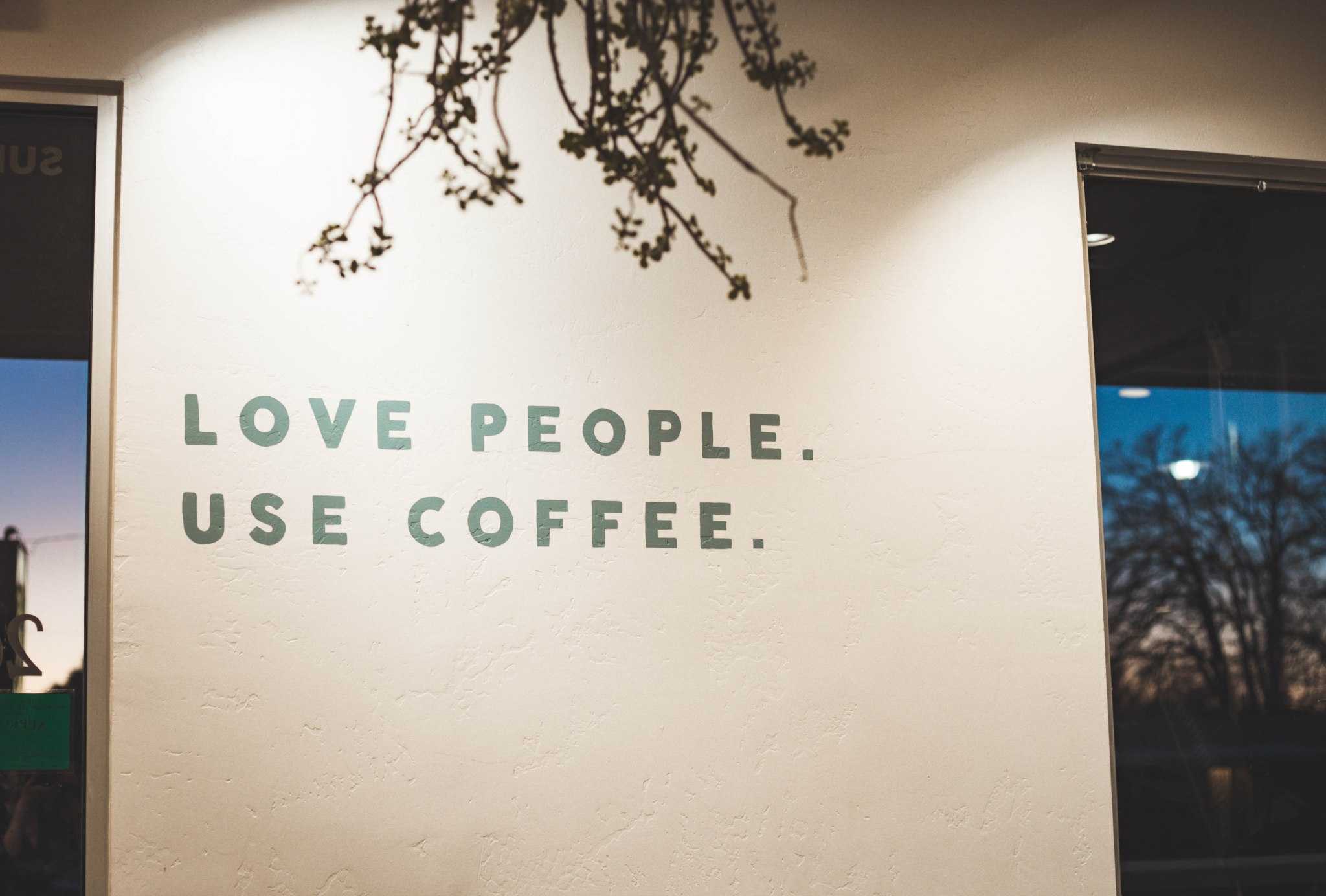
“I think whoever is working behind the bar, it’s their job to make people feel welcome. It’s written on our wall, ‘Love People, Use Coffee’. That’s what we’re here to do,” Reimann said.

IMG_0150

“I think whoever is working behind the bar, it’s their job to make people feel welcome. It’s written on our wall, ‘Love People, Use Coffee’. That’s what we’re here to do,” Reimann said. Photo by Anna Padilla/ New Mexico News Port

“Rather than feeling like we’re just a business, we want to be friends with the people who walk through the door,” Reimann said. “We want it to be a community, and anything we can do to build that community, we’re trying to do.”


You can follow Anna Padilla on Twitter @AnnaLPadilla

You can also read this story on the NM News Port website.

How the remnants of a campaign turned into community outreach

For most political candidates, the end of a campaign is the end of the line. For Albuquerque native Gus Pedrotty, 23, the end of his 2017 mayoral campaign was the beginning of a greater community conversation.

“I mostly took away that communities feel disempowered by government because we believe we don’t know enough, and that’s because the information isn’t easily accessible,” Pedrotty said.

Though Pedrotty didn’t win the election, there were still some important things he and his team learned through the experience and took to heart.

“It was just a group of friends and I who were really learning how to apply our education that we were getting at UNM and looking at our community, talking about lived experience and what it meant to be involved in conversations related to services that we’re closest to,” Pedrotty said.

He describes campaigning as something he and his team were unprepared for initially, but they pushed through it and eventually found their way because they believed their lived experiences made them qualified to run.

“We also really pushed back on the idea that no one really understands what good experience for government is. It’s either you’ve been in government before, or you’re a business person. And neither one of those things I think really resonate with people,” Pedrotty said.

After the campaign, Pedrotty’s team got together for a post-mortem. He says as the get-together was ending someone asked a question.

“Now that we know what we know, do you think we’ll ever be brave enough to do it again?”

No one walked away from that question. This was the inception of Qworks.

Qworks Volunteers

Qworks is entirely volunteer-run by locals who serve as content creators for the video series, 60 Second City. /Photo Courtesy of Qworks/
“Qworks is an authentic attempt to return campaign resources into communities. It’s a page that goes over how the city works. Where anyone can show up and contribute and make content that explains what something is in the city, how it structurally works, and if you’re interested, how you can get involved,” Pedrotty said.

Qworks exists exclusively on social media, predominantly Facebook because the platform allows for conversations in the comment section. After the election, the social media accounts that were previously used for Pedrotty’s campaign were then transformed into the Qworks pages.

The group is entirely volunteer driven. Currently, the team is focusing its efforts on a video series called 60 Second City. Each video project focuses on one topic, and is usually related to a city service that community members might not know about. Each video is 60 seconds long and runs in a three-part series per topic.

There are teams for each project that are made up of between six to thirteen people. Those who wish to be content creators can write the script, research the information and are then paired with a videography team.

Josh Romero, who filmed the videos released on social media for Pedrotty’s campaign, is also an active member of Qworks.

“The best thing we could see out of Qworks is knowing that it has enabled people to play an active role in their city government in whatever capacity that is,” Romero said. “It’s to give people a platform either to share their knowledge, or to empower people to actually make change in their city by having the knowledge to know what to do.”

As for Pedrotty’s future in politics, he doesn’t know if he’ll run again but he will remain active in Albuquerque.

“I will be involved with politics in my community as far as it’s involved with making sure information is accessible, making sure people feel supported if they choose to run or understand they are already at a space where they can run,” Pedrotty said.

“Politics shouldn’t be about parties, it shouldn’t be about campaigns,” Pedrotty said. “It should be about communities effectively communicating  to create the environments they want.”


Anna Padilla is a reporter for New Mexico News Port. She can be contacted on Twitter @AnnaLPadilla.

You can also read the article at the News Port website.

New Mexico Residents Move Forward In Renewable Energy

Read it on NM News Port

By Andrea Solis and Anna Padilla / NM News Port

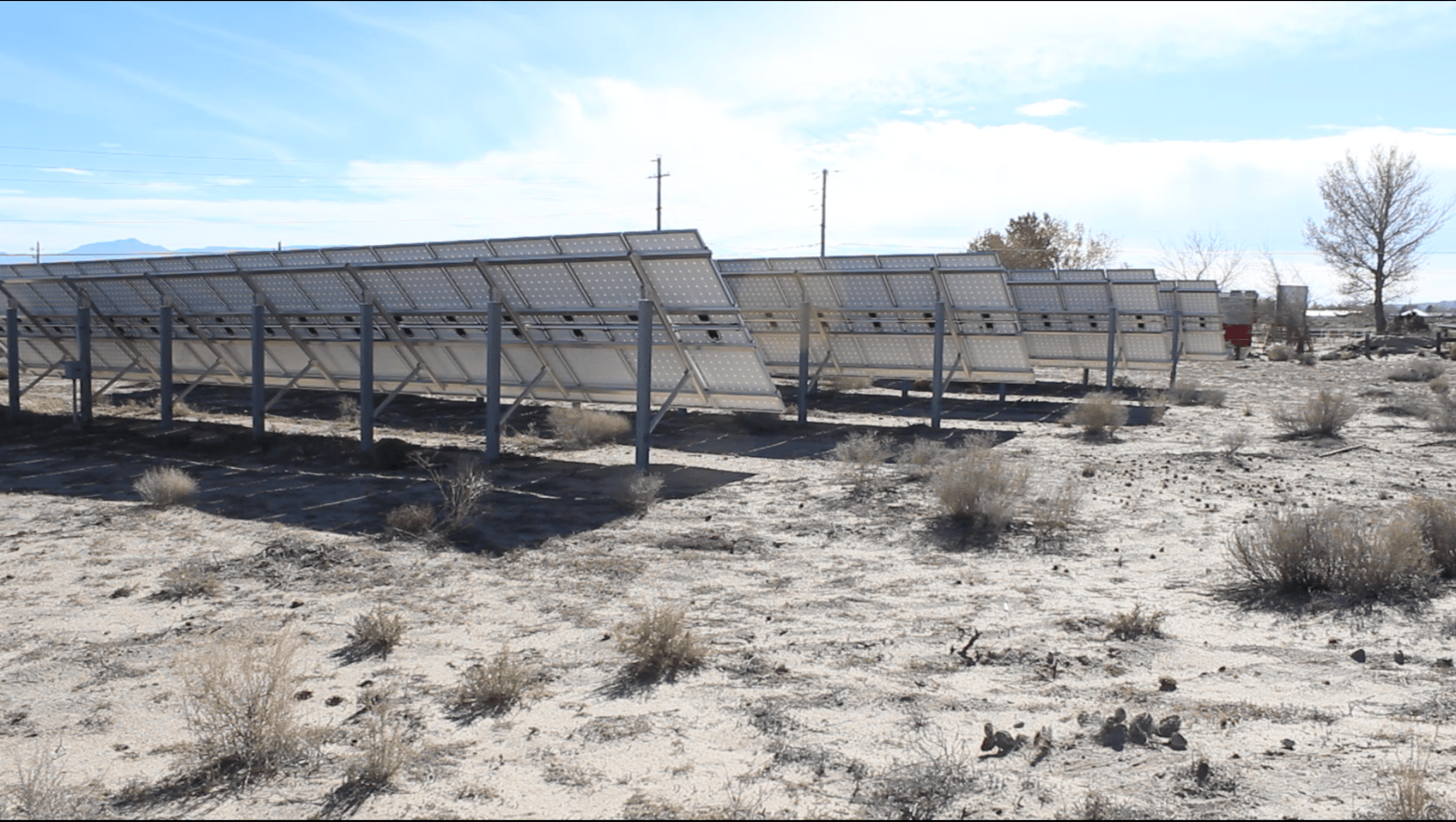
Dale and Diantha Schreffler have invested approximately $40 thousand dollars in solar energy. It took a loan for them to buy the 24 panels for their house, located in Tijeras, New Mexico. But, since getting their panels. they no longer have an electric bill. In fact, the electric company, PNM, gives them a check each month for the extra energy they feed back into the power grid.

If the state’s new governor has her way, there may soon be more people like the Schreffler’s in New Mexico. Governor-elect Michelle Lujan Grisham has promised to make renewable energy a top priority in her administration — a rather sharp pivot compared to the outgoing governor.

Outgoing Republican Governor Susana Martinez notably refused to sign a bill to renew a state tax credit for residents that invested in solar power.

“For the past 10 years, New Mexico has fallen behind,” said Athena Christodoullou, president of The New Mexico Solar Energy Association (NMSEA).

NMSEA has been around since 1972, promoting clean, renewable energy and sustainability in New Mexico. Their main focus is to advocate, educate and empower New Mexicans while supporting the solar industry.

According to The National Solar Energy Industries Association, New Mexico now ranks 16th in the nation for solar energy.

Gov. Martinez’s current renewable energy policy states that investor-owned utilities are to supply 20 percent of electricity from renewable energy by 2020 and rural electric cooperatives to source 10 percent. (About 80 percent of the state’s renewable energy comes from wind and the rest is solar and hydropower.)

In June 2006, under Democratic Governor Bill Richardson, the Solar Market Development Income Tax Credit was passed giving New Mexico residents who invest in solar power a tax credit. The incentive program expired in 2016 when Gov. Martinez rejected a bill to renew it.

That year saw the highest number of new solar installations., The New Mexico Energy, Minerals, and Natural Resources Department approved 441 solar panel projects in Bernalillo County alone. The sum of system dollars spent by owners almost doubled from 2014 to 2016.

Since the tax credit had been taken away, there was a 14 percent decrease in solar jobs according to a report from The Solar Foundation, a nonprofit organization that tracks the solar industry in the United States.

With her proposal titled Clean Power Clean Future New Mexico will become a leader in renewable energy, according to Governor-elect Lujan-Grisham:  

By 2040, renewable energy will overtake coal as a global source of power, a track that will force the U.S. to make changes to its energy sector. As PNM and other energy providers move away from coal generation, we need a comprehensive strategy… “

“This means we aren’t banging our heads against the wall anymore,” Christodoullou said. “The state has an abundance of sun and wind. These untapped resources are not being used,”

According to a 2018 report from the Solar Energy Industries Association there are currently 752.68 MW of solar installed throughout New Mexico. Approximately 200,000 homes are powered by solar energy with 4.34 percent of the state’s electricity coming from solar. The state has invested approximately $1.6 million dollars in solar alone, and the price for solar has gone down by 47 percent over the last five years.

The state’s largest electric monopoly, PNM, is also indicating its support of a renewed tax credit to boost residential solar.

“PNM is constantly looking to increase their Renewable Portfolio Standard,” said Alaric Babej, technical program manager for renewable energy at PNM. “I know last year there was a 10 percent state incentive tax credit, that was turned down by Governor Martinez, we are expecting that to go back into the statehouse this (coming) year — probably to be signed.”

“We are expecting more interconnections (to be installed), which is really a good thing for my group,” Babej said. “We’ll be very busy.”

The prospects for solar under Governor-elect Lujan Grisham are being greeted happily by the 60+ solar-related companies in New Mexico.

Troy McGee is executive director of the The NM Solar Group, an Albuquerque-based employee-owned company. He says local companies need a champion in Santa Fe.

“The biggest problem New Mexico and the nation has about renewable energies is awareness,” McGee said. “In my opinion, it’s not the money, it’s not the return on investment, it’s not that the technology is lacking, it’s an awareness problem that dwarfs all the other problems.”

The policy that Governor-elect Lujan Grisham could make New Mexico a leader in renewable energy.

“I think that the adaptation of solar and renewable energy is really going to have to be a coordinated effort with utilities, homeowners, (and) businesses to decide together, ‘hey, this is something that matters to us’,” Komnick said.

She said leadership by Governor-elect Lujan Grisham could make New Mexico a leader in renewable energy.

“It’s not so much the energy itself but does the economy matter to you — and the fact that New Mexico has the ability to be number one,” Komnick said.