Festival celebrates “New Hollywood” by highlighting local Latino filmmakers

by: Anna Padilla

ALBUQUERQUE, N.M. (KRQE) – Albuquerque’s premier Latino film festival kicks off this weekend for its ninth year. Cine Magnifico is hosting a hybrid event with events and screenings both in-person and online.

The festival will show 20 films that are New Mexico premieres, all of which are directed by Latino filmmakers. According to their website, the festival prides itself on its mission to raise awareness of the Latino culture.

Instituto Cervantes de Albuquerque, which oversees the festival, offers Spanish courses, courses on art and culture, business, teacher training and more from within the National Hispanic Cultural Center. Silvia Rodríguez Grijalba, executive director of the Institute, said they’re focusing on the local film industry this year calling New Mexico the “New Hollywood.”

The festival will host panels with local and international Latino and Hispanic filmmakers in the industry. “We thought it was more interesting if it is online because then everyone could see it. That’s a way of promoting Albuquerque all over the world,” said Rodríguez Grijalba.

Films from numerous other Spanish-speaking countries will be shown in addition to four films produced by Albuquerque filmmakers. Besties, Happy Anniversary, Millennium Bugs, and Scary Finger are films made in New Mexico that features local talent.

Read on KRQE’s website

Happy Anniversary Director DeAngelo Bethea said he was on a mission to create meaningful cinema. “It’s important that the Albuquerque community supports and highlights our local Latino/Hispanic filmmakers because our voice is uniquely different. The stories that we have to tell, as Latinos, are what make our Hispanic heritage so unbelievably poetic,” Bethea said. “As a Latino, I say, this is our time to shine. American-based Latino filmmakers and actors have become outspoken advocates for the need of inclusion and opportunity. Whether it’s in front of the camera or behind the scenes, Latinos are paving the way for filmmakers and others who are fighting to be heard, seen, and understood.”

Christina Gopal served as her crew’s executive producer on Besties, a short film centered on a group of teenagers coming of age in the modern world. She said she is proud to be a part of something so integral to the community. “As a female Hispanic filmmaker, I think it’s perfect. I’m glad that they’re able to bring films and showcase them here because they’re not only promoting us Hispanic filmmakers but they’re also showing the world what we have to offer as filmmakers,” Gopal said.

Alejandro Montoya Marin is no stranger to filmmaking and has been doing it for 10 years in Albuquerque. For his feature-length film Millennium Bugs, which centers on a group of friends in the days leading up to the year 2000, Montoya Marin wanted to capture the authenticity of the Duke City.

“I love working with local talent. I love working and highlighting everything that’s local because I feel with the expansion of all the companies coming to Albuquerque. It’s crucial to keep some sort of authenticity and local ability in all the productions that are done to show others about Albuquerque so it’s something that people from other places can take and learn and get familiar with,” Montoya Marin said.

Films will play at the Guild Cinema in Nob Hill. For a full list of virtual and in-person events and films, visit cinemegnifico.com.
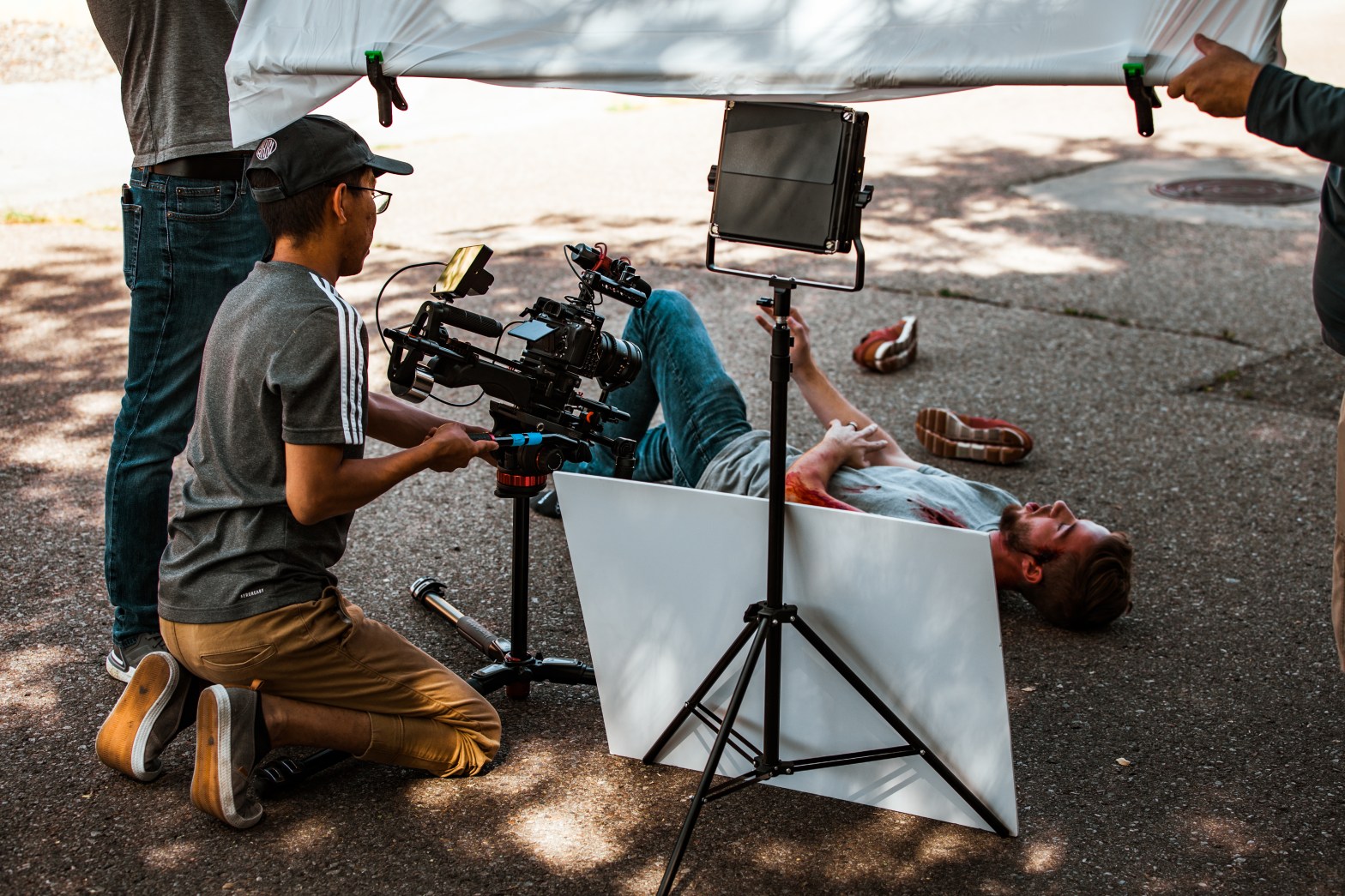
Film workers across state prepare for potential nationwide, historic strike

by: Anna Padilla

NEW MEXICO (KRQE) – The union representing the majority of film workers across the country including hundreds in New Mexico may take the first steps towards a potentially historic strike this weekend. The International Alliance of Theatrical Stage Employees (IATSE) has been in negotiations with entertainment producers over working conditions, wages, and work hours, however, neither side has been able to come to an agreement.

IATSE represents “below the line workers” on a film set – those who don’t fall under the categories of actors, directors, writers, or producers. They’ve been negotiating for months to update their contract with the Alliance of Motion Picture and Television Producers (AMPTP,) which represents major production companies like Walt Disney, Paramount, Universal, Sony and more.

In late September, IATSE announced negotiations had stalled and it would be taking steps towards authorizing a strike. If at least 75% of union members vote for authorization, a strike wouldn’t necessarily happen immediately. Union representatives could first go back to negotiate with the AMPTP, using evidence of the vote. If they feel their proposals are still not being met, union leadership would then have the power to enact a strike.

Read on KRQE’s website

The AMPTP has made few public statements about the situation. In a tweet posted Friday, IATSE said it had not heard from the organization in 11 days. The press release section of AMPTP’s website hasn’t been updated since 2017. AMPTP does not have a representative available for contact in New Mexico.

Liz Pecos, the president of the New Mexico IATSE Local 480 chapter, said the situation is directly affecting entertainment productions in New Mexico. “All of these companies that you’re used to seeing productions in the theaters, television, streaming content, they have refused to meet our basic needs. They’ve refused to acknowledge what we’re asking for, very reasonable proposals,” Pecos said.

Ryan Halsey is the co-owner of Serious Grippage and Light Co. and has 15-years of experience working in the New Mexico film industry. He believes the issues many film workers are now facing stem from work-culture cultivated as far back as World War I.

“By in large, a lot of people that work in film, it’s seen as you having to be ‘tough as nails,’ you have to be extremely hardworking, you don’t complain. You have to be the good soldier,” Halsey said. “But it is a business, and it is a professional industry. Unlike most professional industries, ours isn’t held to a lot of the same standards that others are.”

Halsey likened the intensive and repetitive work hours to what workers experience in industries like healthcare and the military. He says when demands are asked of workers, there is very little pushback. “Most of IATSE crafts are very blue-collar. We make less than mechanics, but we love what we do and that’s where we see the big change being fought. We’re tired of being exploited for loving what we do,” Halsey said.

He believes the push for change comes in part from social media, where workers are more often sharing stories about challenging work environments. Halsey points to an Instagram account called “IA Stories,” where union workers from around the country often post about negative experiences on set.

“There’s been a culture created over many many decades that this is just how it is, and if you don’t like it, go get a nine to five (job) behind a desk,” Halsey said. “The reality is record amounts of profit being made and a lot of promises were made a decade ago when streaming was very virgin and just starting and they didn’t know. The studios and a lot of the people behind it haven’t really been held accountable.”

Halsey said the movement isn’t about the money, but rather basic human rights. He said consistent, dangerous working conditions have been normalized on sets. Halsey said those conditions include working more than 12 hours every day and getting minimal sleep and rest periods. Halsey said as a result, falling asleep behind the wheel has become a more common problem amongst crew members

He believes the solution is in part shorter work days spanning eight to ten hours, and shorter work weeks that would include having weekends off. Halsey said it would be slightly more expensive for the overall production, but a small price to pay for keeping workers happy and healthy. “We’re just seen as day laborers. Even though the skillset we bring, you’re not going to be able to find that anywhere else,” Halsey said.

IATSE members are expected to vote on the strike through Friday and Saturday. Pecos said this isn’t a call to action yet, but rather “another tool in the kit for negotiations.” Numerous organizations have voiced their support of IATSE including the Director’s Guild of America, SAG-AFTRA, and over 100 members of Congress including Bernie Sanders and Sen. Elizabeth Warren. A number of New Mexico politicians have also stated their support of the film union, urging AMPTP to continue negotiations.

Results are expected to be announced on Monday, Oct. 4. Pecos said as far as next steps, it’s unclear what will happen. If a strike does occur, it will cause a major disruption within the industry. The New Mexico Film Office released a statement regarding the impending strike authorization:

“The film and television industry is a key sector of New Mexico’s economy injecting $624 million in direct spend and providing thousands of New Mexicans with jobs. We hope, if there is a strike, that an agreement between the Alliance of Motion Picture and Television Producers (AMPTP) and the International Alliance of Theatrical Stage Employees (IATSE) can be reached swiftly and the issues at hand are resolved in good faith so that this thriving industry benefiting so many New Mexicans and New Mexico communities can continue operating.”

-NEW MEXICO FILM OFFICE

“This is definitely a historic moment. This impacts approximately 60,000 motion picture and television workers, IATSE workers that work under these agreements. This is going to be listed as one of the most impactful strikes in American history if it gets to that point,” said Pecos.

Albuquerque teen the first to represent state in international Filipina competition

by: Anna Padilla

ALBUQUERQUE, N.M. (KRQE) – Albuquerque’s very own Kait Coontz will be representing New Mexico in the Miss Filipina International Competition. She is the first contestant from the state to be chosen to participate in the pageant and was chosen out of 500 other candidates from around the world.

The Eldorado High School senior said she’s never done anything like this before, but wanted to experience something new before graduating. “I saw this pageant on TikTok and I was just like, ‘Oh my God, I love these costumes, I wonder what this is.’ To find out it was a Filipino-oriented pageant. I was like, ‘I want to join this,’” Coontz said.

The pageant aims to promote tourism in the Philippines, in addition to the typical pageant staples like a swimsuit competition and an evening gown portion. Back in December, Coontz visited what she calls her “hometown in the Philippines,” her maternal family’s homeland Occidental Mindoro, and became their tourism ambassador.

Coontz said since this is her first pageant, the only difficult preparation she’s had to do is walking in six-inch heels. Almost everything else has come more easily to her, like meeting other girls competing.

“I already met so many wonderful girls, I would consider them my pageant sisters,” Coontz said. “There’s not a lot of Filipinos in New Mexico, so to be around a lot of girls who have a similar culture as I do, it just feels like I’m back home because we all talk the same language, we all eat the same food, we all basically think the same way. It’s just really comforting to be around those types of people, to be around really kindhearted people.”

Read more on KRQE’s website

As part of her advocacy platform for the pageant, Coontz has focused on mental health awareness and suicide prevention. She said especially after the uptick in Asian hate crimes during the coronavirus lockdown, Coontz wants to honor her heritage. “It’s very important to show my pride this way because there has been a lot of Asian hate. My advocacy is actually for mental health awareness and suicide prevention. Not only in my high school, but multiple high schools around New Mexico have experienced many suicidal students,” Coontz said, holding back tears.

Kait Coontz is the first from New Mexico to represent the state at the Miss Filipina International Competition.

“There has been two suicides usually every year at my school, and so I wanted to use my voice and use the pageant as a platform so I could just let people know that they’re not alone and there are resources,” Coontz said. “You could go to therapy, counseling, you could talk to your friends, your family. Even if you don’t have the money or availability for therapy, you always have people around you including your friends. Friends are definitely the biggest part.”

Coontz said she deals with anxiety and went through a depression episode for about three years, which is why her advocacy is so important to her. She is recovering now but wants to continue that healing in a meaningful way. “What I have been doing is just trying to get out of my comfort zone, just trying to make new friends, meet new people so I know what’s out in the world so I can experience as I’m an adult, so I know how to take care of myself,” Coontz said.

She said she’s excited to be representing New Mexico for the first time, as well as her hometown of Occidental Mindoro. The pageant will host a Parade of National Costumes, where each candidate can choose to honor their community by dressing in clothing inspired by the culture, mythology, or traditional wear.

Coontz will be wearing a traditional costume with beadwork done by the Mangyan, who are the natives of Occidental Mindoro. Everything she will wear in the pageant was made in the Philippines. “I just want to represent my hometown since it’s so underrepresented. My dress is a bunch of good luck charms with a sign that means unity and togetherness. I’m just so excited to represent the natives of Occidental Mindoro because they worked so hard to create my dress. I’m so grateful to them that they did everything for me,” Coontz said.

The competition has an opportunity for people to vote for the People’s Choice Award by liking her post on the Miss Filipina International Instagram page. The person whose post has the most likes will be given a guaranteed spot in the top 10. Voters must first follow the MFI profile and then like the contestant’s photo for it to count. Voting ends on July 25.

Navajo filmmaker aims to build up new generation of Indigenous storytellers

by: Anna Padilla

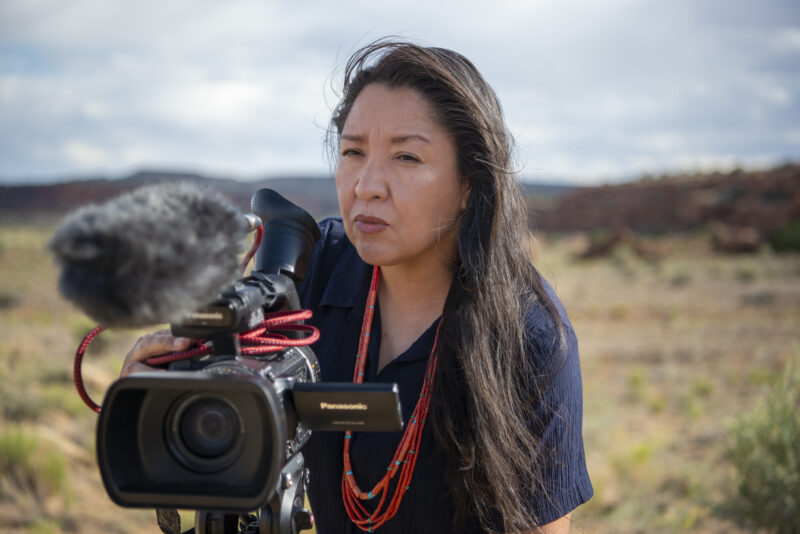
ALBUQUERQUE, N.M. (KRQE) – Ramona Emerson has been telling stories her whole life. As a Navajo woman, she says telling stories is in her blood and an important part of her heritage. She’s been making films for over 20 years, telling the stories of her community, and now helping train the next generation of Indigenous storytellers.

She grew up in Tohatchi on the Navajo Nation, near the border of the Arizona state line. Emerson chose to attend the University of New Mexico for a multitude of reasons, the most important being getting to stay close to family, and having the chance to attend the same college her grandmother and mother graduated from.

Emerson’s preferred major didn’t exist when she started school. It wasn’t until later that the film program was created, and she was part of the very first cohort to participate. “I’ve always loved film, I’ve always been a film buff. It’s something I share with my family. My grandma, my mom, we all loved movies and it was such a big part of our lives that I just memorized movie lines and I went to see movies a million times. It was just one of those kinds of things in my life,” Emerson said.

Growing up, she never thought she could accomplish being a filmmaker because of the lack of funds and experience, and because it was mostly a male-dominated field at the time. “As a little girl, a little Navajo girl on the rez, or hanging out with my mom and seeing her do her art, I just knew there was no way that I could be a filmmaker,” Emerson said. “There were no female directors, there wasn’t anything like that going on at the time. I thought it was so far out of reach.”

As a sophomore, she made a film for one of the retiring staff members at her high school, and ever since then, she said she was completely obsessed with filmmaking. Emerson read any book she could get her hands on regarding film. Her grandmother bought her a video camera when she graduated from UNM.

Emerson would record conversations with her grandmother, something that set her down the path to becoming a documentary filmmaker. “Now that she’s gone, I can go back and listen to what she said. That made me realize the importance of film and documenting. It archives the history, it archives stories that I might not remember without the videos or photos,” Emerson said.

Emerson has since gone on to work on numerous projects as a cinematographer, writer and editor through her and her husband’s production company, Reel Indian Pictures. She received an MFA in creative writing in 2015 from the Institute of American Indian Arts. She is a Sundance Native Lab Fellow, a Time-Warner Storyteller Fellow, a Tribeca All-Access Grantee and a WGBH Producer Fellow.

Now, she’s taking those skills and experiences and helping the next generation of Indigenous filmmakers learn how to tell their own stories. “I always talk about how you should tell stories about the place that you come from, and the problematic issues behind outsiders coming in to tell stories in our communities and I wanted to walk the walk,” Emerson said.

She’s currently working with Vision Maker from PBS to do a workshop that will teach methods of obtaining funding for their projects. “I want them to know that getting funding from PBS and telling those stories is absolutely within their reach,” Emerson said. “That’s the way to change the narrative, you give them the money, you give them the tools to tell these stories and then you step back and let it happen.”

APS seniors ‘in a holding pattern’ while dealing with college prep

by: Anna Padilla

ALBUQUERQUE, N.M. (KRQE) – Students all around the country have been affected by schools holding virtual classes due to the COVID-19 pandemic. When it comes to high school seniors planning for their life after graduation, counselors say students are overwhelmed by the major changes that have come with the pandemic. Many of them have become discouraged planning for their future, and counselors are trying to support them as best as they can during these unprecedented times.

Debra Chandler, College and Career Readiness Counselor at La Cueva High School describes what the seniors are experiencing as a holding pattern, waiting for things to go back to normal. As APS returned to in-person classes, Chandler said she noticed a small change in the students. “It’s been a very long year. We have a lot of students back on campus and the joy and the excitement for the future is back,” Chandler said.

She said under normal circumstances, there is a progression in the senior year of high school where students see their peers preparing for post-secondary life, which in turn, encourages them to start their own preparations. “We’re seeing our numbers down for a lot of things like college applications, financial aid applications, and things are just slower because we’ve lost that connection,” Chandler said.

Read on KRQE’s website

Lorraine Chavez, College and Career Readiness Counselor at Manzano High School said students have been through so many unknown possibilities. Many seniors still don’t know what exceptions will be made for them regarding normal college admissions requirements like applications and filling out financial aid forms. “There is so much unknown that it made it hard for them to progress with their senior year as they normally would,” Chavez said. “We’ve been chasing down answers, trying to find opportunities, trying to open doors and it seemed like every day, something was changing. A lot of our students shut down.”

Chavez said she’s seen a wide range of students deal with a lot more than their own studies due to the pandemic. Many seniors have to take care of their younger siblings while they try to get their own schoolwork done. Many have to work part-time jobs to help support their families. The result of that though, Chavez said, is many students are reconsidering any kind of studies beyond high school. “Many who are working 30-40 hour jobs now are thinking that this is good money and think they can live off that. But we want to show them and try to direct them back to getting a type of post-secondary education or certificate that could take them to the next level,” Chavez said.

This line of thinking is compounded by the fact that the seniors who graduated in 2020 went off to college but were almost immediately sent home because of COVID-19 closures, Chandler said. “It’s a waiting game, we’re stuck again because we don’t know the answers because the people who are supposed to know are still figuring it out, which we all understand. But it’s hard for a kid to progress again through that process,” Chandler said.

Chandler said while there’s many things still out of their control, something parents can do is encourage their students to continue through the process of filing out applications and admissions. “Make sure they’ve applied, make sure they’ve been admitted because there’s certain paperwork that needs to happen and they might have missed something. Make sure they’ve done their financial aid application. If all of that is done, sign up for orientation. The colleges really will take care of the kids as long as they’re checking their email,” Chandler said.

Chavez said college and career counselors are great resources for students who want to make plans for their post-secondary education. She said the district has also provided virtual resources for parents. Each high school’s website should have a resource page to help guide students on graduation requirement information, career exploration, mental health resources, and more.

‘Without them, I don’t think any of us really could have survived:’ Events honor legacy of Cesar Chavez

by: Anna Padilla

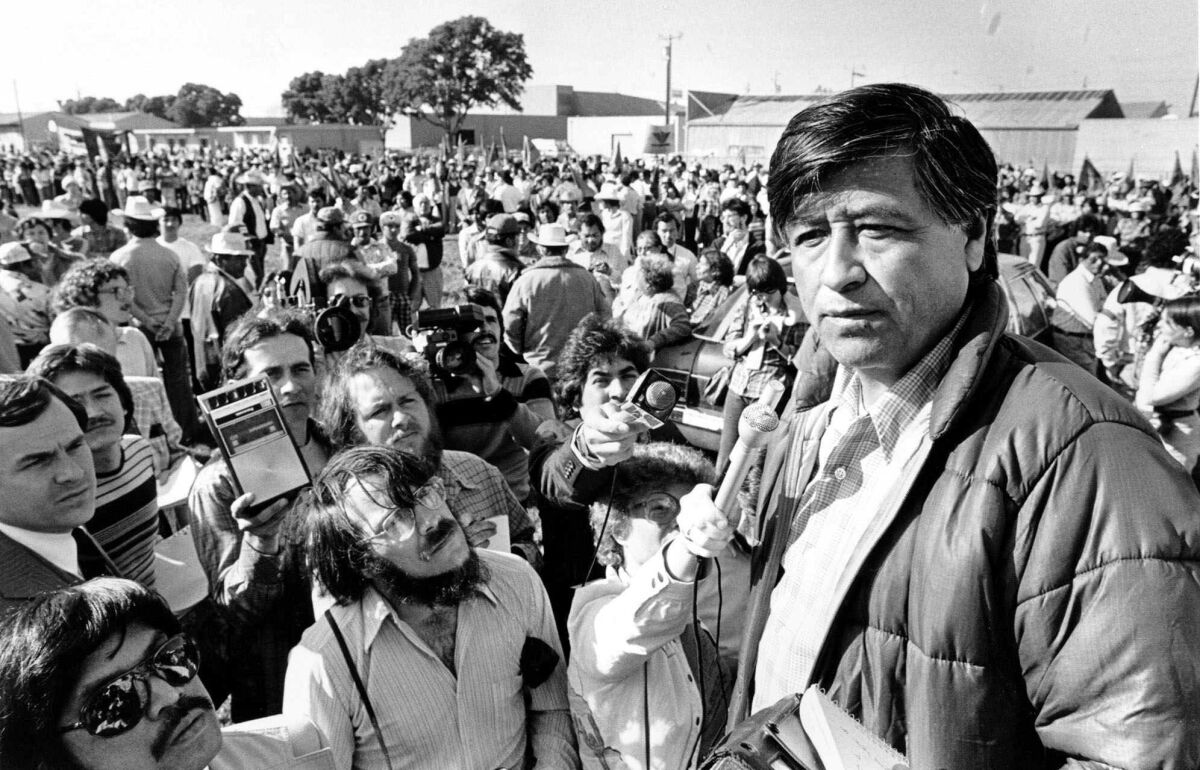
ALBUQUERQUE, N.M. (KRQE) – Two farm-working civil rights activists are being celebrated beginning this week, one of whom is from New Mexico. The 28th annual César Chávez Celebration kicks off on the late activist’s birthday, Mar. 31 and will end April 10 on Dolores Huerta’s birthday. The event is put on by the Recuerda a César Chávez Committee and will be held online.

César Chávez and Dolores Huerta, an activist from northern New Mexico, are known for leading a movement to bring better working conditions and civil rights to farm and migrant workers, a movement still on-going today in New Mexico’s own farm-working communities. Chavez passed away in 1993 but Huerta is still very involved in national groups working to create a safer experience for farm workers.

Committee Co-Chair Linda Benavidez said this is the second year in a row where they’ve had to hold the event online, but they’re determined to continue educating and advocating in any way they can. Mar. 31 will be an online celebration of Cesar Chavez’s birthday, beginning with a video of two student migrant workers who are currently attending the University of New Mexico and will end with local musicians from all across the state singing “Las Mañanitas.”

Read on KRQE’s website

April 7 and 8 will be the Dolores Huerta Days of Service and will focus on educating students about the aspects of farm working and civil rights. Every day they will post information about Chávez and the work that he did on the committee’s social media. On April 9 is the César Chávez Fiesta Justicia and will include performances by Nosotros and New Mexico poet laureate Levi Romero. They partnered with Casa Barelas to have a trailer concert through Barelas which will begin at 5 p.m. April 10 will be the dedication of Avendia Dolores Huerta, which intersects with Avendia Cesar Chavez.

Benavidez believes that many people began understanding the importance of farmworkers during the pandemic. “I think where it became highlighted was during this pandemic because without them, I don’t think any of us really could have survived. They sacrificed themselves and went out there to manage the fields, pick the food, got it to where we needed it to be but yet, they were not able to get vaccinations. They were not able to call into work and say ‘I don’t really feel good.’ A lot of times they went out without the PPE,” Benavidez said.

The event begins on the heels of National Farmworker Awareness Week, a week of action for students and community members to honor farmworkers’ important contributions and to raise awareness about the issues they face. One of the many local organizations the Recuerda a César Chávez Committee works with is the Farmworker Awareness Week initiative at the University of New Mexico, whose focus is to bring attention to the unjust conditions seasonal migrant farmworkers face and begin a dialogue with the community to make positive change.

Diego Salicido with the UNM FAW project said because New Mexico’s industry is high in the production of chile and onion, there are many farm workers in the community that he believes UNM doesn’t know about. “Because of the pandemic, they were hit especially hard with lack of protections that weren’t in place. They work in crowded facilities in long work hours and they don’t have overtime, they don’t have health insurance. They were vulnerable before and now the pandemic didn’t help. I hope the community can learn during these events and take action to protect these people providing food on our plate,” Salicido said.

For more information on events, visit the Recuerda a César Chávez Committee’s Facebook page or their website.

New Mexico Film Office aims to create safer sets with new training

by: Anna Padilla

ALBUQUERQUE, N.M. (KRQE) – A select group of New Mexico residents have begun training for a unique and relatively new position on film sets. The New Mexico Film Office is offering training courses to equip applicants to be certified intimacy coordinators.

Intimacy coordinators work on film and television productions to create a safer work environment for actors performing in scenes involving physical touch, nudity, intimacy, and simulated sex. The film office partnered with the Intimacy Professionals Association (IPA) Intimacy Coordinator Training Program, the first agency in the world to solely specialize in representing intimacy professionals.

The training is taught by Amanda Blumenthal, IPA’s founder and the first intimacy coordinator for film and television in Los Angeles. The 16-week training begins with foundational topics such as consent, power dynamics, and boundaries. They will also work on the skills needed to be on a film set and what is required of an intimacy coordinator during rehearsals for scenes.

Read on KRQE’s website

One of the many misconceptions Blumenthal comes across is that having an intimacy coordinator will take away from a scene or ruin the chemistry, which is the opposite of what happens in her experience. “My job is to make sure the performers feel safe and are able to focus on what they need to do in the scene. I work with how they work, whether that’s something more improvisational or something more heavily choreographed,” Blumenthal said.

New Mexico Film Office Director Amber Dodson said this program is the first of its kind in the state. “We’re really excited to support a training like this. We are really behind initiatives that foster safe, inclusive, and collaborative sets, and intimacy coordinators are really critical to creating those kinds of sets,” Dodson said. “Performers and the content creators are greatly empowered by having an intimacy coordinator on set. We want to say, ‘Hey, if you want an intimacy coordinator on your set, we’ve got people for you.’”

Blumenthal said it’s surprising how new the concept of having an intimacy coordinator is on productions, but was a necessary evolution for the industry because of the #metoo and #timesup movement which gained momentum in 2017. “Before then, people knew that there was an issue with how intimacy scenes are handled in the film industry, but no one was really talking about it. Because of those movements, I think that really opened people’s eyes to the issue and the discussion of safety on set because so many people have had traumatic experiences,” Blumenthal said.

This first round of training is currently underway, and Dodson said as demand grows for the position and becomes more standard on sets, the film office will work on providing more trainings in the future. “We want to be a leader in creating a more safe, diverse, equitable place to produce content and one of the ways we can help foster that kind of environment is by supporting intimacy coordination,” Dodson said.

Changing lives: Program helps disabled veterans get out of the house

by: Anna Padilla

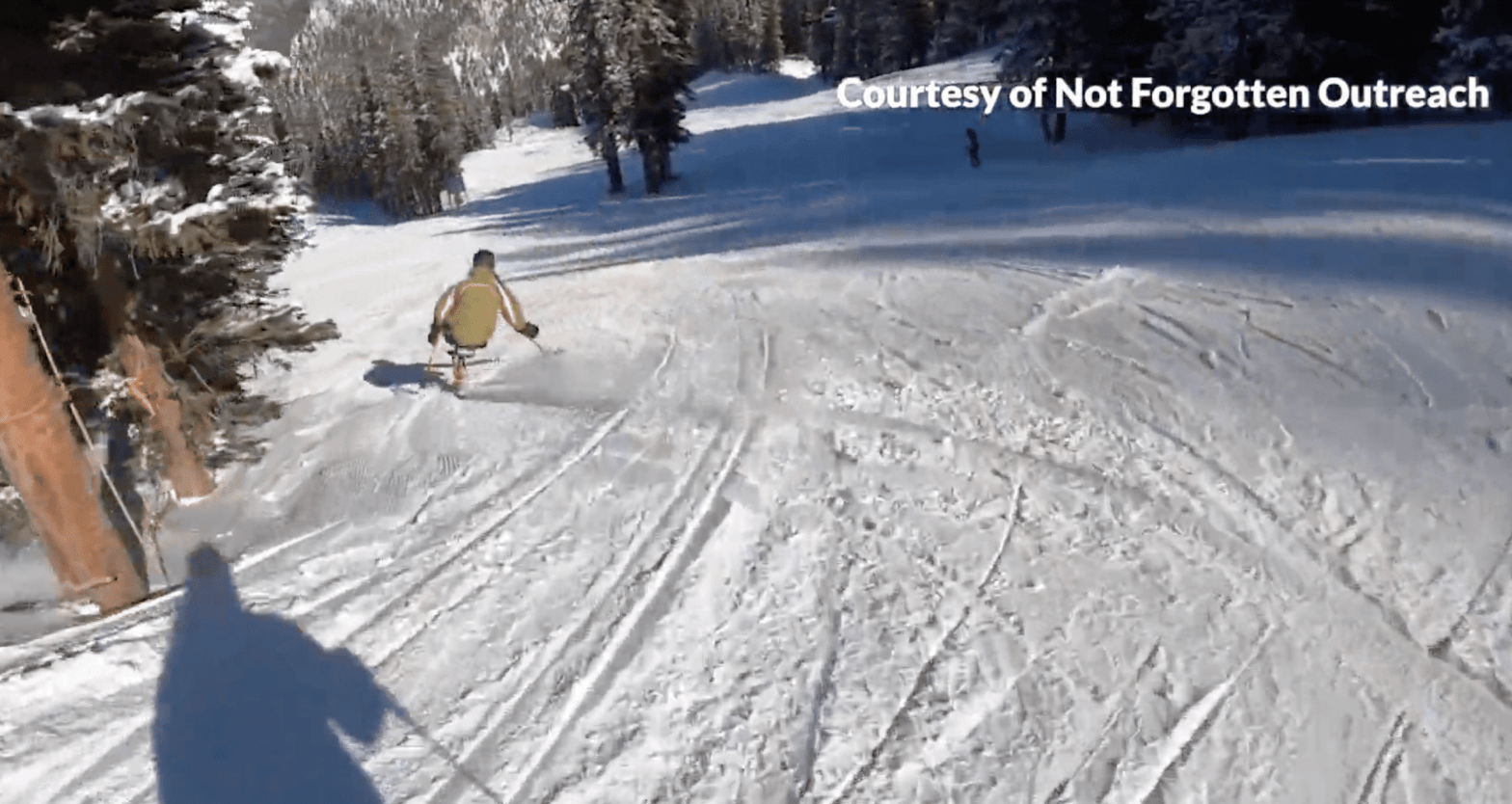
NEW MEXICO (KRQE) – Not Forgotten Outreach Inc. in Taos is dedicated to the reintegration and whole health healing of military and veterans through various activities and programs, like the Adaptive Sports Program. The program is in its third year of being funded by a grant from the United States Veteran’s Affairs office and is now offering scholarships for disabled veterans interested in skiing or snowboarding at Taos Ski Valley.

The scholarships provide for freeskiing, lessons, meals and lodging with two different options. The first option is a six-day scholarship with or without lessons for adaptive skiers and snowboarders. The second option is a one or two-day scholarship with or without lessons for adaptive skiers and snowboarders. This year, scholarship recipients will be allowed to bring their caretaker if one is necessary. In order to keep instructors and participants safe during the pandemic, one participant at a time will be allowed at the ski resort.

Executive Director Don Peters was a participant in an adaptive sports program himself, which is what put him on the path to modify what he could. He taught himself how to ski, how to ride a tractor only using his hand controls and even modified his motorcycle. “To me, just being out and getting active in a sport was creative enough to get me active in the rest of my life and get back to farming, get back to motorcycles which I used to do prior to my injury,” Peters said.

Read on KRQE’s website

Throughout his time participating in adaptive sports, Peters has seen first-hand the positive impact this program can have on servicemen and women and likes to use one example of a positive change it’s had on a person. “He isolated for 20 years. He did not want to get out to participate in anything because he did not think he could do it anymore. I met him at a VA an adaptive sports event, started getting together, he is now one of the best skiers on a ski bike that I have ever seen,” Peters said.

He’s seen the program help with participants who struggle with substance abuse, depression and anxiety. Mark Whitson has been hand cycling for the past five years and said adaptive sports changed his life, so much so that he is now a sports ambassador for a national organization that works with veterans. “It gets you out of the house, it makes you stronger mentally and physically, it gets them integrated into the community,” Whitson said.

Not only does the program provide ways for veterans to transition back into the community, but it also creates an opportunity to create its own community. “Now I have friends, it’s a social thing. You get out among similar types of people and then you start sharing what works and what doesn’t work. It just opens so many doors,” Whitson said.

The NFO also offers fly fishing during the spring and summer and an agricultural program where Not Forgotten will plant year-round gardens for a farm-to-school program in which veterans and their families will grow food for local school cafeterias. For more information or to view the scholarship application, visit the Not Forgotten Outreach website.

‘Mobile librarians’ help connect APS students with other cultures

by: Anna Padilla

ALBUQUERQUE, N.M. (KRQE) – Albuquerque Public Schools bus drivers have temporarily turned into mobile librarians for the district’s Books on Buses free book giveaway. Previously, students in the bilingual program were able to pick out books from their schools to take home with them. Since schools are closed, APS is bringing the mobile library to any student who is interested.

Rachel Altobelli, director of Library Services and Jessica Villalobos of the Language and Cultural Equity department came up with the idea for their departments to collaborate with the Transportation Department for this project. “We know that families and students sometimes prefer to read a paper book, so we wanted to keep sharing that with our students,” Altobelli said. “We want all of our students to have books that reflect them and their language, their culture and their beautiful selves.”

At least three buses travel around the district to different schools and drop off a bag with books and school supplies. The books range from being in both English and Spanish. “It really is about equity. If you take a look at APS and the population that we serve, these kiddos come from many different backgrounds and we are probably one of the most diverse districts in the nation,” Villalobos said. “If kids are speaking another language, we really need to validate their language and their culture.”

Former APS student Alexandra Jaquez said this program reignited her love for reading. “I was able to see myself through these books that usually I wouldn’t see myself in. You feel like you’re not alone in your situation. You feel that other people who are struggling the way you have.” Jaquez said. “It also helps you see outside of your own hardships and see there are other sides to the story.”

Read on KRQE’s website

The books chosen are a result of research done based on reviews, award-winner lists, what’s popular, teacher perspectives and diversity. Venessa Urioste is the Educators Rising teacher at Atrisco Heritage Academy. The course is a teacher pathway program for high school seniors who are interested in a career in education. The class is currently studying the impact that culturally relevant books can have on students and has even asked for copies of what books elementary students are receiving.

Urioste said the lack of representation can impact students who don’t see their heritage or community reflected in the books they read. “There are less than 10% of children’s books have a main character of color. There are more animals featured in children’s books than there are children of color,” Urioste said.

Altobelli and Villalobos said it made sense for them to open up the book giveaway to all students who are interested, since they all are learning virtually. “There’s nothing like having your own physical book, especially now that they have to learn online. We hope this also give them a break from looking at a screen all day,” Altobelli said.

For more information, contact Rachel Altobelli at rachel.altobelli@aps.edu or Jessica Villalobos at villalobos@aps.edu.

‘A bottle with a mission’: NM entrepreneurs fight to provide clean water in Africa

by: Anna Padilla

ALBUQUERQUE, N.M. (KRQE) – It’s said that the best way to start a business is to solve a problem, and that’s exactly what the young men who started Didomi intend to do. Didomi is an Albuquerque company that partners with organizations that aim to combat the global water crisis.

For co-founder Anaa Jibicho, the company’s mission is deeply personal. Jibicho is a refugee from Ethiopia and has already lost two siblings to sickness related to drinking unsafe water. Jibicho became ill himself, but was able to recover when he came to the United States.

Now he wants to make sure something like that doesn’t happen to anyone else. “I realized I had to help the community I came from,” Jibicho said. “I think the water crisis is one of the biggest crises of our generation. Over one billion people don’t have access to clean, safe water and unsafe water actually kills more than war itself.”

Didomi, which means “to give” in Greek, sells water bottles and uses 50% of profits from every bottle to provide 10 years of water access to someone in Africa who needs it through technology provided by WaterisLife. WaterisLife provides clean drinking water, sanitation, and hygiene education programs to schools and villages in desperate need.

Read on KRQE’s website

While attending school at Pamona College in California, Jibicho met future Didomi team member Brian Bishop who grew up in Albuquerque and graduated from Albuquerque Academy. Bishop convinced the team to make Albuquerque its home base. “Out of anywhere in the United States, New Mexico understands the water crisis,” Bishop said. “I know the community is really awesome and will come together to support this idea.”

Didomi uses the same manufacturer as Hydroflask, so they have the same quality of bottles as their competitor. “We don’t sacrifice the quality of our bottle, we take that really seriously,” Jibicho said.

Since the company’s launch this summer, they were able to use the funds generated from their bottle sales with WaterisLife to provide 300 students in Kenya with straw filters that allow them to drink clean water from whatever water source they have. Bishop said children can’t reach their full potential if their sole focus is attaining clean water for survival. Jibicho hopes this venture will allow children to learn and grow without worrying about finding clean water to drink.

Bishop said especially after 2020, people will understand the need to reach out and help however they can. “People want to make a difference, people want to make an impact in the world they just might not know how,” Bishop said. “You’re going to buy a bottle anyways, so why not have that bottle actually make an impact.”