‘From many, one:’ Traveling photo studio captures life in northern New Mexico

by: Anna Padilla

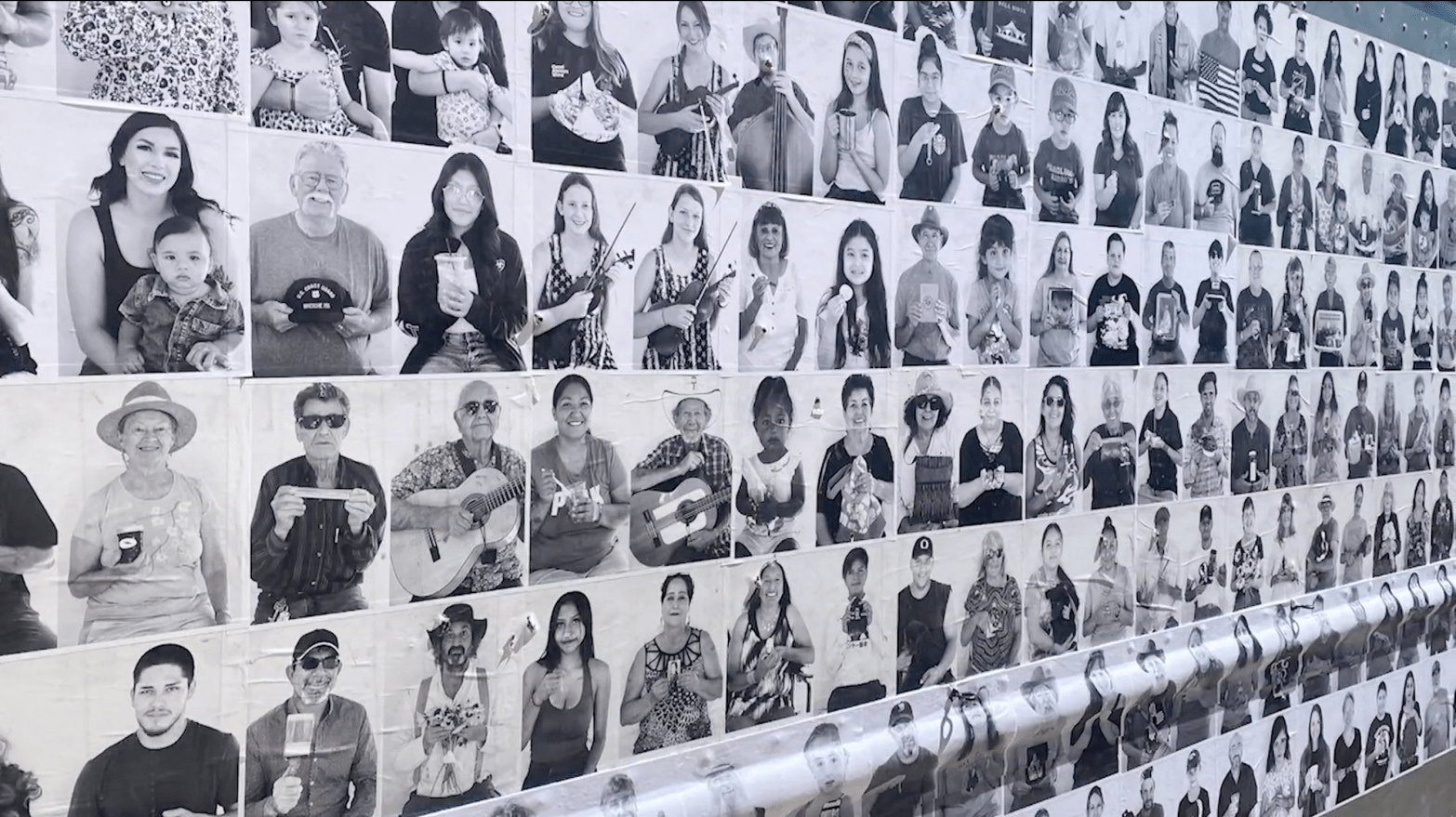
NEW MEXICO (KRQE) – A mobile portrait studio is making its way through northern New Mexico. Residents in areas like Raton, Espanola, and Taos will have the opportunity to have their portraits taken for free as part of E Pluribus Unum: El Norte. The traveling public exhibition will culminate in the collection of over 1,000 photographs that will be turned into a book and museum exhibit.

Matthew Chase-Daniel and Jerry Wellman have been operating as Axle Contemporary for 12 years. They describe it as a mobile exhibition space that makes projects like E Pluribus Unum: El Norte possible. They launched the first iteration of this project 10 years ago in Santa Fe, which ended up being a success. “It feels like an honor to photograph people like that, and in five years, twenty years, a hundred years, these photos and books will be records of people in the community in this present time,” Chase-Daniel said.

This year, they’ve taken the project to Albuquerque, the Navajo Nation, Alamogordo, Hobbs, Clovis, and various other places across the state’s southeastern part. They’re focusing on getting the project to those places north of Espanola. Over seven weeks, the duo will visit about 15 towns in northern New Mexico.

They set up at local businesses, schools, roadsides, and other community gathering places. Each person that is photographed holds a small object in the photo that holds significance to them. Two copies of each photograph are printed immediately in their solar-powered print studio. One is given to the participant and the other is pasted outside the mobile studio–a modified delivery truck.

“There’s just so many aspects to what a New Mexican is, and in thinking about that, we thought of the motto of the United States at the very beginning that Jefferson and Franklin thought of, E Pluribus Unum, which means from many, one,” said Wellman.

The pair get to meet many people on their travels, many of whom provide a peak into their personal lives by what they choose to be photographed with. Chase-Daniel remembers meeting a woman a few weeks ago who was hesitant to have her portrait taken.

“When we handed it to her, she said, ‘You know, I’ve struggled with negative body image for most of my life, and seeing this and seeing myself in this photograph somehow feels healing, and I look beautiful in a way I didn’t think I did.’ So that’s as good as it gets,” Chase-Daniel said.

They’ve seen people bring a wide variety of pets like a goose, snapping turtles, goats, dogs, and a hairless cat, to very personal items like the ashes of a loved one inside a locket, photos of loved ones, and even newborn babies. The photographers say they love seeing what people choose to bring in and never judge what people choose to be photographed with.

“This is a project that Jerry and I make together, but we really make it with all of the community. It’s not something that’s really ours–we’re snapping the shutter and printing the photographs and arranging to get from town to town, but it’s really the people who come in and share of themselves their face, their special object, that makes the project what it is,” Chase-Daniel said.

The project is in its fifth week of operation and will continue through Oct. 10. An exhibition of the photographs will be presented at the Taos Center for the Arts Encore Gallery in the summer and fall of 2023. For more information, visit the Axle Contemporary website.
Science Girl’s Lab performs, teaches kids about STEAM at state fair

by: Anna Padilla

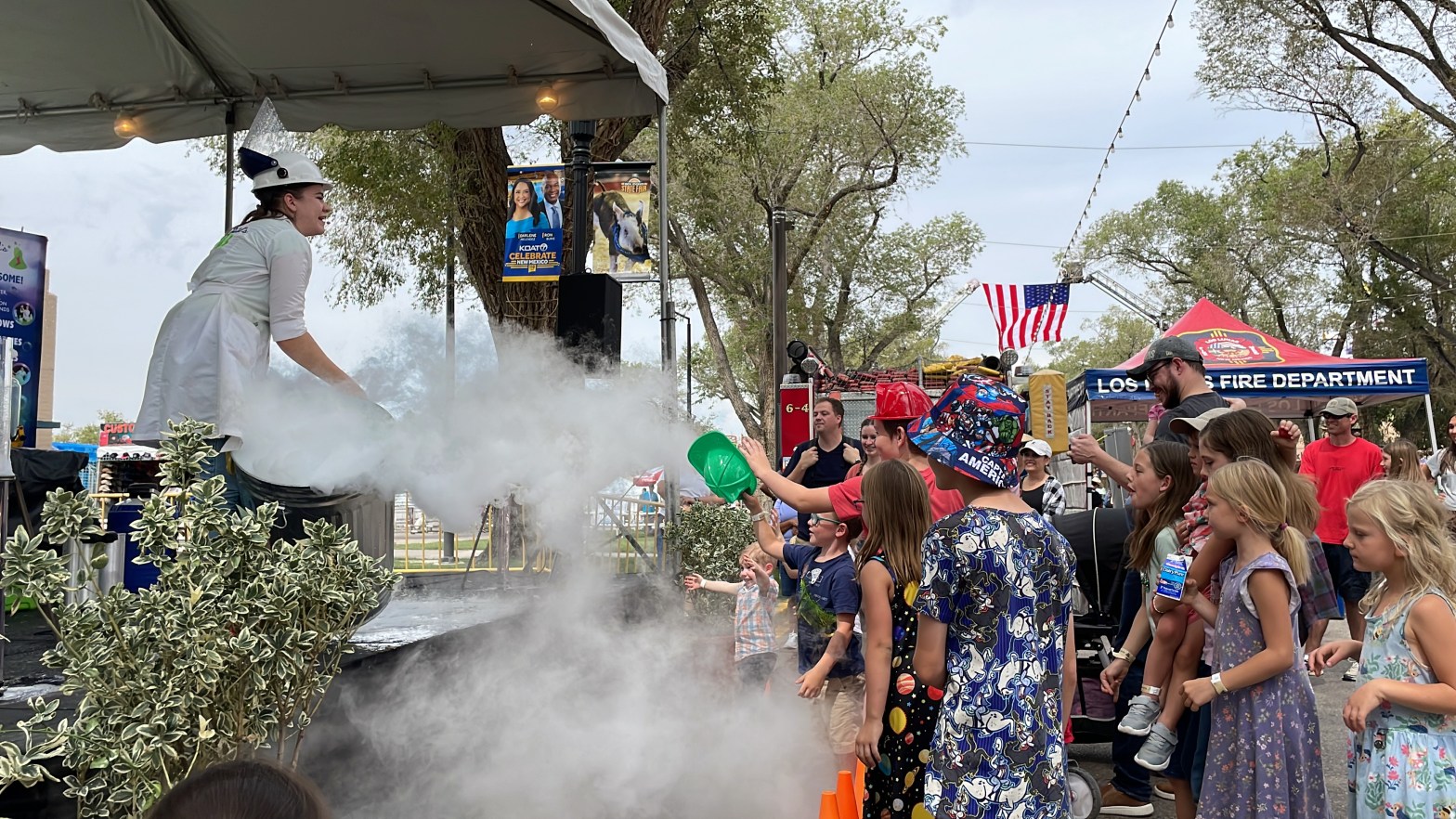
ALBUQUERQUE, N.M. (KRQE) – Melissa Ober is bringing her science laboratory to families at this year’s state fair. At just 17 years old, Ober created Science Girl’s Lab with the mission of making science exciting and engaging. Seven years later, Ober is living her dream of being a science performer in her home state.

She began performing her show at Explora while she was in college and turned it into a business where she has the opportunity to perform at schools, birthday parties, and events like the state fair. Ober, also known as Science Girl, grew up in Los Lunas and holds a degree in Elementary Science Education from UNM.

She said making STEAM subjects fun for kids and families is something that has always been a priority for the project. “Science often seems to be like words out of a textbook for most kids in school today, so I want to expand their excitement and imagination, and just get them exposed and involved and have a great time and make real memories here at the state fair with their families,” Ober said.

Ober spoke of her journey to get Science Girl’s Lab off the ground at the age of 17, and because she got started at a young age, she feels she can connect with the children she performs for better. “I get to be a part of that experience that I had growing up seeing science performers. I get to connect with them on that level which makes me just feel absolutely great about what I do. It’s the best feeling of my job,” Ober said.

Science Girl’s Lab will have performances every day of the state fair at 11:15 a.m., 1:15 p.m. 4:15 p.m., and 6:15 p.m. on the Main Street stage. For more information, visit the New Mexico State Fair website.

‘A space we can thrive in’: New Mexico Asian Film Festival kicks off

by: Anna Padilla

ALBUQUERQUE, N.M. (KRQE) – Beginning Friday evening, Albuquerque will host the first-ever New Mexico Asian Film Festival. The Asian Business Collaborative is hosting the event which will feature Asian short films produced by Asian and Pacific Islander directors, an inaugural awards ceremony, and a feature film celebrating Asians in film.

Local award-winning producer and actor Lava Khonsuwon was asked to direct the festival. “It was really important to me to be involved to help bring our voices of the AAPI community to Albuquerque and New Mexico,” Khonsuwon said.

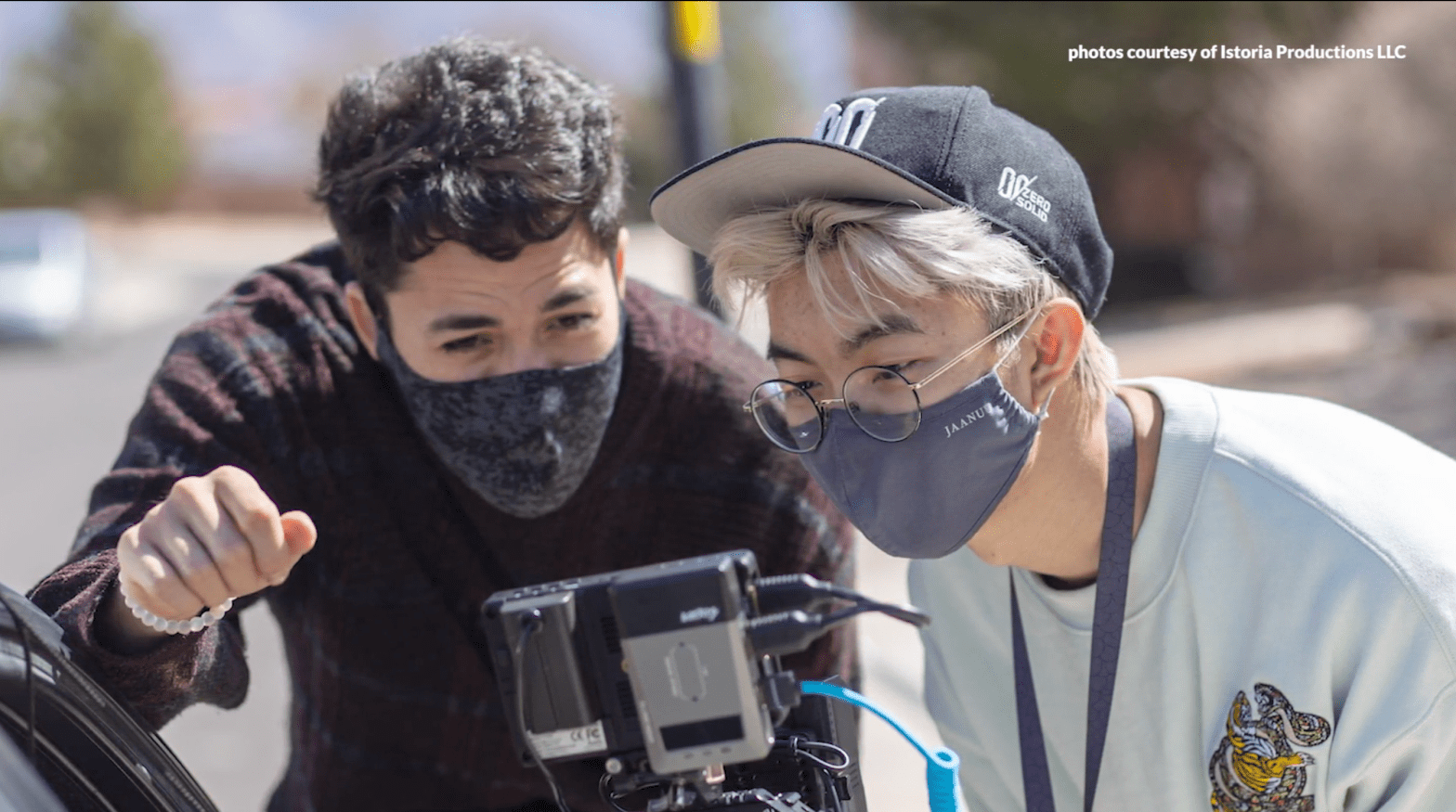
University of New Mexico graduate and local filmmaker Andy Bui’s film was one of the shorts chosen to be featured in the festival. He and his team produced the film during the pandemic, at the height of the violence against Asians during quarantine.

Read on KRQE’s website

“I think it’s a very historical event where I feel like Asian Americans in the art space is still very new–it’s not a path we’re encouraged to take, so it is a very hard space to navigate. There are trailblazers now, and I feel like now more than ever, we’re recognizing that it’s a space we can thrive in,” Bui said. “Any event in this capacity is something I’m always excited to see in our community.”

Bui is most looking forward to meeting other Asian American creatives in the area, something that was made even more difficult to do because of the pandemic. “Working in the industry, I didn’t get to meet a lot of people with Asian American backgrounds, so anyone who’s interested or just there for the event for what it is, celebrating the art of film, are my two favorite things combined together,” Bui said.

Khonsuwon welcomes all members of the community to attend the festival. “You don’t have to be Asian to attend the festival. It’s a variety of films we’ll be showing from short documentaries, animation, and narrative films and they all have a variety of messages, but mostly about belonging. Whatever your background is, I just want people to know whatever your struggle is with identity or finding yourself or finding community, that you belong,” Khonsuwon said.

The event is a part of the larger Asian Expo and Marketplace event on Aug. 19-20 at the Sid Cutter Pavilion Balloon Fiesta Park. On Friday, the festival kicks off at 6 p.m. Saturday, the festival begins at noon. For more information, visit the Asian Expo New Mexico website.

New Mexico suffragette featured on newly released U.S. coin

by: Anna Padilla

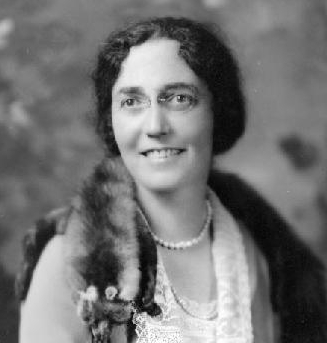
Nina Otero-Warren: New Mexico’s very own Hispanic suffragette, champion of education, and advocate for cultural preservation

LOS LUNAS, N.M. (KRQE) – Starting Tuesday, people all across the country will have the chance to see a famous New Mexican woman’s face on a special edition quarter as part of the American Women Quarters Program. Adelina Isabel Emilia Luna Otero-Warren, better known as Nina Otero-Warren, played a major role in the shaping of New Mexico during its early statehood.

She belonged to the Luna family, after which the Village of Los Lunas is named. The famous Luna Mansion is where the prominent family spent many years living. The Luna-Oteros were among the most powerful families in New Mexico in the late 1800s and early 1900s, having descended from some of the earliest Spanish colonists in New Mexico. At one time, Nina’s mother Elouisa was the wealthiest woman in the territory.

But she made sure to use the resources she had access to, to better the state and the people in it. Most women at that time were uneducated. However, the girls in the Luna-Otero family had the opportunity to study at prestigious schools. Nina attended Maryville College of the Sacred Heart (now Maryville University). She returned home to her family when she was 13, helped educate her siblings, and contributed to the work on the family ranch, which she spoke about in her book, Old Spain in Our Southwest.

Read on KRQE’s website

That sharing of knowledge continued her on the path to eventually serve as the first female superintendent of Santa Fe Public Schools. Nina made it her mission to improve the conditions in rural Hispanic and Native American communities.

At the time, the federal government was pushing for the assimilation of Hispanic and Native American communities into a more “Anglo” version of America. While Otero-Warren pushed for both English and Spanish to be allowed in schools. As a suffragette, she wanted a more inclusive audience and worked for suffrage literature to be published in English and Spanish.

The newly released coin features the phrase “Voto para la Mujer,” which means “Votes for Women.” Also pictured on the coin are three yucca flowers–New Mexico’s state flower. Otero-Warren also was chosen to lead the lobbying effort to ratify the 19th Amendment in New Mexico.

In 1921, she won the nomination to be the Republican Party nominee for New Mexico to the US House of Representatives and was the first Hispanic woman to do so. Though she did not win the seat, she remained active by serving as Director of Adult Literacy for the New Mexico Works Projects Administration and as the Chairman of New Mexico’s Board of Health.

The Nina Otero-Warren quarter is one of five quarters that will be released this year. The quarter is a part of the American Women Quarters Program which is a four-year program that celebrates the accomplishments and contributions made by women to the development and history of the United States. Beginning in 2022, and continuing through 2025, the U.S. Mint will issue up to five new designs each year.So far the Maya Angelou, Dr. Sally Ride, and the Wilma Mankiller quarters have been released. Following the Nina Oterro-Warren quarter, the Anna May Wong quarter will be released.

Albuquerque skating rink sees more visitors after Stranger Things premiere

by: Anna Padilla

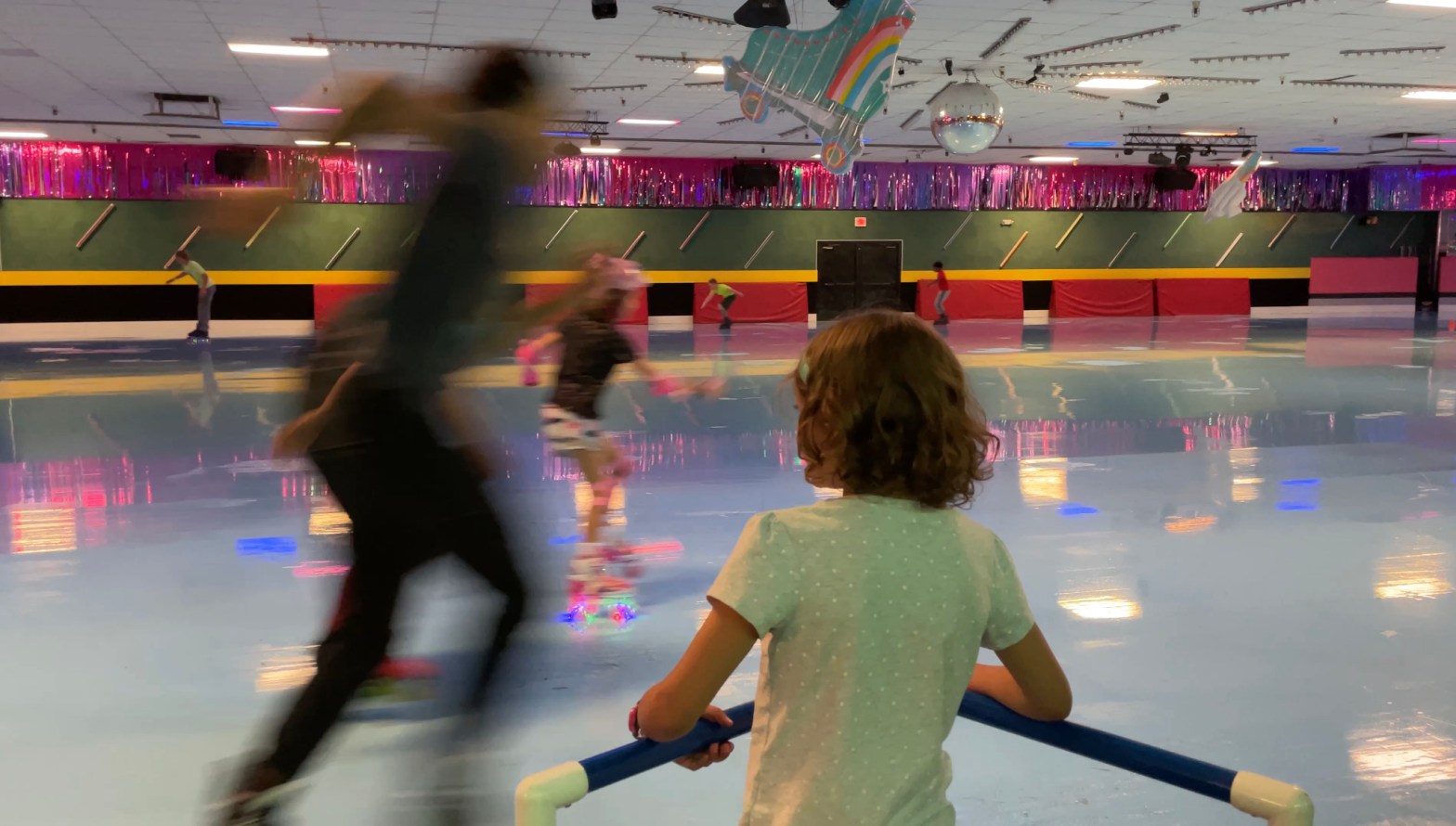
ALBUQUERQUE, N.M. (KRQE) – Albuquerque skaters now have the opportunity to step straight into a scene from season four of Stranger Things. The hit Netflix series was filmed around the Duke City and surrounding areas. One of the most recognizable locations was Albuquerque’s very own Skate-O-Mania, formerly known as Roller King. Office Manager Victoria Candelaria says business has picked up for the roller rink. Visitors that stop by can also see much of the set decor still up from the series.

Candelaria said Skate-O-Mania offered Netflix a discount to film there. In return, once the crew had finished filming there, they allowed the business to keep whatever set decoration they wanted. “They were gracious to leave the set behind because normally, for the past four seasons, I don’t think they’ve ever done that,” Candelaria said.

Candelaria said Stranger Things fans are frequenting the establishment, many of whom come in 80s costumes or Hellfire Club t-shirts. They welcome the visitors who purchase a ticket just to visit and take photos.

It took four days to film the two episodes that take place in the roller rink. However, it took about a month to prepare for those four days of filming. The snack bar was covered with a fake wall, and new bathrooms were created in what used to be storage rooms. The rental skate area was also moved to the opposite side of the skating rink.

Zelda Quintana is a manager at Skate-O-Mania and gets to work alongside her daughter Glory at the rink. They both also had the opportunity to be extras while they were filming Stranger Things.

Glory even went through the audition process to be a featured extra, and she is credited as a teen skater in episode three. “It was really fun because in between takes they’d let us go out and skate, and it was fun because we’d skate with cast members,” said Glory. “They were all very nice.”

Zelda spent much of her time on set teaching extras who didn’t know how to rollerskate. “To see what it actually takes to produce the episodes, how many takes, it was a lot of fun to learn,” Zelda said.

Creating community: Albuquerque’s largest photo gathering returns

by: Anna Padilla

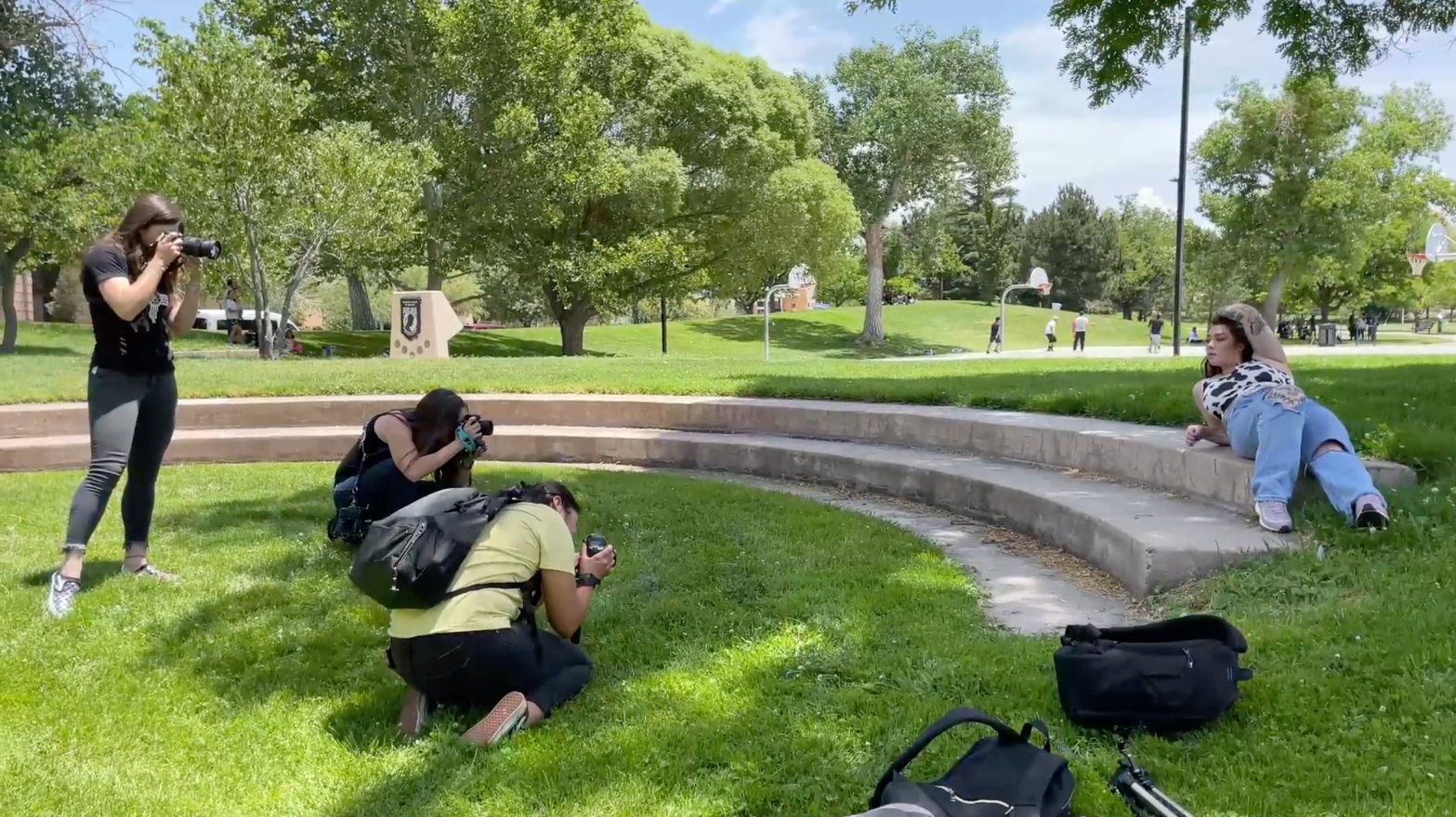
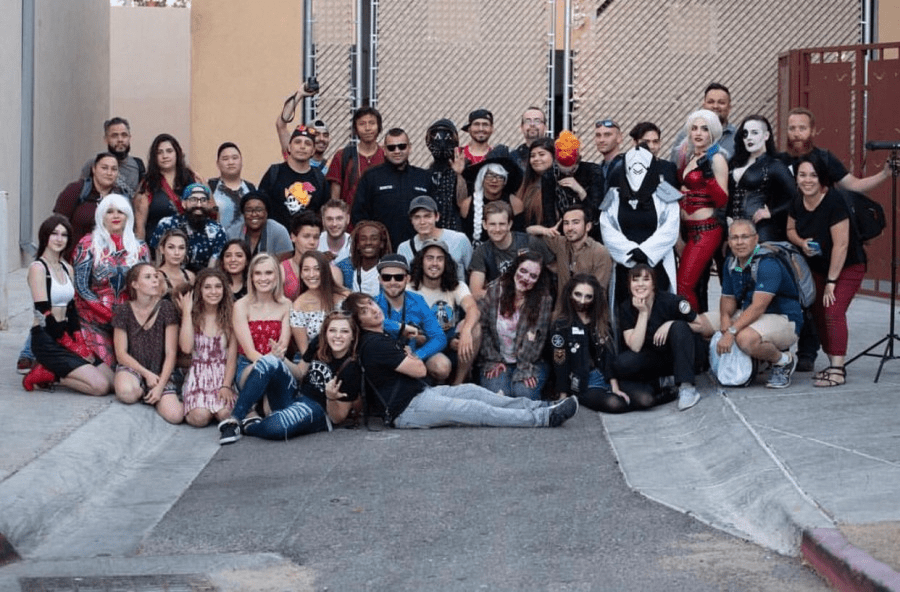
ALBUQUERQUE, N.M. (KRQE) – Albuquerque residents can expect to see a large group of cosplayers and photographers wandering around Old Town on Saturday. For the first time in over a year, the Albuquerque Street Meet is returning to Duke City. It’s the city’s largest gathering of photographers, videographers, makeup artists, and cosplayers.

Megan Kamauoha said it all started because she was complaining to her friends about feeling isolated back in 2018. She was feeling frustrated at the lack of opportunities to meet other creatives. That’s when her friend encouraged her to be the one to create that opportunity for herself and others.

“I created the event and decided to make it big, let’s make it so that way everyone is included. That’s how it started, was me complaining that I wasn’t feeling included, and I just wanted to change the way the creative culture in Albuquerque was at the time,” Kamauoha said.

The culture at the time, Kamauoha said, felt very competitive because photographers were hesitant to share helpful information with each other; like photo locations, makeup artists, or models. This led to the first-ever street meet event that had about 50 attendees.

Read on KRQE’s website

Stephany Taylor came across one of the street meet events through social media and decided to check it out. At the time, she was wanting to practice her photography skills, but she too felt excluded by many prominent photographers at the time. “None of them were interested in helping me as being an assistant or anything. I felt like they were gatekeeping a lot of the information about how to book clients, or even how to pose or what time of day would be better,” Taylor said.

She noticed an entirely different experience when she came to one of the events early on. “It was exciting. I was shocked to meet people who were more than willing to help me learn and share their knowledge,” Taylor said.

Kamauoha said the events are meant to be a jumping-off point for local artists to network and collaborate, but the goal is always to create a safe space to help people find collaborators for their own personal projects. “You need people to bounce ideas off of and have those people say, ‘I like that idea, here’s what I can bring to the table,’” Kamauoha said.

Jose Casias has been part of Albuquerque Street Meet as a photographer since its inception and has seen firsthand the good things that come from networking with other local artists. “After my first Street Meet, I booked my first jewelry shoot. I was able to get into a jewelry catalog. So it just really helps you launch your career and portfolio,” Casias said. “And if you’re looking to photography either as a hobby or even as a profession, it really helps you meet a lot of people that can get that ball rolling.”

Celine Kamauoha began participating in the street meet events because of her sister but continued because she found her new passions–modeling and special effects makeup. She said ever since her sister picked up a camera, she was always on the other side of it.

The first Albuquerque Street Meet in June of 2018. Courtesy of Megan Kamauoha.

“The progression of Street Meet is like the progression of my adult life and you get to see that in a sense,” Celine said. “Street Meet is so cool because even if you come in as a person who wants to be involved, you’re able to get involved and integrated very easily and very quickly.”

Abril Storms is part of the administrative team that keeps the event and overall group running. They come up with ideas for events or help problem-solve when there’s a hiccup in the planning. Initially, she felt intimidated joining the community as a newcomer. “I was so scared and I didn’t really know what to do, but everyone was so welcoming. The whole experience felt so uplifting,” Storms said.

Megan says she wants the community to know hat that everyone is welcome. “Not everyone believes in the arts. I was lucky because my parents encouraged me in that, but not everyone has that. I want people to know that they’re valuable. The goal of the meets is to push creatives forward and give them the support we all need,” Kamauoha said

The fourth annual Albuquerque Street Meet will be held on Saturday. Everyone will meet at Tiguex Park and walk through Old Town beginning at 6 p.m. For more information, visit the ABQ Street Meet Instagram page.

Hidden heritage: New Mexico’s first Afro-Latino festival finds ‘Shared Roots’

by: Anna Padilla

ALBUQUERQUE, N.M. (KRQE) – New Mexico has come to be known as a minority-majority state that is home to numerous backgrounds and cultures. One Albuquerque organization says it’s time locals had the opportunity to learn about a part of their lineage that may have been hidden, even to themselves.

AfroMundo is a collective of local scholars and storytellers who aim to cultivate a community that embraces both old traditions and contemporary ideas. Their upcoming venture, Shared Roots: A celebration of Afro-Latinx Culture, is New Mexico’s first Afro-Latinx festival (while some choose to identify themselves as Latino or Latina, Latinx or Latine are often used as gender-neutral terms to include non-binary members of the community).

The weeklong festival will feature music, dancing, films, panels, and bilingual events that showcase the shared histories, cultures, and traditions of Afro peoples throughout the Americas. Most events are free and open to the public.

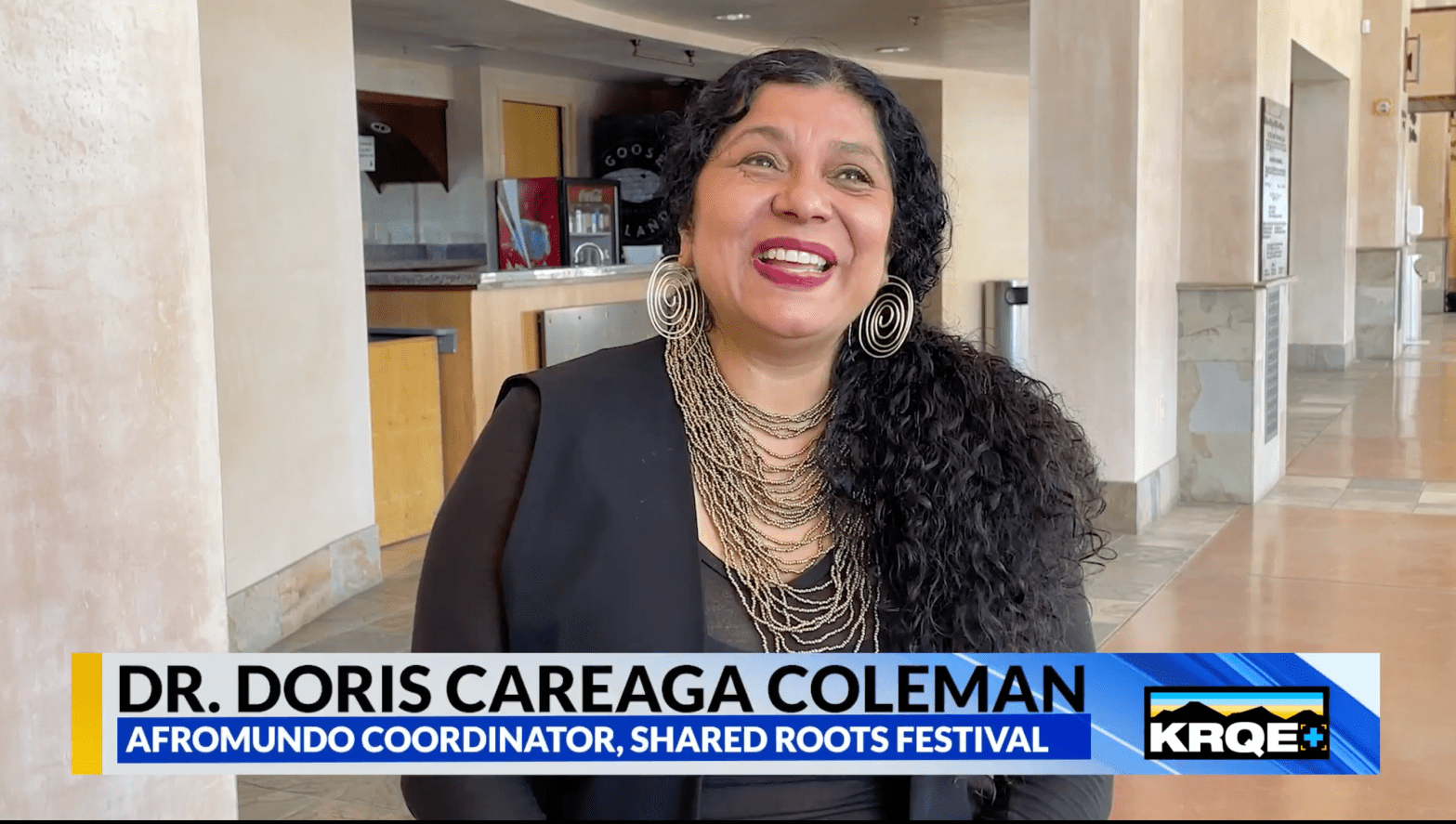
Dr. Doris Careaga Coleman of AfroMundo is the coordinator of the Shared Roots festival and an assistant professor of Chicana and Chicano Studies at the University of New Mexico. Hailing from Tamiahua, an Afromexican community in northern Veracruz, Careaga Coleman said she’s hoping to help others find their connection to their Afro-Latin heritage, a journey she too traveled. “I had the consciousness that I was Afromexican. I didn’t know anything about it,” she said.

Read it on KRQE’s website

Over the course of the pandemic, Dr. Careaga Coleman says the social and political movements that occurred resulting from the Black Lives Matter movement have brought Black culture and heritage into the forefront of public consciousness. She believes people are looking for their lost connections.

“We are a small community, the Afro-Latinx people. I think the idea of the AfroMundo festival started in our kitchens, in our living rooms, in conversation,” said Dr. Careaga Coleman. “We thought it was the right time. Right now, this year, to show how many Afro-Latinx lives here in Albuquerque, and how we contribute to the cultural life here.”

Dr. Careaga Coleman has spent her career studying Afromexican cuisine techniques used throughout her home state. She found similarities in the culinary arts used by communities in Columbia, the Dominican Republic, Puerto Rico, and Albuquerque.

“Here in Albuquerque, we have a lot of Afro heritage too but we don’t know because this was part of Mexico in the beginning. In the colonial period in Nueva España, we had a lot of African population,” Dr. Careaga Coleman said. “We have that heritage, we just don’t know. When people know a little bit more about what we want to share here in Albuquerque, they have the necessity to see what happened in the family tree.”

Local performing artist and flamenco dancer Rosalinda Rojas has studied the cultural connections between her Puerto Rican, Cuban, West African, Iberian, and Indigenous heritages extensively. She said she was thrilled to see the lineup of festival participants who now have the chance to share their experiences and experiences that resemble hers.

“It’s very timely that our Afro-Latino and Latina heritage is acknowledged. It’s an opportunity for us to take our place within the histories that have been invisiblized and not so likely known,” said Rojas. “It’s very important right now that globally speaking, and even myself as an individual, to acknowledge, to celebrate, and also have a conversation of our African roots and our African heritage.”

Rojas will be speaking on a panel alongside her Black Flamenco Network peers for one of the films being screened as part of the festival. “Being part of the panel will allow us to come together and start to fit in those puzzle pieces that are missing of understanding or of knowing what is our personal narrative going forward individually and collectively,” Rojas said.

The festival, which features performances and films by local and international artists, kicks off Saturday and runs until April 23. In-person attendees are encouraged to register in advance. The capacity for each event is limited and varies according to the venue. For a full list of events, times, and locations, visit the AfroMundo website.

On the Shelf: Anne Hillerman goes from fact to fiction

by: Anna Padilla

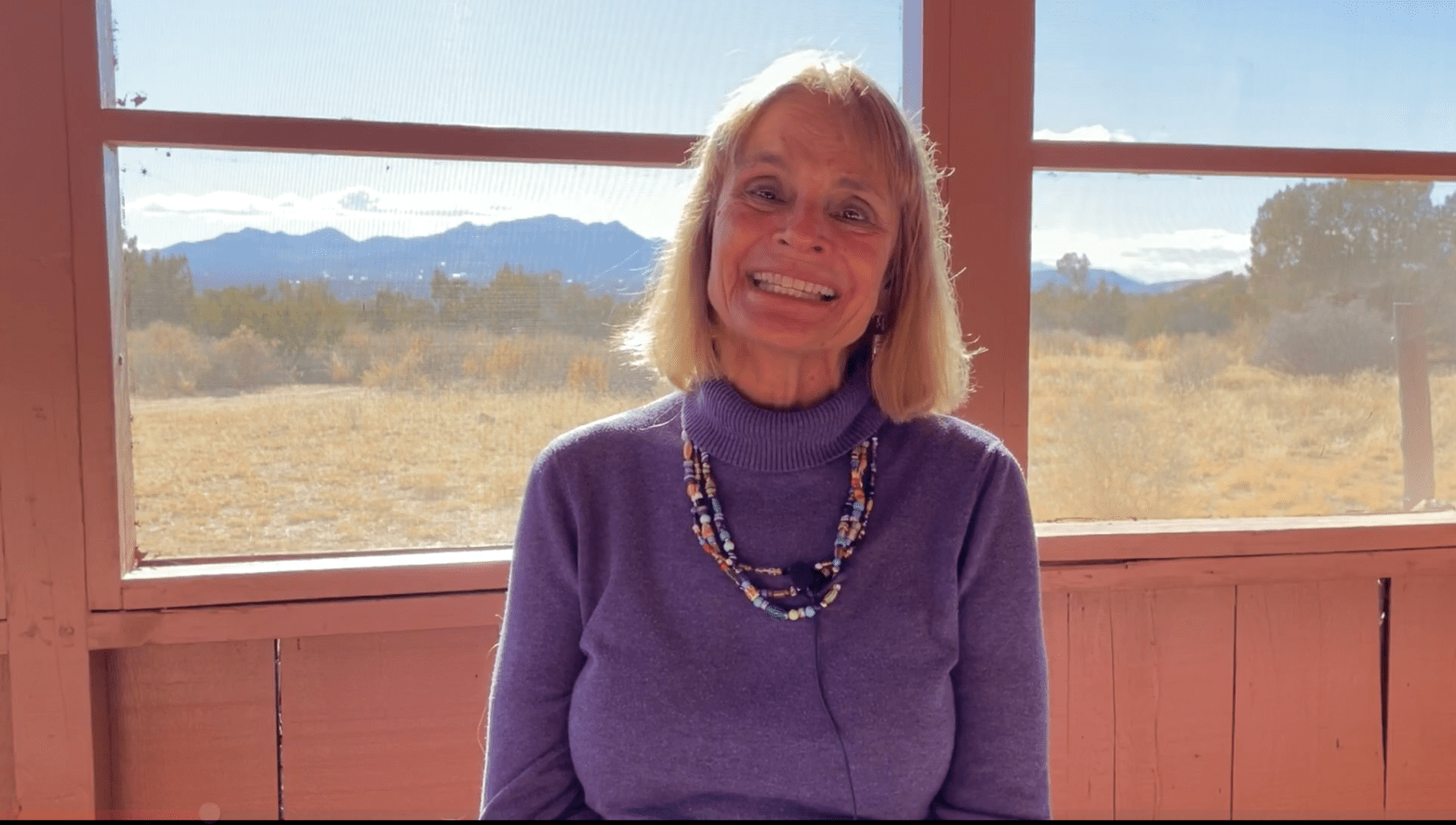
SANTA FE, N.M. (KRQE) – Anne Hillerman is no stranger to writing. As the daughter of prominent author Tony Hillerman, Anne knew she would be a storyteller but never imagined she’d follow so closely in the footsteps of her father by delving into fiction writing. Now, she’s picking up the mantle and continuing the beloved series her father began.

After having spent most of her life in Santa Fe, Hillerman attended the University of New Mexico and studied journalism, just like her father did. “When I was in my late teens, early twenties, trying to think of what I wanted to do when I got out of college, journalism just seemed like a logical choice because my father had enjoyed his career in journalism so much,” Hillerman said.

She wrote for The Santa Fe New Mexican, The Albuquerque Journal, and various other outlets, something Hillerman described as an experience that helped her reimagine her life in her 60s. There were many skills she learned as a journalist that she could utilize as an author, like learning how to work with editors and write concisely.

Her background in journalism is something she is grateful for, as it gives her a unique perspective on the landscape that she calls home. “I was able to go to a lot of places in New Mexico that I probably wouldn’t have gone to just as an average 20-something-year-old, and I met so many different people. I think the combination of the places and the people taught me great respect for diversity and taught me how interesting it is to live in New Mexico,” Hillerman said.

Read on KRQE’s website

She never intended to make the transition from writing non-fiction to fiction, but it was a decision she made after her father died, and she realized she didn’t want his famous Leaphorn and Chee mystery series to end. She and her late husband Don Strel took a trip through Navajo land as research for their non-fiction book, Tony Hillerman’s Landscape: One the Road with Chee and Leaphorn.

“I got to see firsthand the lovely landscape that my dad wrote about. I also talked to dozens of people and all of that. At the time I didn’t think I was going to be writing novels, but all of that really helped me in terms of preparing myself for my next career,” Hillerman said.

The task was daunting, though, as Hillerman had never written a novel before she continued the Chee and Leaphorn series. “I loved his characters, I loved his series, and I hated to think of there being no more of those stories. But I knew I could never be Tony Hillerman,” Hillerman said.

Her father had written about a supporting character in the series named Bernadette. She was a young and naïve Navajo police officer, and Hillerman wanted to continue her story with her version of the series. “She was kind of the guiding light that led me to continue the series, who gave me the bravery to write her,” Hillerman said.

In Hillerman’s newest book, The Sacred Bridge, set to be released in April, she says Bernadette wants to work towards becoming a detective. Hillerman says a number of people from the Navajo Nation, especially women, have reached out to her to express their appreciation of showing a strong female Navajo woman being represented in a series that is adored by so many.

Hillerman will reach out to a couple of retired Navajo police officers when she wants to make sure she’s representing the Navajo community accurately. With each of her previous books, Hillerman has made it a priority to visit the places she would write about in her novels. However, due to COVID, she didn’t have that opportunity, so she relied on previous research she had conducted to help her build the setting.

As for returning to non-fiction, Hillerman said she tries to focus on the current task at hand but hopes to return to writing non-fiction soon. In the meantime, she’s finishing up another book in the Chee and Leaphorn series. “When I start these books, I never quite know how they’re going to end. That’s part of the joy of writing them,” Hillerman said.

Resources at your fingertips: BernCo launches mental health app

by: Anna Padilla

ALBUQUERQUE, N.M. (KRQE) – Bernalillo County has released an app to support those struggling with mental health. Evan Gonzales, a community program specialist with the Department of Behavioral Health Services, said the goal was to create something to help the community find the resources they need, especially in the wake of COVID-19.

“Isolation, along with other factors really caused individuals to recognize behavioral health needs, whether it’s for themselves, a loved one, a family member, a friend. So we really took that to heart and as we continue services as a department, we also realized people need resources,” Gonzales said.

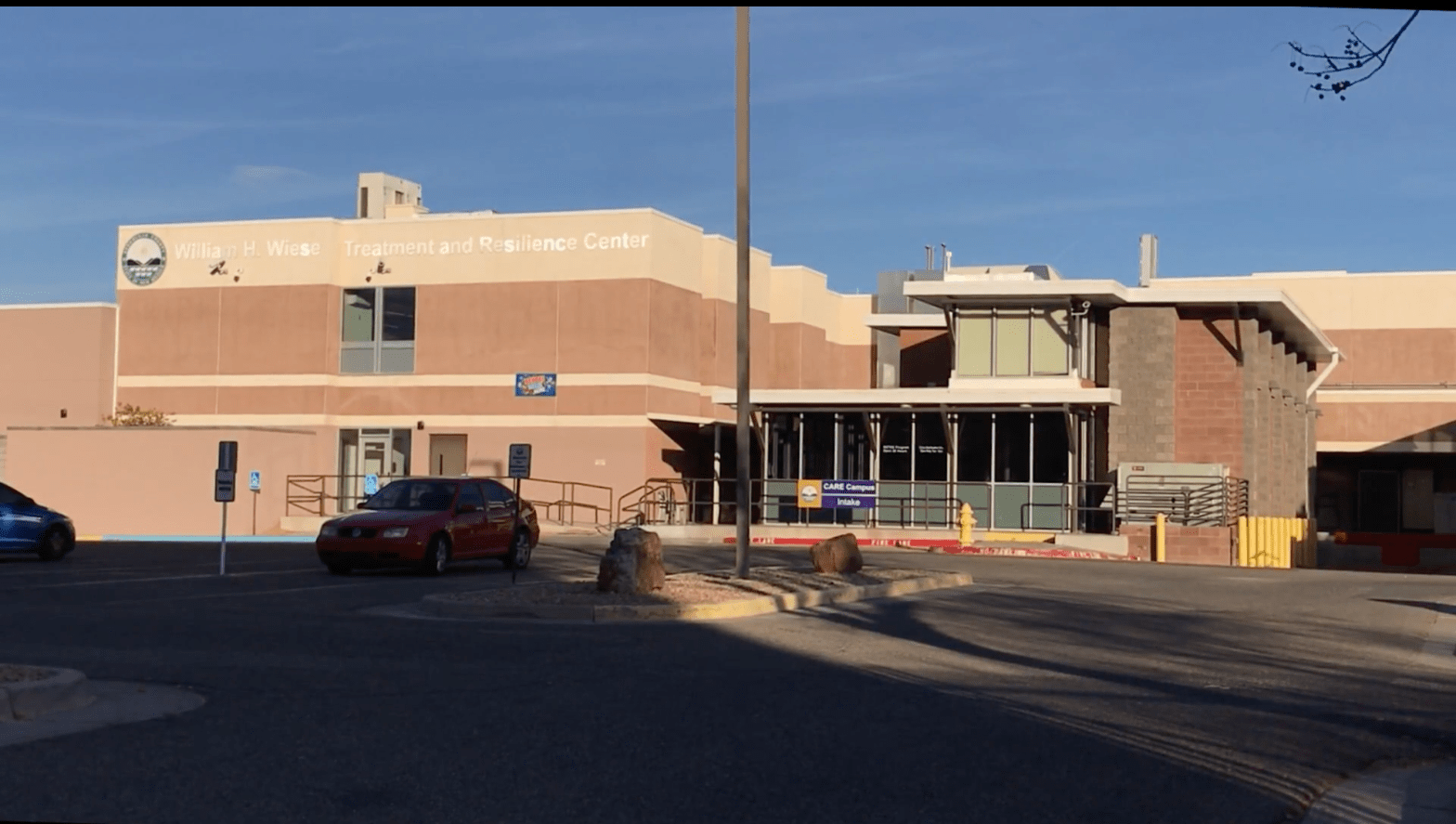
The department operates the Care Campus, which is a detox facility. Gonzales said as clients are being discharged, they encourage them to download the app, so they’re able to have the resources they need at their fingertips. “As the app launched, we really grew organically through word-of-mouth  and friends and family. The app was able to be shared by a lot of different people who found it beneficial,” Gonzales said.

Read on KRQE’s website

Gonzales said they wanted to make it as easy as possible for members of the community to access their services. If there is someone who is interested in a specific service offered by the department, the app uses GPS to locate how far away they are from that service and the best route to get there. “That’s really important for those individuals who might not have easy transportation, they’re able to find places and services that are within walking distance,” Gonzales said. “We’ve seen a lot of our clients and community members succeed with that because they’re finally able to find those services that are close to them.”

In addition to the short-term detox center, the Department of Behavioral Health Services has an overnight sobering service called Public Inebriate Intervention Program. It provides a safe environment for individuals to come down from the substances in their system.

The Crisis Stabilization Unit works closely with local emergency rooms and hospitals. “That way we can best offer those services to clients without taking up extra ER beds,” Gonzales said.

These kinds of services are made possible through the Behavioral Health Initiative. The initiative was approved by voters in favor of taxing themselves to help create a healthcare system for behavioral health. The department has worked to embed itself into the community by working with local organizations, Gonzales said, in order to help as many people as they can. “It’s just great that we’re able to partner with them, and this app really helps us shine a light on those services that are offered at no cost to Bernalillo County residents as a result of this behavioral health tax,” Gonzales said.The app is available for both Android and iPhone users. For more information, visit bernco.gov/department-behavioral-health-services.

In the Mix: Albuquerque cellist brings healing through music

by: Anna Padilla

ALBUQUERQUE, N.M. (KRQE) – Keely Mackey is a teacher, music instructor, and musician. But most of all, she prefers to see her music as an instrument of healing.

Growing up on the border of Canada and New York gave Mackey a well-rounded perspective on music, from classical to more contemporary sounds. She picked up her cello at nine years old and practiced every single day. In college, she studied music on her own, which led to her experimenting with performance art.

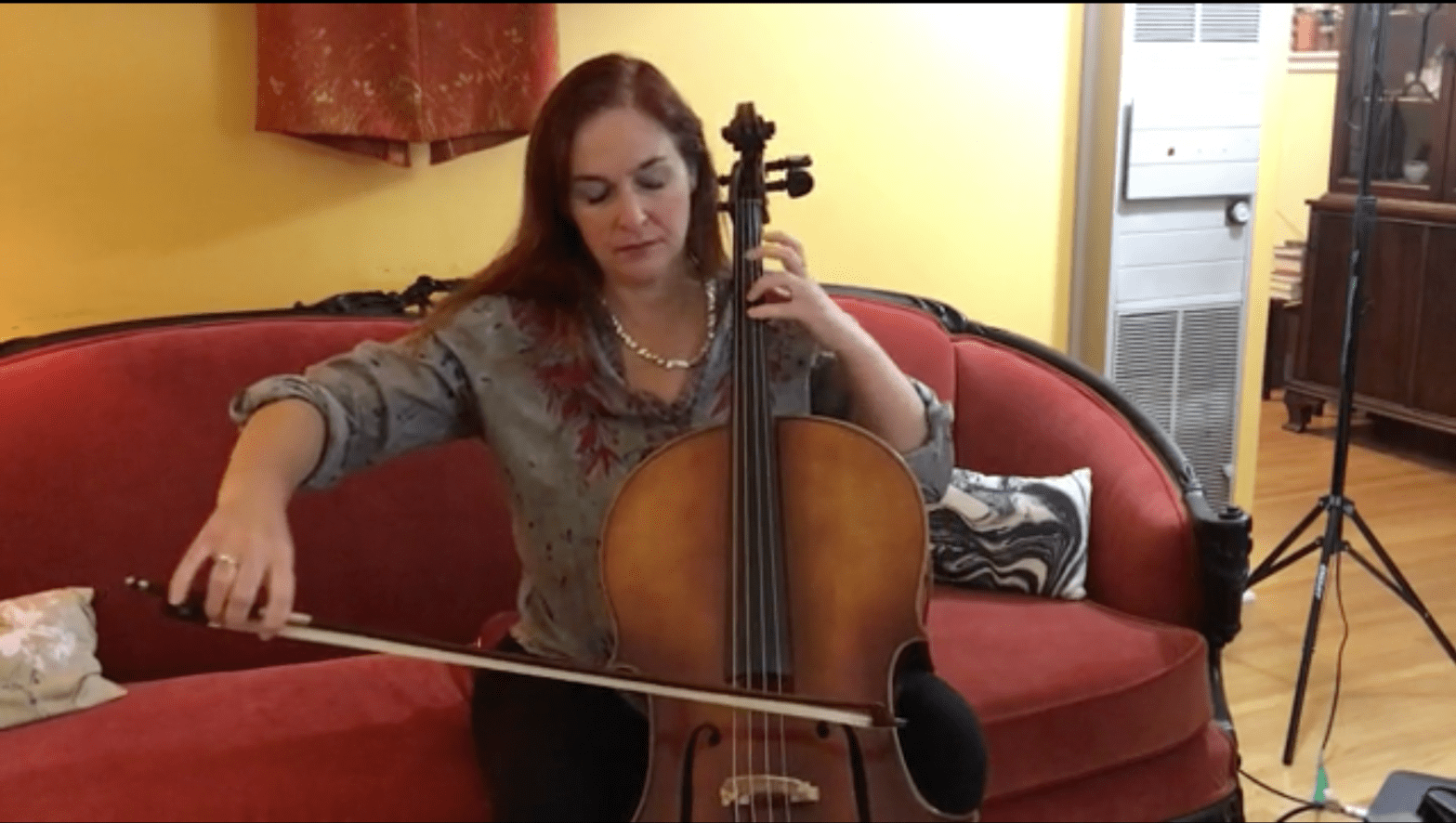
Mackey came to New Mexico to study at the University of New Mexico at a graduate level. She played in various groups as well as the university orchestra. It wasn’t until she began amplifying her cello that she found her own sound. She plays with a switchboard that allows her to loop what she plays and add effects. “All this music that I’ve been playing and experimenting across multiple genres over the years, it’s allowed me to find my own voice. So now when I sit down with my cello, I just start improvising and these songs just kind of come out of me, and then I structure them, record them, memorize them and perform them,” Mackey said.

Read on KRQE’s website

One of her latest songs, titled “Out at Sea” recently won a New Mexico Music Award in the Ambient/Instrumental category. Mackey found that after her performances, many of those listening said they felt healing from various ailments they suffered from while she played.

“People have told me it helps them relax, sometimes people that I know have chronic pain, they feel like their pain is taken away for a while, and just allowing people to tap into things that maybe words can’t address,” Mackey said. “That’s why I don’t sing even though I can sing, I don’t sing. I want my music to be able to touch people no matter what language they speak and to be able to bring their own stories because there are no words, they can attach their own meaning to it as well.”

Mackey’s music, most of which falls under her solo performer name Celloquacious, embraces nature and the four elements, which is why she believes people find it to be healing. She’s performed at a number of major events like weddings and major celebrations, but she’s also been called to play for families of those who are passing away. “I’ve been told it does help comfort them so that they’re not agitated and they can have a peaceful transition,” Mackey said. “I feel humbled that I’m called there and also that it can also end that transition. To be able to potentially comfort somebody during that transition and also their loved ones, it feels powerful.”

In her experience, she sees many people struggling with the transition of losing their loved ones, and sees music as a way to bridge that gap. “I think that in our culture, people have a hard time processing death. People, also I don’t think have enough time to grieve in our culture,” Mackey said. “Music is part of life, it’s not just entertainment. I think we’ve all felt that over the pandemic with live music having to go away, that we’ve craved it, this is something that we need to help feed our spirit. Now that people have had to pause because of the pandemic, and now that live music is starting to come back, I hope it’s healing for people.”